Bathroom flooring
Bathroom flooring options
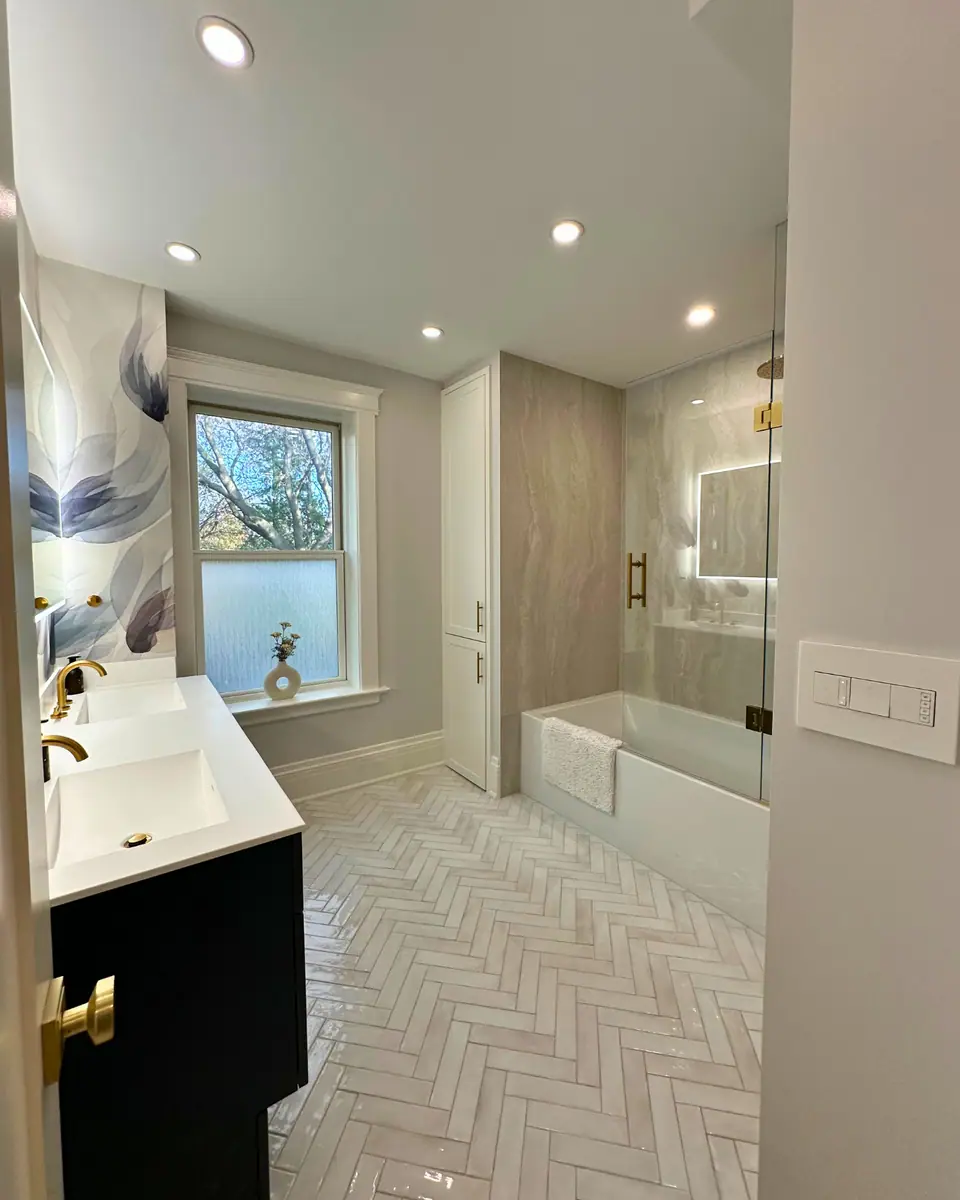
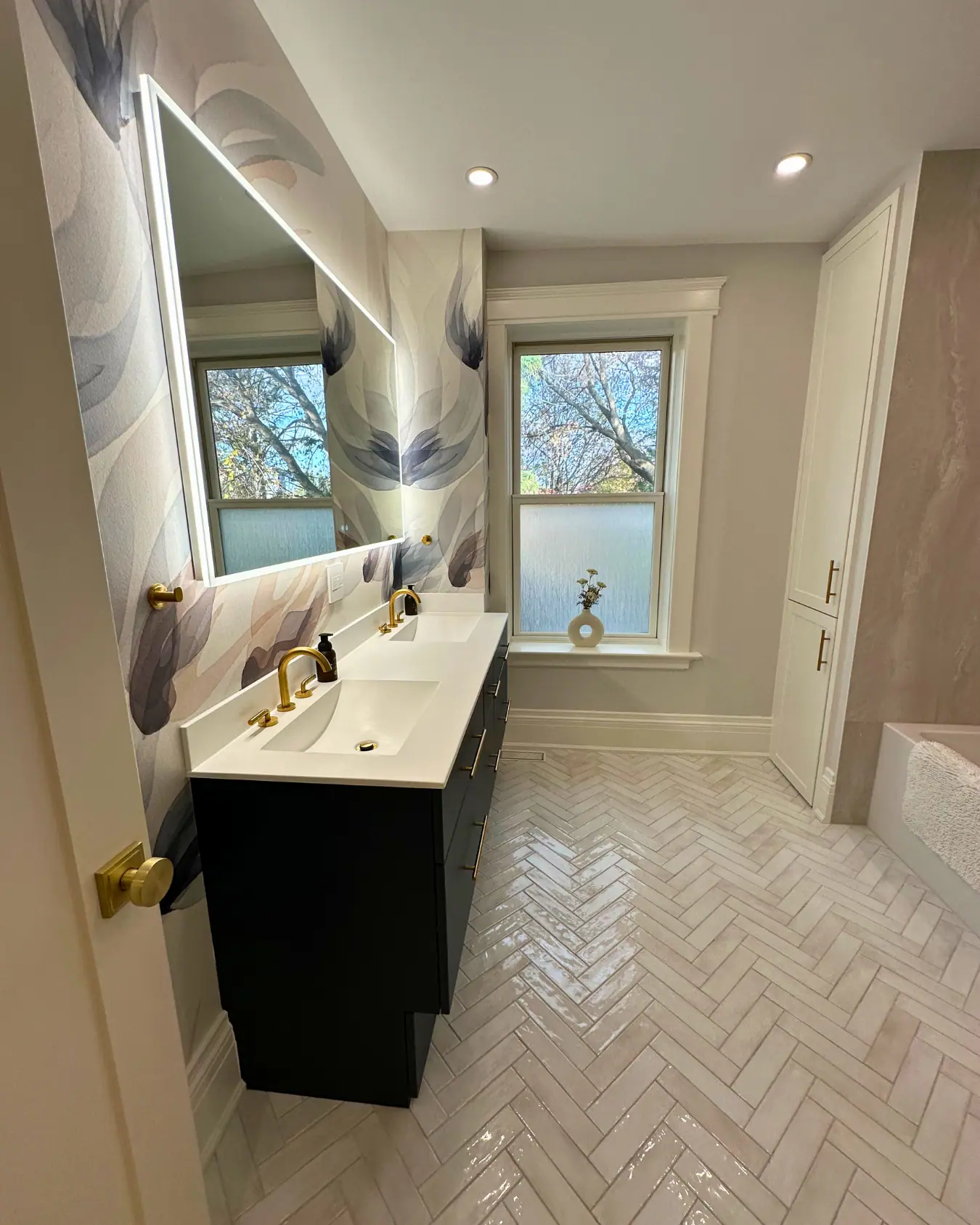
Porcelain tile is the default bathroom floor: it absorbs 0.5% of its weight in water or less, can be chosen for grip when wet, and carries a heated floor well. Natural stone looks richer but needs a stiffer subfloor and more careful cleaning, and marble or limestone etch with acids. Luxury vinyl is warmer and quieter underfoot, but water that gets past its edges reaches the subfloor. Whatever you pick, Ontario's Building Code requires a water-resistant finished floor in a bathroom.
What Ontario's Building Code allows on a bathroom floor
The code sets a water-resistance test rather than a single approved product. Article 9.30.1.2 of the 2024 Ontario Building Code (O. Reg. 163/24) requires finished flooring in bathrooms, kitchens, public entrance halls, laundry and general storage areas to be resilient flooring, felted-synthetic-fibre floor coverings, concrete, terrazzo, ceramic tile, mastic or another flooring with a similar degree of water resistance. Vinyl belongs to the resilient family. Wood and laminate are not on the list, so they qualify only if they can match that water resistance, a hard case to make beside a tub or shower.
Two companion rules matter in older houses with board subfloors. Article 9.30.2.1 requires a panel-type underlay under resilient flooring and ceramic tile laid over lumber subflooring, and under any ceramic tile applied with adhesive. Article 9.30.6.1 requires tile to be set in a mortar bed or bonded to a sound, smooth base. The floor you see is the top layer of an assembly, and the code governs the layers too. Confirm the current requirements with your municipality's building department, because the code is amended over time.
Bathroom floor materials side by side
Each material trades comfort, upkeep and tolerance for water differently. The table summarizes how they behave in a bathroom; the sections after it cover the details that usually decide the choice.
| Material | Water | Wet grip | Heated floor | Main trade-off |
|---|---|---|---|---|
| Porcelain tile | Absorbs 0.5% or less, the ANSI definition of porcelain | Depends on finish; read the wet DCOF on the spec sheet | Yes, passes heat well | Hard and cold without heat; grout needs care |
| Glazed ceramic tile | Glaze sheds water; the body absorbs more than porcelain | Check wet DCOF and that it is rated for floors | Yes | Choose a product rated for floor use |
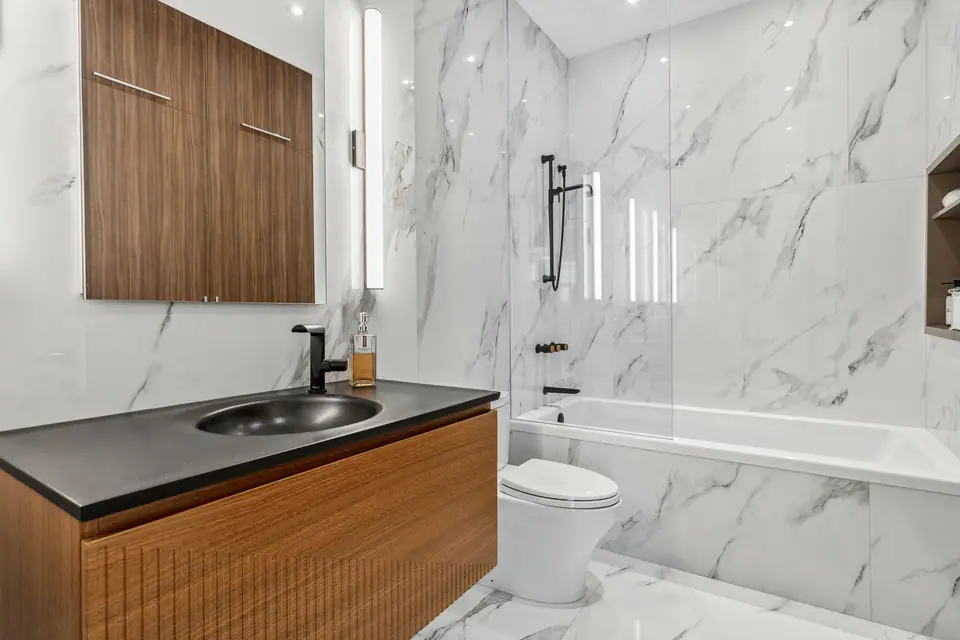
| Marble, limestone, travertine | Porous; a sealer adds stain resistance, not stain-proofing | Polished faces are slick when wet; honed grips better | Yes | Etched by acids; needs a stiffer subfloor |
| Granite | Dense; resists most household acids | Honed or textured finishes grip better | Yes | Heavy; needs the same stiff subfloor as other stone |
| Luxury vinyl plank or tile | The plank resists water; joints and edges are the weak point | Varies; ask for the maker's slip rating | Only where heating system and vinyl are rated for each other | Softer, warmer and quieter; shorter service life than tile or stone |
| Engineered wood or laminate | Not named in Article 9.30.1.2 | Varies | Some heating systems are rated for it | Swells where water sits; at most a powder room choice |
Slip resistance: check the wet DCOF before the colour
For tile, the number to find is the wet dynamic coefficient of friction (DCOF), measured with the ANSI A326.3 test. ANSI A137.1 asks for 0.42 or more on level interior floors that are walked on when wet, which describes a bathroom floor outside the shower. Daltile, which prints the figure for its products, sets higher marks in its own guidance: 0.60 for constantly wet, barefoot areas such as public showers and steam rooms, and 0.65 for ramps.
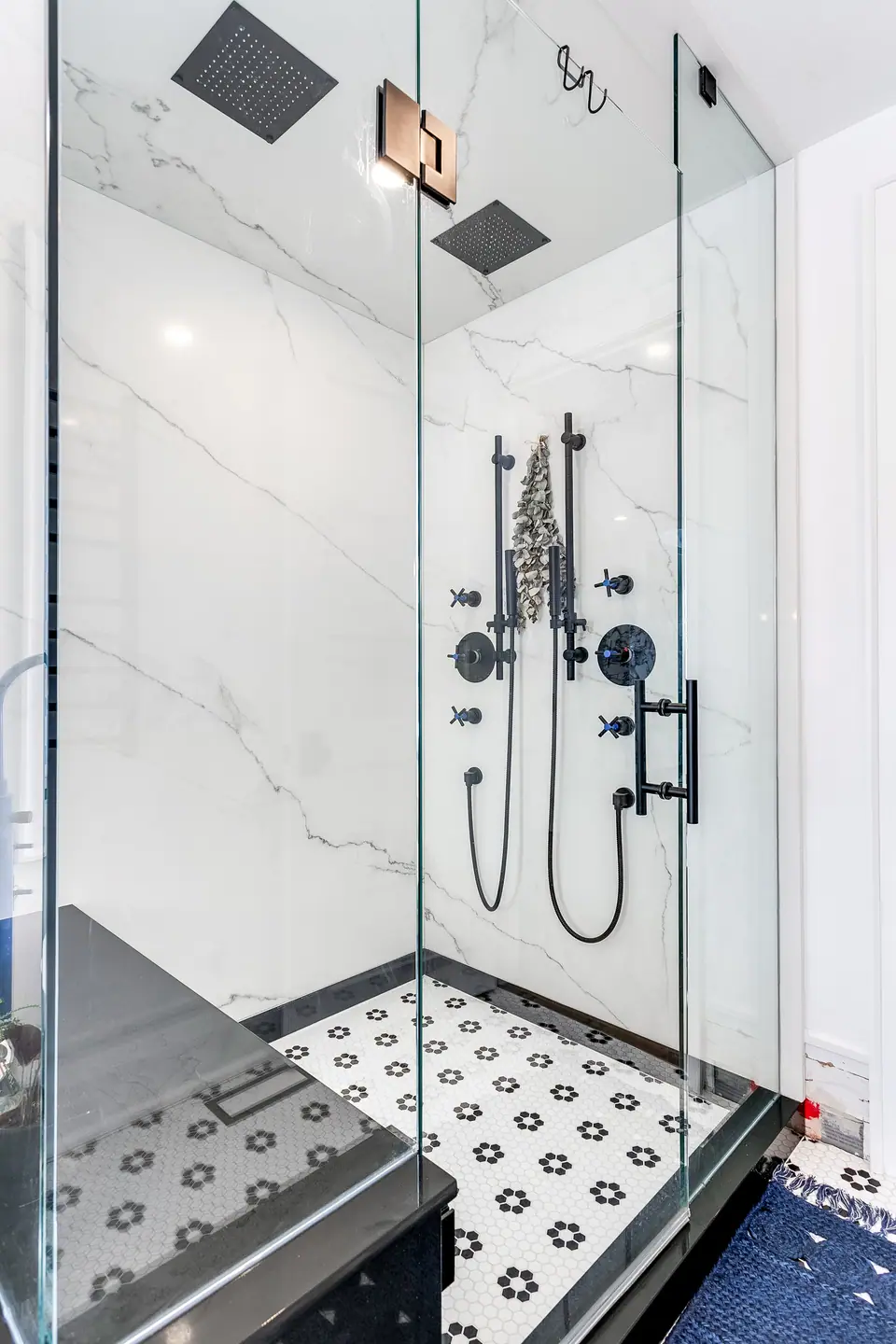
Read the number alongside the finish and the format. Daltile does not recommend polished surfaces where water may be present, notes that larger formats can leave more standing water, and says plainly that no floor tile is slip-proof and that soap film or the wrong cleaner can make any tile slippery. For the shower floor itself, smaller tiles with more grout joints are the usual answer; mosaic tile in bathrooms explains why.
DCOF is a ceramic tile standard. For vinyl, ask the maker what slip testing the product has passed and whether it is intended for bathrooms.
Natural stone needs a floor twice as stiff as porcelain
Stone tile is weaker in bending than porcelain, so the wood floor under it must flex less. The Ceramic Tile Education Foundation explains that a wood-framed floor under ceramic tile may deflect up to L/360 under load, while natural stone calls for L/720, twice as stiff. The TCNA Handbook method for stone over wood framing (F250) uses two layers of plywood: a subfloor at least 19/32 inch thick over joists at 16 inches on centre, plus a 15/32-inch underlayment in homes, before the backer board. The Natural Stone Institute does not accept a single wood panel layer under backer board for stone.
Stone also needs at least 95% mortar contact everywhere, wet or dry, against 80% for porcelain in dry areas. In a Toronto house with tired joists, stiffening the floor can be a bigger job than laying the stone, and the extra layers raise the floor at the door; see renovating a bathroom in an older Toronto home.
Care is the other commitment. The Natural Stone Institute separates calcareous stones such as marble, limestone and travertine, which acids like lemon and vinegar etch, from siliceous stones such as granite, which resist most household acids. It describes stone sealers as impregnators that make stone more stain resistant, not stain-proof, and many stones do not need one; marble bathrooms goes deeper.
Where luxury vinyl fits, and where it struggles
Luxury vinyl is an industry term, not a standard: vinyl printed to look like wood, stone or tile under a wear layer, usually a heavy film topped with UV-cured urethane. Plank products tend to be thicker and click together, while tile products are more often glued. It is softer, warmer and quieter than tile, but as a class it has lower durability and a shorter useful life than tile or stone.
Its weakness is the edges. A plank that ignores water does not make a floor waterproof: water that runs past the tub, the toilet flange or the walls reaches the subfloor and can sit there unseen. That makes vinyl reasonable in a powder room or a basement bathroom on a concrete slab, and a weaker pick beside a curbless shower or in a children's bathroom that floods at bath time. Over boards or plywood, the underlay rule in Article 9.30.2.1 still applies.
Vinyl over a heated floor works only where both makers allow it, at the vinyl's maximum temperature; heated bathroom floors covers the systems. In a condo, a hard floor may also need an approved acoustic underlay, explained in condo flooring and acoustic underlay rules.
Before the old floor comes up: asbestos and threshold height
Vinyl floor tiles made during the 20th century often contain asbestos, and the 9 by 9 inch size almost always does, according to the ASTM text Wikipedia cites. Have an old floor tested before anyone breaks it up; asbestos and lead in older homes explains the process.
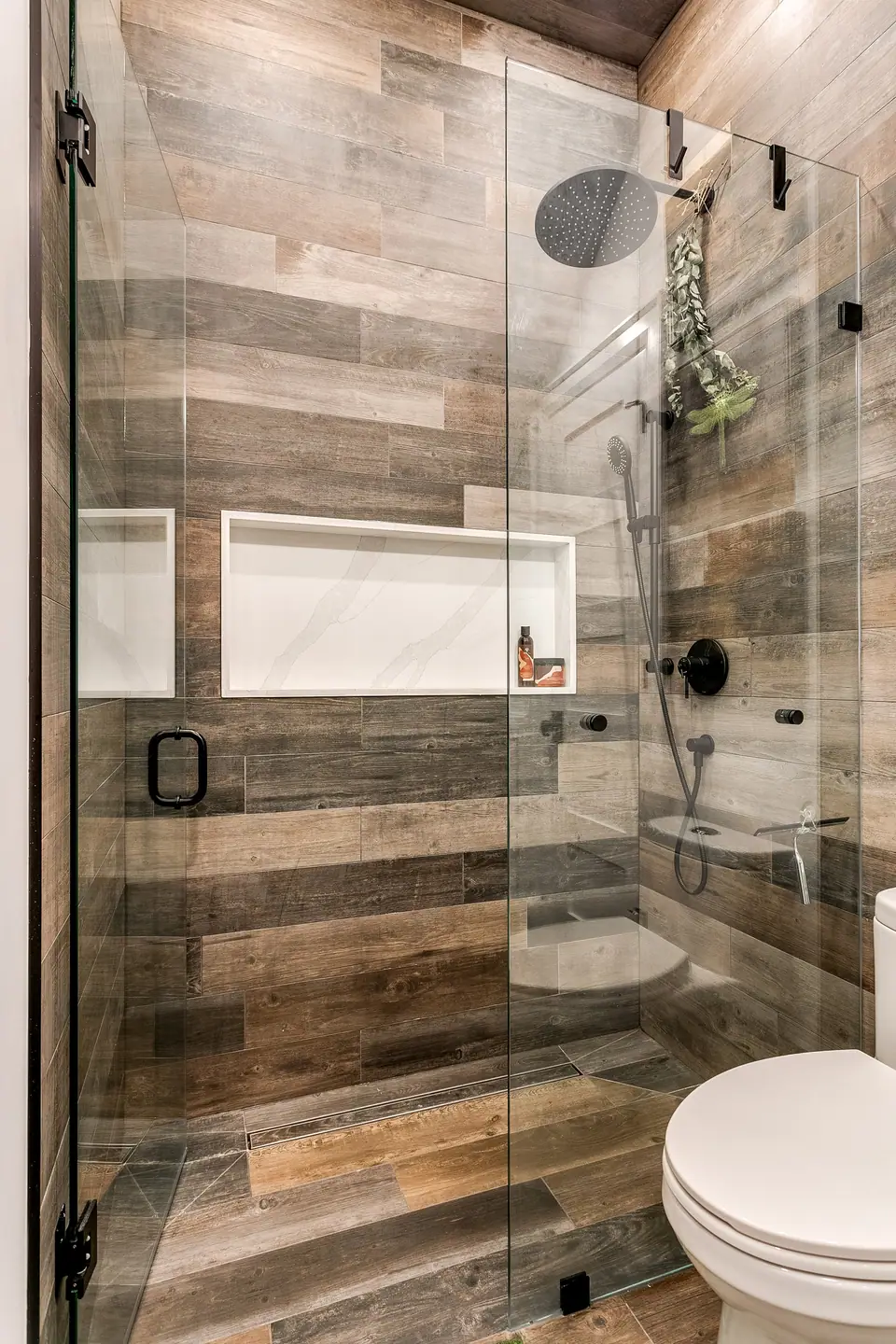
Then plan the finished height. Membrane, heating cable, mortar and tile together can sit well above a hallway floor. The National Kitchen & Bath Association's planning guidelines call for flush transitions where possible, and otherwise an eased threshold no higher than 1/4 inch or a bevelled one no higher than 1/2 inch, so nobody catches a toe at the door. If the hall is hardwood, wood-look tile can carry a similar tone into the bathroom on a water-resistant surface.
Questions
Is porcelain better than ceramic on a bathroom floor?
Porcelain is the safer default because it absorbs 0.5% of its weight in water or less, the threshold ANSI uses to define it. A glazed ceramic tile can still work on a floor when its maker rates it for floor use and its wet DCOF is at least 0.42.
Can luxury vinyl go in a bathroom with a tub or shower?
It can, if the product is made for bathrooms and installed to the maker's wet-area instructions, but the joints and perimeter remain the weak point. Keep it away from curbless showers, where water reaches the floor every day, and expect a shorter life than tile.
Do I have to seal a stone bathroom floor?
Not always. The Natural Stone Institute says many stones do not require sealing, and that sealers only make stone more stain resistant, not stain-proof. Ask the stone supplier about your specific stone, and clean with a neutral stone soap or mild detergent rather than anything acidic.
Which bathroom floor feels warmest without heating?
Vinyl feels warmer to bare feet than tile or stone, because it draws less heat away from your skin. Tile and stone feel cool unless heated, which is why so many tiled bathrooms add an electric mat or cable under the floor.
Sources and further reading
- Ontario 2024 Building Code Compendium, Part 9 (Articles 9.30.1.2, 9.30.2.1 and 9.30.6.1)
- Daltile: What is DCOF? (ANSI A137.1 and A326.3)
- Ceramic Tile Education Foundation: Caution, natural stone tile installed over wood framing
- Natural Stone Institute: Care and cleaning for natural stone
- Wikipedia: Vinyl composition tile (luxury vinyl and asbestos in older tiles)
Checked November 19, 2026. Codes, by-laws, prices and product specifications change; confirm with your municipality, condo corporation or supplier before you build.
Keep reading
Related guides