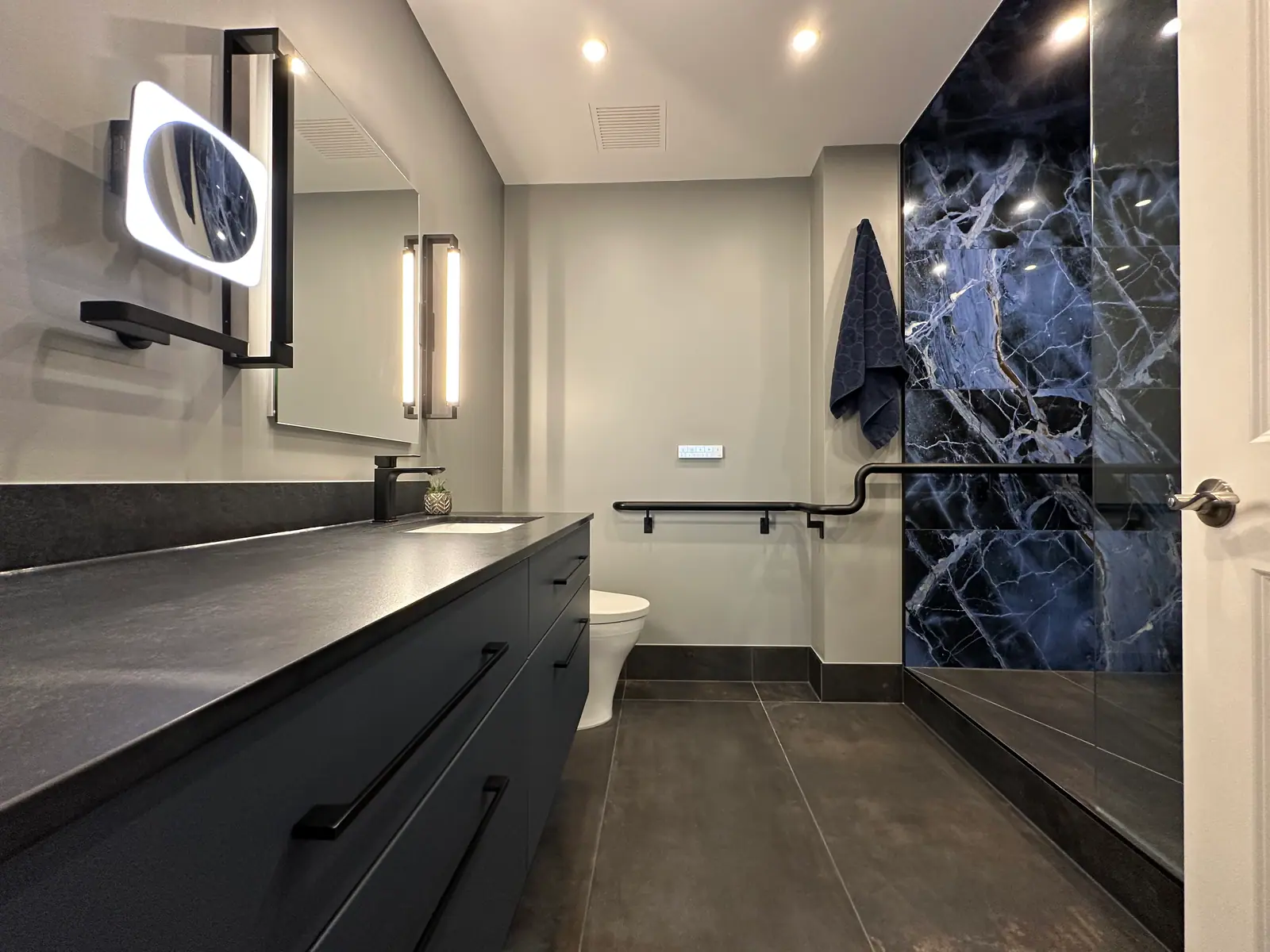
Bathroom fixtures
Smart toilets and bidet seats
A bidet seat replaces the seat on the toilet you already have, while a smart toilet builds the bowl, the flush and the washing seat into one fixture. Both need two things an ordinary toilet does not: a cold-water connection for the wand, usually a tee at the existing shut-off, and a 120-volt, GFCI-protected outlet close enough for a short cord. In Ontario, adding that outlet is electrical work that needs a notification filed with the Electrical Safety Authority (ESA).
Bidet seat or integrated smart toilet: what you are buying
A bidet seat is an electronic seat that bolts into the two seat holes of a standard toilet. TOTO, a widely known maker in this category, describes installing one as much like changing a toilet seat, and says its seats fit most standard North American toilets. An integrated smart toilet is a bowl and an electronic seat designed as one product, with the hoses and cord hidden inside the fixture.
The choice usually comes down to timing and looks. A seat can be added to a toilet that is staying, or moved to a new toilet later. An integrated fixture is a bigger decision made during a renovation, because its water supply and outlet positions are set by its own installation sheet, and some models are wall-hung on an in-wall carrier.
| Question | Bidet seat | Integrated smart toilet |
|---|---|---|
| What it replaces | The toilet seat only | The whole toilet |
| Fit | Must match the bowl shape: round or elongated | Designed as one unit |
| Water | Hose to a tee at the toilet's cold supply | Supply position set by the maker's rough-in sheet |
| Power | Plugs into a GFCI outlet near the toilet | Plugs into a GFCI outlet, often hidden behind the fixture |
| Visible hose and cord | Usually yes, at the side of the tank | Usually concealed |
| If the electronics fail | Swap the seat; the toilet stays | Parts and service come from one maker |
Measure the bowl before you order a seat
Seat shape is the most common ordering mistake. TOTO gives the two North American sizes: a round bowl measures 16.5 inches from the centre of the mounting holes to the front of the bowl, and an elongated bowl measures 18.5 inches. Measure yours with a tape before ordering, and look at the space between the seat holes and the tank, since some one-piece toilets with curved tanks leave little room for the seat's control housing.
Also check which side the cord and water hose leave the seat on the model you choose. That side decides where the outlet goes and where the tee connects, so it belongs on the plan before drywall, not after.
The outlet: GFCI, placement and the ESA notification
The outlet is the part that turns a fixture swap into a renovation decision. The Ontario Electrical Safety Code requires standard 15- and 20-amp receptacles within 1.5 m of a sink, bathtub or shower stall to be protected by a Class A ground fault circuit interrupter (GFCI), and ESA confirms that applies to replacement receptacles in bathrooms too. In most bathrooms the toilet sits within 1.5 m of the vanity sink, so the outlet beside it falls under that rule.
Placement follows the cord. TOTO's installation page calls for a ground-fault 120-volt outlet within three feet of the toilet, because its seat cord is about three feet (0.9 m) long. Plan the box on the cord side, low on the wall behind or beside the tank, where it can be reached for a reset but stays clear of mop water and splashing. Do not plan on an extension cord to bridge the gap.
A new outlet usually extends an existing circuit, and ESA's Bulletin 26-29-6 says the first added receptacle on an extended circuit needs arc-fault (AFCI) protection and every added receptacle must be tamper-resistant. Almost all electrical work in Ontario needs a notification of work filed with ESA before it starts. Homeowners may do electrical work in their own home with a notification, but friends, relatives and neighbours may not; ESA recommends hiring a Licensed Electrical Contractor.
- Outlet within reach of the cord, on the side the cord exits, without an extension cord.
- GFCI protection at the receptacle or upstream, plus AFCI and tamper-resistant devices where the circuit is extended.
- Notification filed with ESA before the work, and an inspection afterwards.
- A certified product. ESA says electrical products must carry the mark of an accredited certification agency before they are used or sold in Ontario, and installing unapproved equipment is against the law. Check for the mark before buying, especially from an online marketplace.
How the water connects, and where the warm water comes from
Most bidet seats take water from the toilet's own cold supply. A tee fitting goes between the shut-off valve and the tank supply line, and the seat's hose connects to the second outlet of the tee; TOTO's steps are to shut off the water, flush to relieve pressure, connect the hose, then turn the water back on and plug the seat in. If the existing shut-off is an old valve that weeps or will not close fully, replace it while the water is off.
The seat warms the water itself. TOTO explains the two designs: a tank-type seat keeps an internal reservoir at your chosen temperature, while an instantaneous seat heats the stream on demand, which allows quicker temperature changes. Neither needs a hot-water line run to the toilet.
A smart toilet is still a toilet under the Building Code. Ontario limits tank-type toilets to 4.8 litres per flush, so any integrated model you choose has to meet that; low-flow toilets and water efficiency in Ontario explains the flush rules.
Features worth paying for
Bidet seats are sold in tiers, and the price climbs with each feature. These are the ones that change daily use.
| Feature | What it does | Worth knowing |
|---|---|---|
| Warm-water wash | A retracting wand sprays warm water | Tank-type stores warm water; instantaneous heats on demand |
| Heated seat | Keeps the seat warm | Set from the remote or side panel |
| Warm-air dryer | Dries with adjustable warm air | Reduces the toilet paper you use |
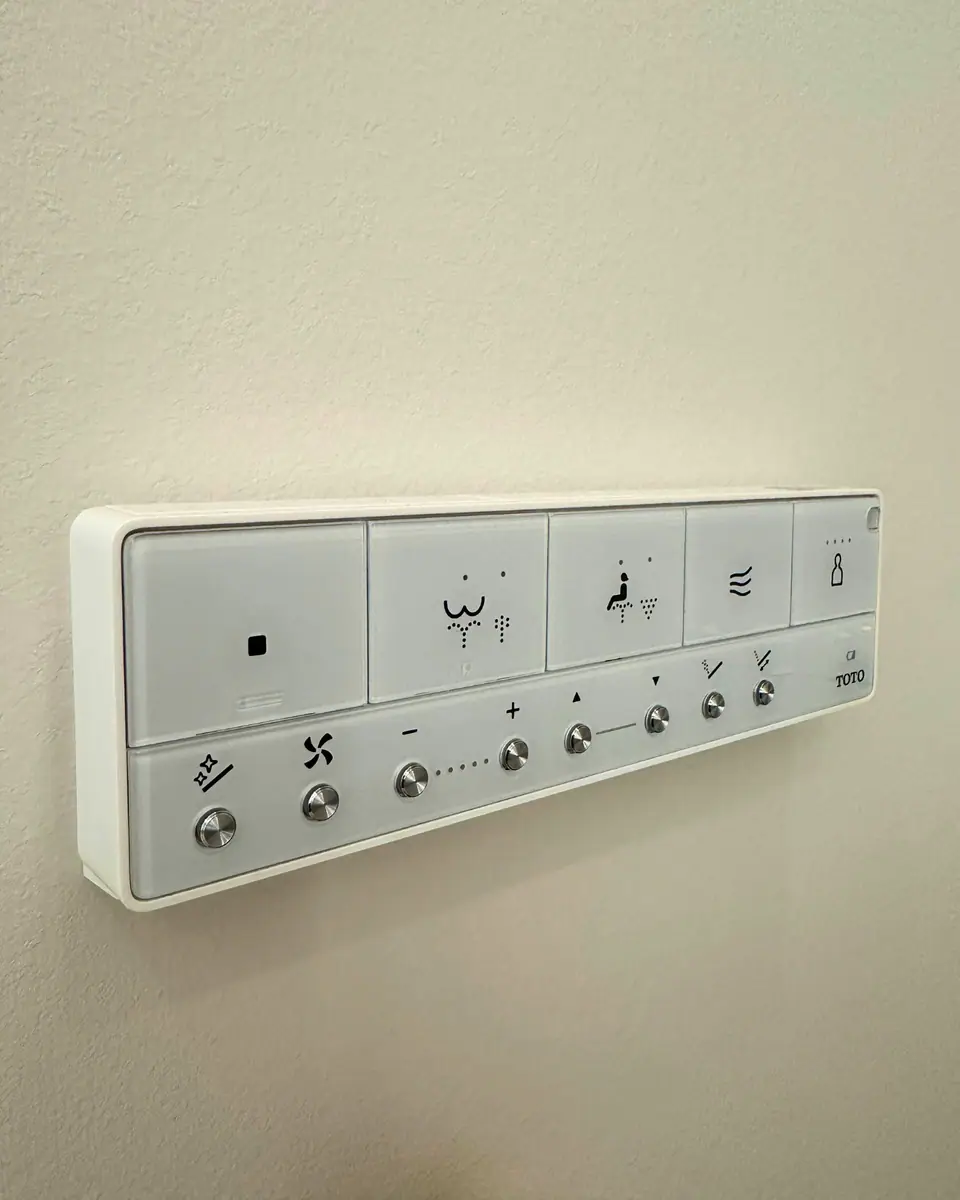
| Auto open and close | The lid lifts when you approach and closes when you leave | An option on some models, not all |
| Remote or side panel | Controls on a wall remote or the seat arm | A wall remote needs a spot planned near the toilet |
| Wand self-cleaning | Rinses the wand before and after use | The wand also retracts out of sight when idle |
Planning one into a bathroom renovation
The cheapest time to get a smart toilet right is before the walls close. Decide the model, or at least the seat shape and cord side, during design so the electrician can place the outlet and the plumber can set the supply height to the installation sheet. If you are not ready to buy, ask for the outlet anyway: a GFCI receptacle beside the toilet costs far less to rough in during a renovation than to add after the tile is finished.
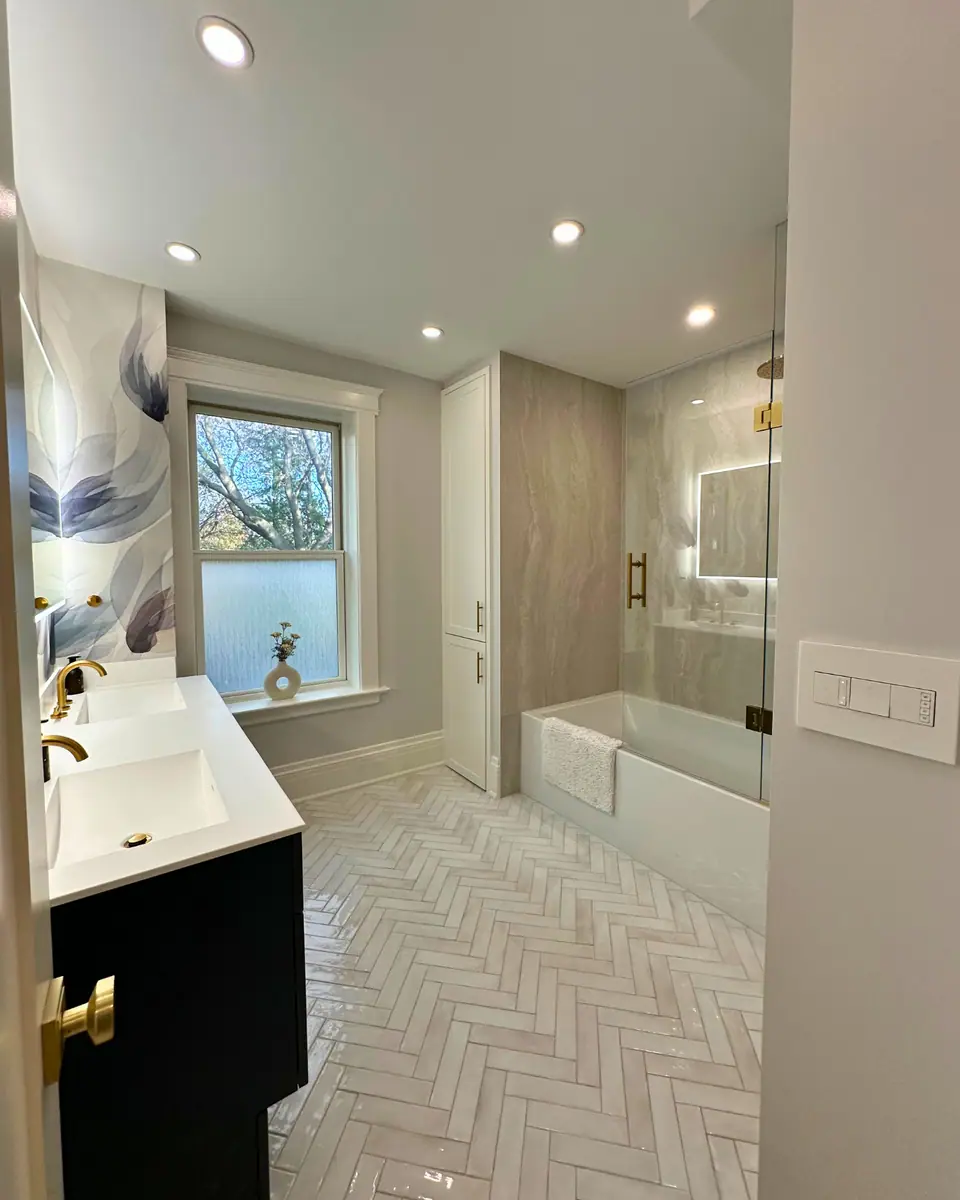
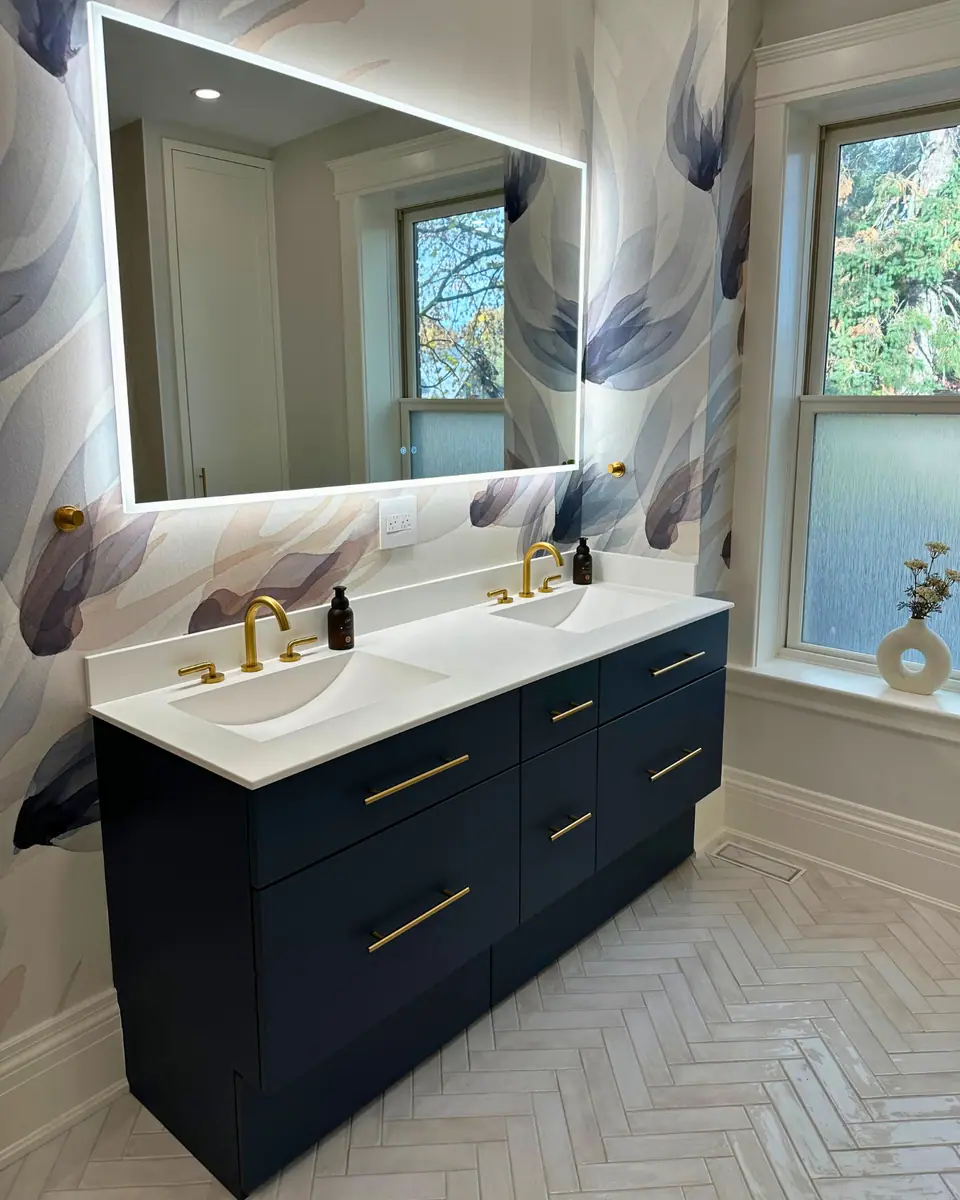
Smart toilets pair naturally with other powered comforts in the same room, such as heated bathroom floors and backlit mirrors. Planning their circuits together keeps the panel, the GFCI protection and the ESA notification in one package of work.
Questions
Will a bidet seat fit my existing toilet?
Most standard North American toilets accept one, as long as the seat matches the bowl. Round bowls measure 16.5 inches from the mounting holes to the front and elongated bowls 18.5 inches. Check the clearance between the holes and the tank on one-piece toilets with curved tanks.
Does a bidet seat need its own electrical circuit?
It needs a 120-volt receptacle with GFCI protection within reach of its cord, which is often an extension of an existing bathroom circuit. Whether that circuit has capacity is for the electrician to check. Any new receptacle in Ontario needs an ESA notification.
Does the bidet wash use hot water from the house?
No. The seat connects to the toilet's cold supply and warms the water inside the seat, either in a small tank or with an instantaneous heater. No hot-water line needs to be run to the toilet.
What happens to a smart toilet in a power outage?
A bidet seat on a standard gravity toilet loses its wash and heat, but the toilet still flushes normally. Integrated models vary, so read the manual for a manual or battery flush before you buy.
Sources and further reading
- TOTO USA: WASHLET installation requirements and seat sizes
- Electrical Safety Authority: Bulletin 26-29-6, electrical replacement and alterations in dwelling units
- Electrical Safety Authority: DIY electrical work and notifications
- Electrical Safety Authority: Recognized certification marks
- City of Markham Builder Tip 77: Water conservation for dwellings (2024 OBC)
Checked November 19, 2026. Codes, by-laws, prices and product specifications change; confirm with your municipality, condo corporation or supplier before you build.
Keep reading
Related guides