Bathroom plumbing
Thermostatic and pressure-balanced shower valves
Both valves stop a shower from suddenly running scalding or icy, and Ontario's Building Code requires one of them on every shower. A pressure-balanced valve watches the hot and cold supply pressures and rebalances the mix when someone flushes a toilet. A thermostatic valve senses the water temperature itself and holds the setting you chose, usually with a separate volume control. Either way, water leaving the shower head may not exceed 49°C.
What Ontario's 2024 Building Code asks for at a shower
The 2024 Ontario Building Code (O. Reg. 163/24), in force since January 1, 2025, moved the shower rules into Article 7.2.10.7, Water Temperature Control. As summarized in municipal training material on the 2024 changes, water supplied to shower heads or bathtubs must be controlled by an automatic compensating valve conforming to ASME A112.18.1/CSA B125.1 or ASSE 1016/ASME A112.1016/CSA B125.16. "Automatic compensating valve" is the umbrella term: pressure-balanced, thermostatic and combination valves all qualify when certified to those standards.
Rules change and their wording matters, so confirm the current text with your municipal building department before plumbing rough-in.
| Provision | What it says, in short |
|---|---|
| 7.2.10.7.(1) | Shower heads and bathtubs are fed through an automatic compensating valve to CSA B125.1 or B125.16 |
| 7.2.10.7.(2) | A bathtub-only supply may instead use a CSA B125.3 valve or an ASSE 1070/CSA B125.70 temperature-limiting device |
| 7.2.10.7.(3) | A single tempered water line controlled by a CSA B125.3 valve can serve in place of individual valves |
| 7.2.10.7.(4) | Hot water from a shower head or into a bathtub may not exceed 49°C |
| 7.2.10.7.(5) | Healthcare facilities and retirement homes: 43°C maximum, adjusted at the controls |
Why the limit is 49°C, and why the water heater cannot do the job alone
Scald time drops sharply as water gets hotter. Parachute, the Canadian injury prevention charity, says water at 60°C can cause a third-degree burn on a child's skin in one second, while at 49°C it takes about 10 minutes. Young children, older adults and people with conditions such as diabetes are at the highest risk.
Turning the tank down is not a complete answer. Parachute recommends 49°C at every tap, but also advises that electric water heaters should not be set below 60°C. So the tank stores water hotter than a person should stand under, and the shower valve is what brings it down to a safe, steady temperature at the head.
How a pressure-balanced valve keeps the temperature steady
Inside a pressure-balanced cartridge, a piston or diaphragm sits between the hot and cold inlets. When a toilet flush drops the cold pressure, it moves and throttles the hot side to keep the ratio, so the mix at the head barely changes. In the ASSE 1016 test summarized by InspectAPedia, a type P valve must hold the outlet within ±2°C (3.6°F) within one second when either supply pressure changes by up to 50 percent, and cut the flow to 0.5 US gallons a minute (about 1.9 L/min) or less if the cold supply fails.
What it does not do is correct for hotter incoming water. The same summary lists no compensation for a rise in hot supply temperature on a pressure-balanced valve, so if the water heater runs hotter, the shower does too. That is why the valve has a rotational limit stop, which caps how far the handle turns toward hot. It is set when the valve is installed and may need resetting later, for example after a new water heater goes in.
Most pressure-balanced valves use a single handle that turns on the water and sets the temperature in one motion. They suit a shower with one head, or a head and a hand shower switched through a diverter.
How a thermostatic valve holds the temperature you chose
A thermostatic valve has a temperature-sensitive element in the mixed-water path that expands or contracts and moves the mix until the outlet returns to its setting. In the ASSE 1016 test summary, a type T valve compensates for a 25°F (about 14°C) rise in hot supply temperature, rising at 5°F (about 3°C) a minute, and holds the outlet within ±2°C within five seconds, tested with supply pressure swings of up to 20 percent. A combination T/P valve adds the one-second pressure response.
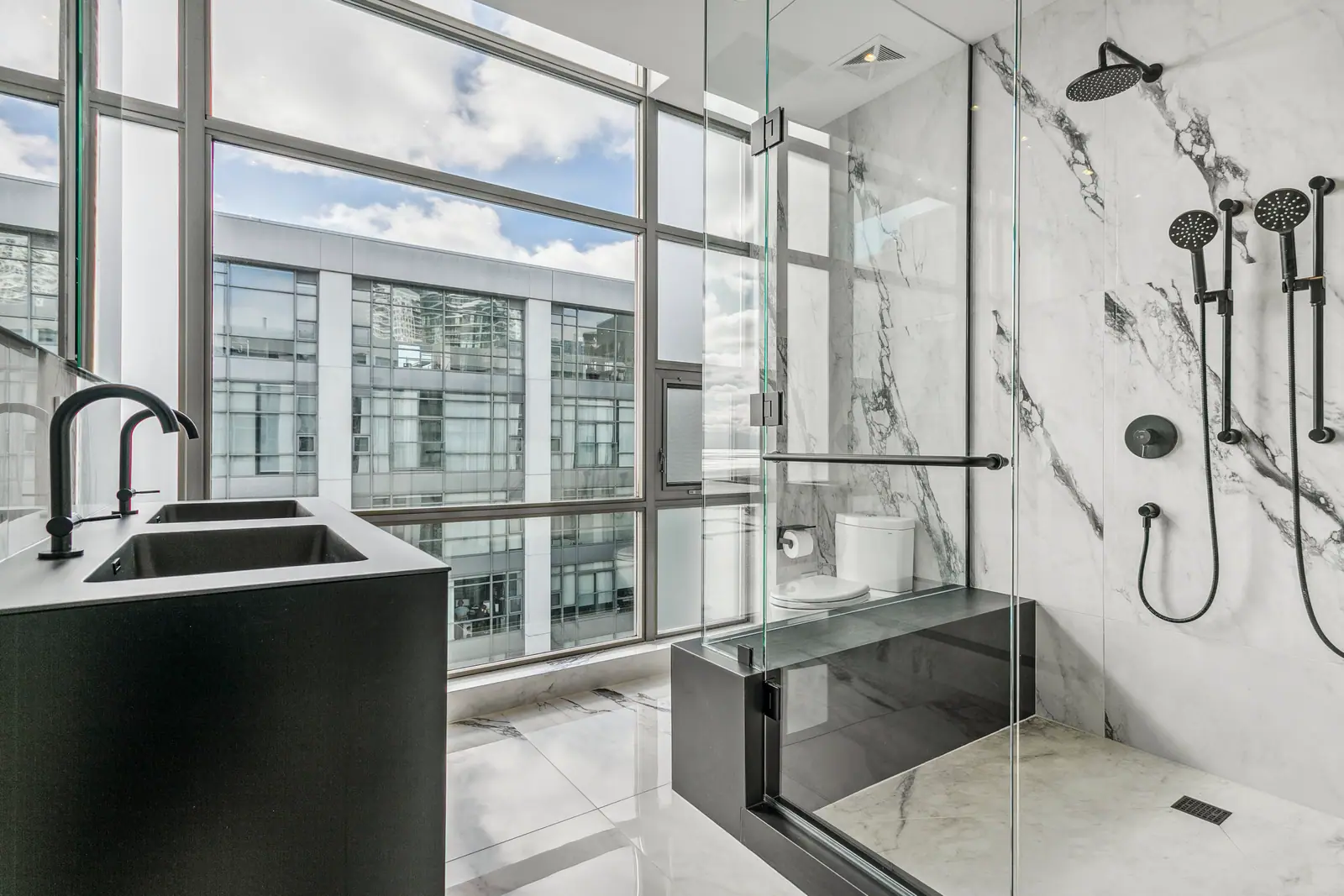
The everyday difference is control. Most thermostatic setups separate temperature from volume: you set the temperature once and leave it, then use a volume control or diverter to start the water and choose outlets. That arrangement suits showers with a rain head, a hand shower and body sprays, where several outlets may run at once; rain shower heads and hand showers covers how those outlets are combined.
Pressure-balanced and thermostatic valves side by side
Both types meet the Building Code when certified to the standards it names. The choice is about how many outlets you want, how precise you want the temperature, and budget.
| Detail | Pressure-balanced (type P) | Thermostatic (type T) |
|---|---|---|
| What it senses | Hot and cold supply pressure | Mixed water temperature |
| Toilet flush elsewhere | Rebalances within 1 second in the ASSE 1016 test | Corrects within 5 seconds; T/P versions within 1 second |
| Hotter water from the heater | No compensation; the limit stop caps the handle | Compensates and holds the setting |
| Usual controls | One handle for on, off and temperature | Temperature dial plus separate volume or diverter controls |
| Best fit | One head, or a head and hand shower on a diverter | Several outlets, rain heads, precise temperature |
| Cost | Usually lower | Usually higher, with more trim pieces |
Choosing and roughing in the valve
The valve body is buried in the wall at rough-in and the visible trim is added after tile, so the decision is made early and lasts as long as the tile. A trim fits the valve body it was designed for, usually from the same maker, so buy them as a matched set and keep the model numbers. Before the wall closes, the plumber sets the body's depth to the finished wall thickness, which depends on the backer board, waterproofing and tile you have chosen.
Older GTA houses often still have two-handle shower valves with no compensation at all. When the shower is rebuilt, the new valve has to meet the current code, so that is the moment to choose between the two types. Plan the control location with the layout: a valve near the shower entry lets you start the water without stepping into the cold spray. Plumbing upgrades during a bathroom renovation covers the supply lines that feed it.
Questions
Is a thermostatic valve worth it for a single shower head?
For one head, a certified pressure-balanced valve meets the code and keeps the temperature steady when toilets flush. A thermostatic valve adds precise, set-and-forget temperature and protection against a hotter water heater. Many homeowners choose it when they plan to add outlets later.
My new shower never gets hot enough. Is the valve faulty?
Often the rotational limit stop is set conservatively. A plumber can adjust it, but the outlet still has to stay at or below 49°C. If the stop is correct, check the water heater's setting and the hot supply to the valve.
Do bathtubs need a compensating valve too?
Under the 2024 Ontario Building Code, water supplied to bathtubs is covered as well, capped at 49°C. Where hot water serves only a bathtub, a CSA B125.3 valve or an ASSE 1070 temperature-limiting device is permitted instead.
What happens if the cold water supply fails mid-shower?
A valve certified to ASSE 1016/CSA B125.16 must cut the flow to 0.5 US gallons a minute or less, so you get a trickle rather than a burst of hot water. That test applies to pressure-balanced, thermostatic and combination types.
Sources and further reading
- Ontario Building Code, O. Reg. 163/24
- Township of Leeds and the Thousand Islands: 2024 Building Code changes, Division B Part 7 plumbing
- Parachute: Hot tap water scald prevention
- InspectAPedia: Anti-scald mixing valve types and ASSE standards
Checked November 19, 2026. Codes, by-laws, prices and product specifications change; confirm with your municipality, condo corporation or supplier before you build.
Keep reading
Related guides