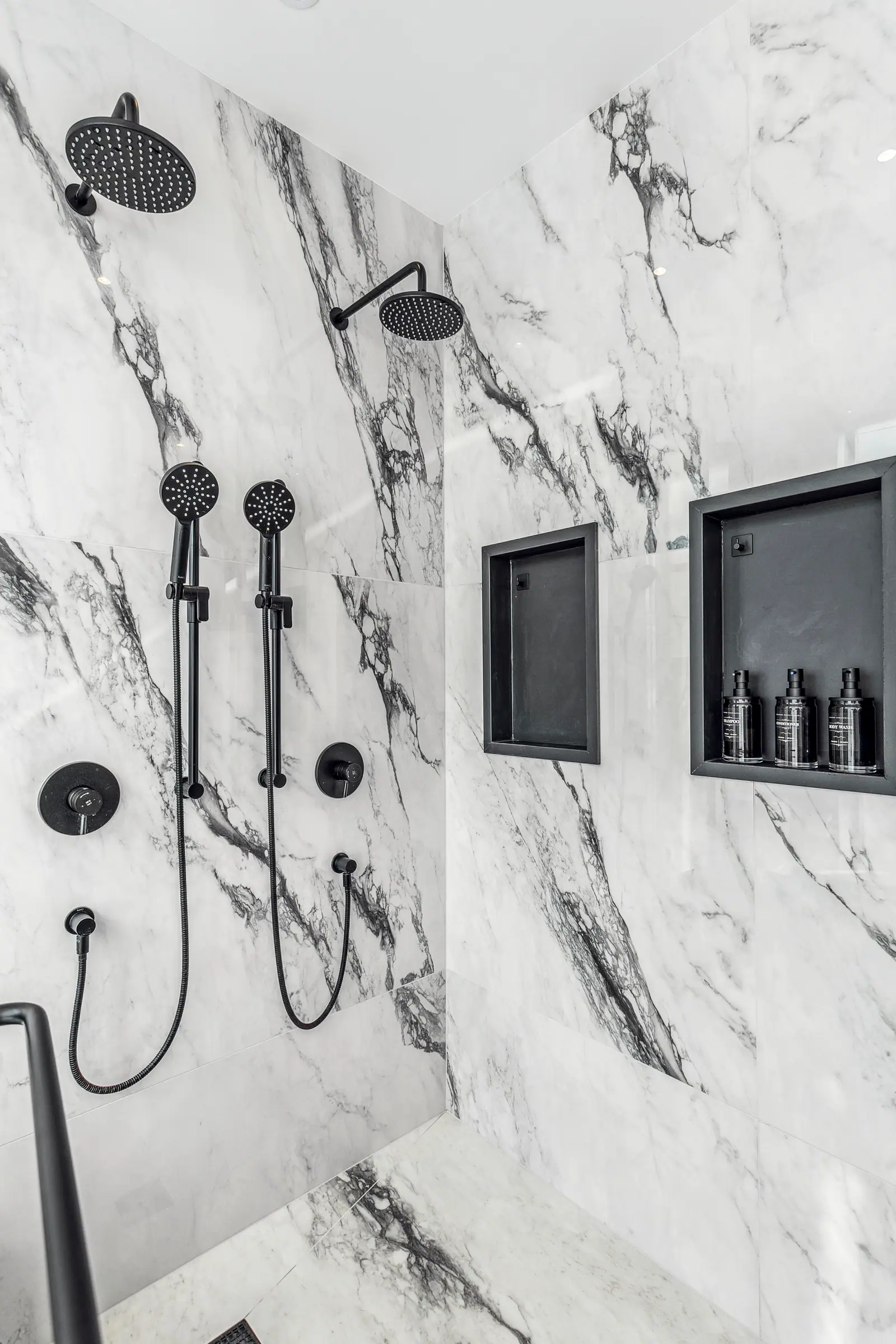
Bathroom materials
Marble bathrooms: what to know before you choose marble
Marble works in a bathroom if you accept that it will change with use. It is calcium carbonate, so acids such as vinegar, citrus and some cleaners etch dull marks into it, and sealing slows stains but does not stop etching. Choose a honed finish for floors and shower floors, where polished marble is slippery when wet and shows etching most, keep polish for walls and vanity tops if you love the shine, and clean with pH-neutral stone cleaners.
Etching and staining are two different problems
Most marble disappointment comes from confusing the two. A stain is something absorbed into the stone, such as oil, coloured soap or hair dye, and it darkens or tints the surface. An etch is a chemical burn: the Natural Stone Institute explains that marble, limestone and onyx are calcareous, made of calcium carbonate, so acids react with the surface and leave a dull, rough spot that no amount of wiping removes.
Sealers help with the first problem and not the second. The Natural Stone Institute says sealers slow absorption but do not make stone stain-proof, and Fine Homebuilding notes that penetrating sealers leave the surface itself unprotected, so acid etches sealed marble just as readily as unsealed. In a bathroom, the usual culprits are vinegar-based or descaling cleaners: Daltile's care guide warns that even a light solution of vinegar and water will etch many natural stones.
Honed or polished: where each finish belongs
Finish is the decision that most affects how marble lives in a bathroom. Polished marble has a mirror shine that deepens the colour and veining; honed marble is ground to a smooth matte surface. The Natural Stone Institute notes that polished marble shows etching, while a honed surface makes it less noticeable, because an etch on honed stone is dull on dull.
Wet floors are the other reason. Daltile, a major tile and stone supplier, does not recommend polished surfaces anywhere they may be exposed to water. ANSI A137.1, the ceramic tile standard, asks for a wet dynamic coefficient of friction (DCOF) of 0.42 or more on level interior floors expected to be walked on wet; natural stone is outside that standard, but the same ANSI A326.3 test can be run on a sample, so ask your supplier for a wet result on the exact finish.
| Location | Suggested finish | Why |
|---|---|---|
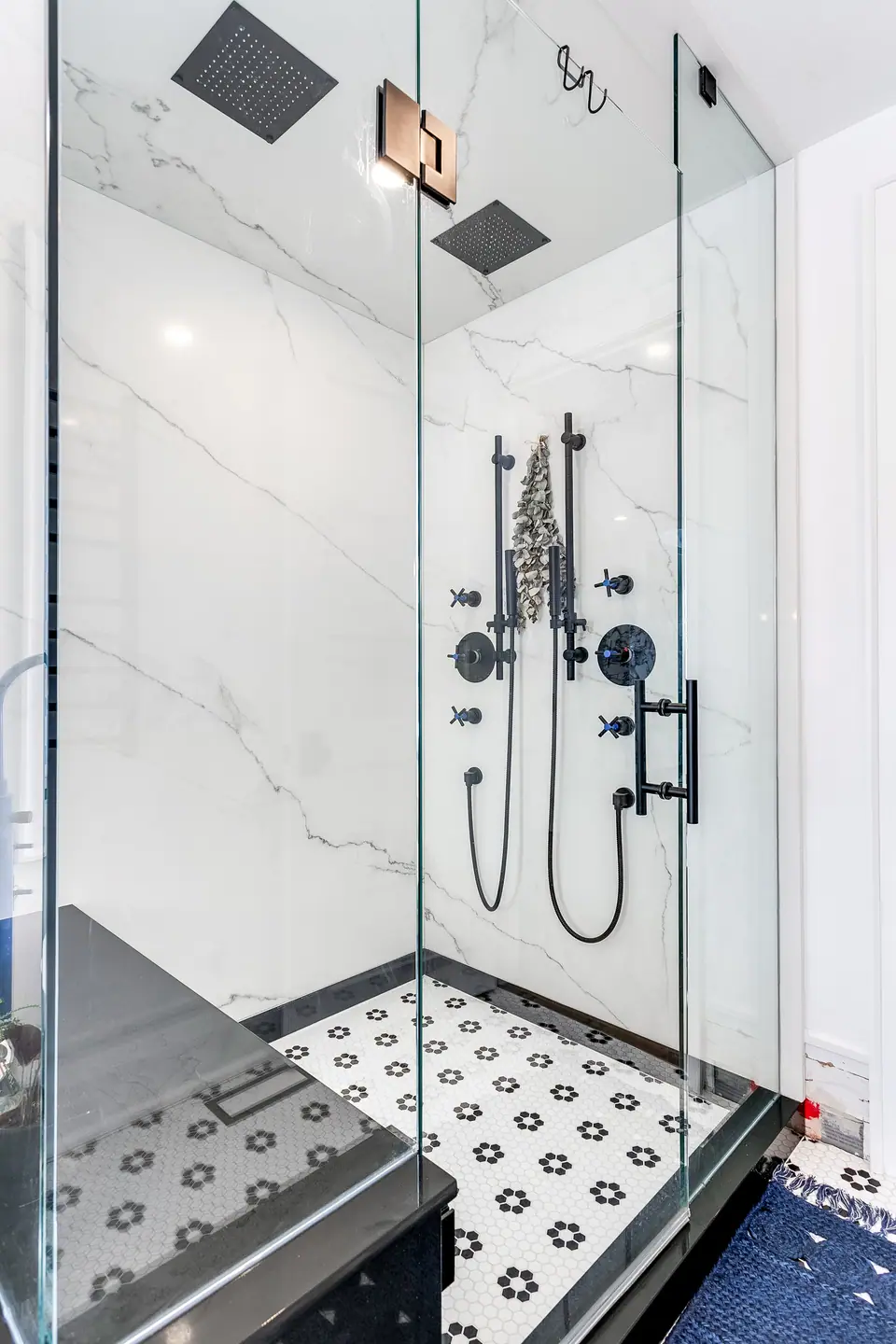
| Shower floor | Honed, in small tiles or mosaic | Grip when wet; small tiles follow the slope and add grout lines for traction |
| Bathroom floor | Honed | Less slippery after a shower; etching shows less |
| Shower walls | Honed or polished | Not walked on; polish shows etching more |
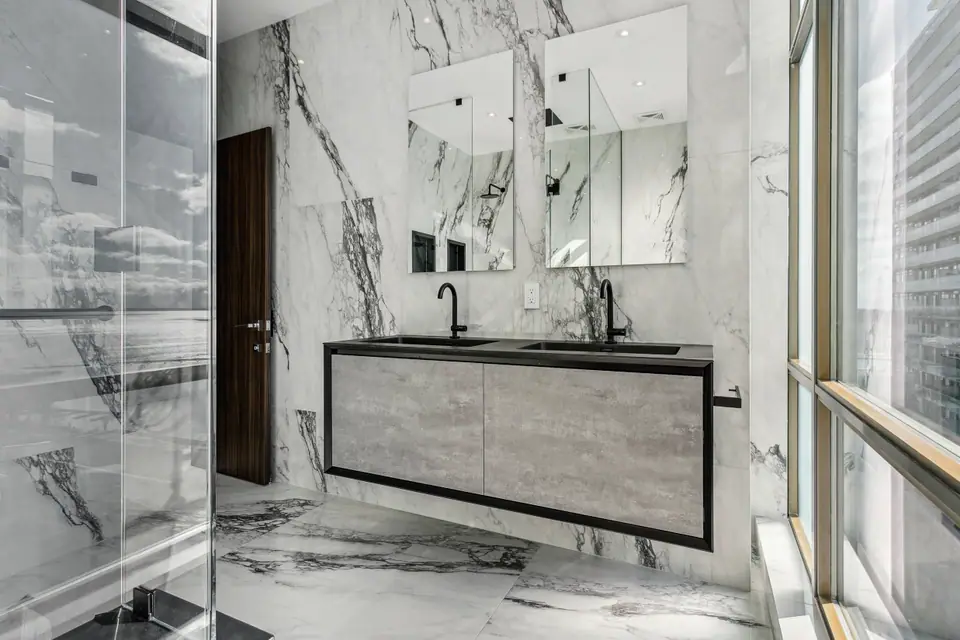
| Vanity top | Polished or honed | Toiletries and cleaners land here; honed hides etching better |
| Tub surround and deck | Either | Wipe up bath products promptly either way |
Sealing marble, and how to tell when it needs it
Seal marble with a penetrating, or impregnating, sealer, which soaks in and leaves the natural look. Daltile strongly recommends sealing new marble and resealing every couple of years, following the sealer maker's directions; the Natural Stone Institute says intervals range from yearly to every ten years or more depending on the stone and the product. Stone enhancers that darken and enrich the colour also darken the grout lines next to them, so test on a spare tile.
A simple water test tells you when it is time. Put a few drops of water on the stone and wait: Fine Homebuilding suggests 15 minutes. If the spot has darkened when you wipe it off, the stone is absorbing and needs sealing. Test the busiest spots, such as the shower floor and the edge of the vanity, rather than a corner nobody uses.
Installing marble in a wet room
Marble asks for a few decisions before the first tile is set, because some setting materials and grouts can mark it permanently.
- White setting materials for light marble. MAPEI warns that light-coloured marble can be stained by epoxy setting materials and names white mortars for setting it.
- Grout that will not mark the stone. The same maker cautions that marble can be scratched, stained or dulled by pigmented, sanded or epoxy grouts, says white grout generally suits white or light marble, and excludes one of its epoxy grouts from white or translucent marble entirely. Test on a spare piece; grout types compares the options.
- Waterproofing behind it. Marble is not a waterproof layer; it goes over a membrane like any shower tile. See shower waterproofing systems.
- Slab or tile on the floor. A slab or large tiles on a shower floor need a single-plane slope to a linear drain; mosaics follow a centre drain's four-way slope.
Daily care that keeps marble looking right
Marble care is mostly about what you leave on it and what you clean it with. Use a pH-neutral stone cleaner, never an acid or bleach product, and limit how long liquids sit on the surface. Squeegee or towel the shower after use; the Natural Stone Institute notes that this limits soap scum, which can then be removed with a non-acidic soap scum remover, while warning that frequent ammonia can dull some stones. Never use a rust remover on stone, since some contain hydrofluoric acid.
When etching builds up, it can be corrected. Refinishing by a stone professional can restore marble's lustre, and the Natural Stone Institute notes that honed surfaces need refinishing less often than polished ones. Store bath products on a tray rather than straight on a marble vanity top.
Real marble, or a marble look
If you love the veining but not the upkeep, marble-look porcelain gives the pattern without the calcium carbonate, so vinegar and descalers do not etch it. Large porcelain panels can also cover a shower wall with few grout lines; see large-format porcelain tile in bathrooms. You can also mix the two: real marble on a vanity top where they will see it up close, porcelain on the shower floor.
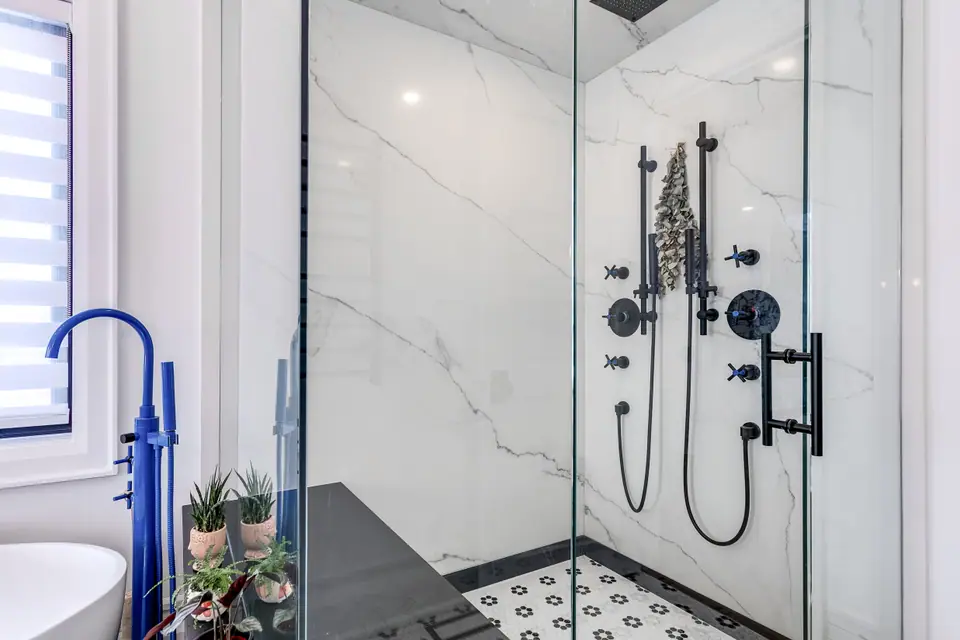
To see stone surfaces in finished rooms, watch the Marble ensuite full bathroom tour on the renovation videos page, and look at the herringbone bathroom renovation in High Park, which pairs a polished herringbone floor and slab surfaces with brushed gold fixtures, a navy double vanity and a backlit mirror. For marble in a kitchen, see marble countertops in a working kitchen.
Questions
Will a marble shower floor be slippery?
Polished marble is slippery when wet, which is why a honed finish is the usual choice for a shower floor. Small tiles or mosaics add grout lines that help grip. Ask for a wet DCOF result on the exact tile and finish.
Can etch marks be removed from marble?
Light etching can often be polished or honed out by a stone refinisher, and a honed surface hides minor etching to begin with. Sealing does not prevent etching, so the fix is changing cleaners and wiping up acids promptly.
How often should a marble vanity top be sealed?
Follow the sealer maker's directions, and use the water test: if a few drops darken the stone within about 15 minutes, reseal. Test the vanity top more often than the walls, since it sees the most products.
Should the grout be white with white marble?
Usually, yes. Grout makers say white grout generally suits white or light marble, and some pigmented, sanded or epoxy grouts can stain or scratch it. Test the grout on a spare tile before committing.
Sources and further reading
- Natural Stone Institute via BNP Media: Natural stone fact vs myth
- Daltile: How to care for and maintain natural stone
- Daltile: DCOF and slip resistance
- Fine Homebuilding: What's the difference between stone sealers
- MAPEI Canada: Kerapoxy CQ technical data sheet (marble cautions)
Checked November 19, 2026. Codes, by-laws, prices and product specifications change; confirm with your municipality, condo corporation or supplier before you build.
Keep reading
Related guides