Bathroom fixtures
Wall-hung toilets with in-wall carriers
A wall-hung toilet is a bowl bolted to a steel carrier frame hidden in the wall, with the tank concealed in the same frame and a flush plate on the wall that doubles as the service opening. Most carriers are built for a 2x6 wall, about 5-1/2 inches of stud depth. One widely used carrier is rated to 880 lb (400 kg) and lets you set the bowl rim anywhere from 15 to 19 inches before the wall is closed.
How the carrier, tank and bowl work together
The carrier is a powder-coated steel frame that stands on the floor and fastens to the framing on either side. It holds an in-wall plastic tank, the drain elbow, the water connection and two threaded studs that pass through the finished wall. The bowl slides onto those studs and is bolted tight, so the frame carries the weight, not the drywall or the drain pipe.
That is also how a wall-hung toilet meets Ontario's Building Code. Article 7.3.4.1 requires wall-mounted fixtures to be supported so that no strain is transmitted to the piping, and every wall-mounted water closet bowl to be securely attached and stable.
- Frame: carries the load and sets the bowl height.
- Concealed tank: insulated against condensation, with an anti-siphon fill valve.
- Drain elbow: commonly a 3-inch DWV connection, discharging down through the floor or, with optional fittings, sideways in the wall.
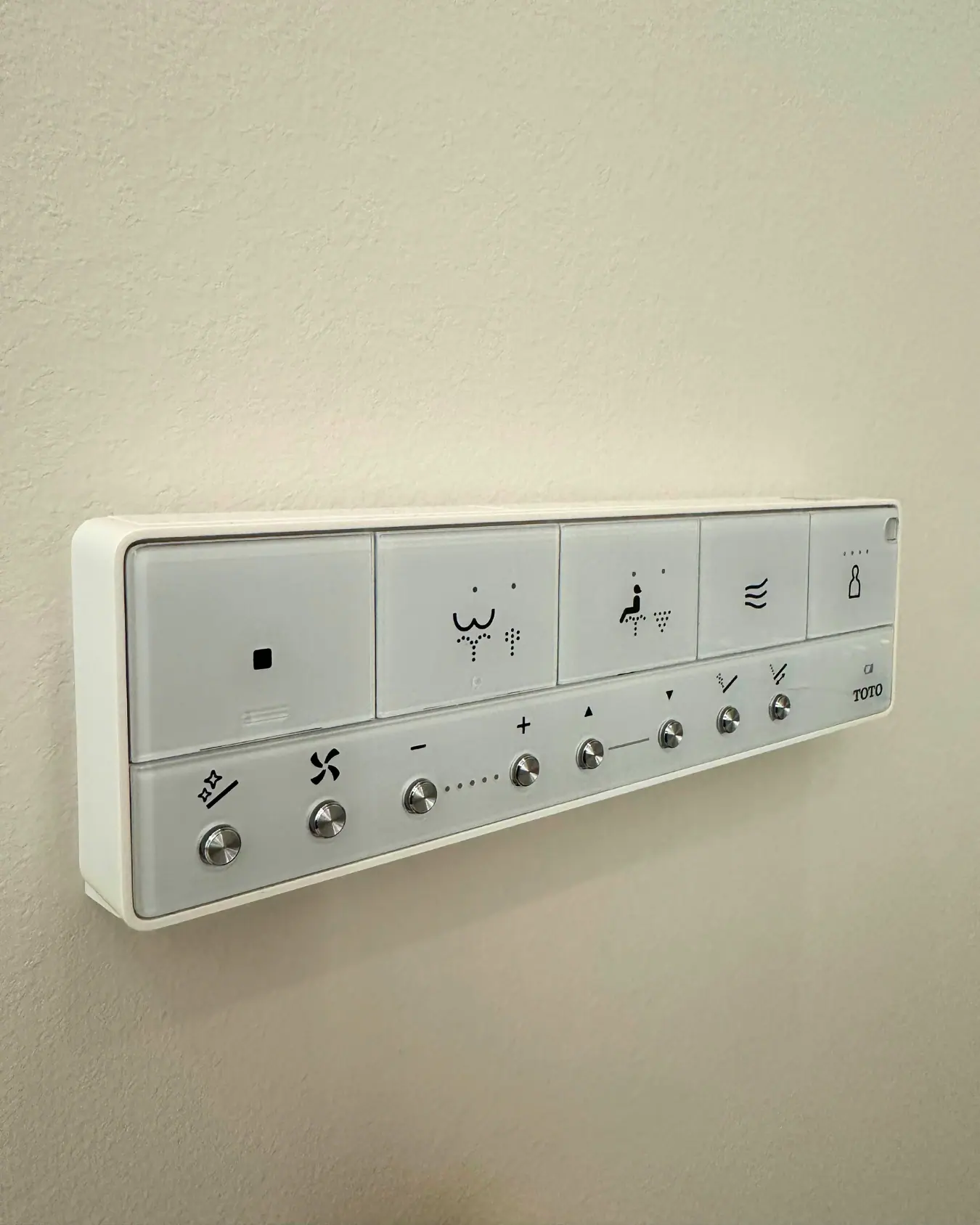
- Flush plate: the button panel on the wall, removable for service.
- Bowl: a two-hole wall-hung model the carrier maker lists as compatible.
Why a 2x6 wall is the default
Specifications differ by maker, so the figures below come from one widely used system's published installation documents. Use them to see what a carrier asks of a wall, then plan from the manual for the exact model you buy.
Slimmer versions for 2x4 framing exist, with a thinner tank of about 3-1/8 inches (80 mm), for walls that cannot be made deeper. In an existing bathroom the other options are to fur out the wall, or to build a half-height ledge wall in front of it, which hides the carrier and leaves a handy shelf above the tank.
| Requirement | Specification | Why it matters |
|---|---|---|
| Wall depth | At least 5-1/2 in. (2x6) for the standard tank | The tank and frame fit inside the stud cavity |
| Framing at the carrier | Members 19-3/4 in. (500 mm) apart | The frame fixes to the framing on each side |
| Finished wall build-up | Up to 3 in. on the 2x6 model, 3-1/2 in. on the 2x4 model | Backer, membrane and tile together must stay within it |
| Frame rating | 880 lb (400 kg) without damage to wall or carrier | Carries the bowl and the user with a wide margin |
| Bowl rim height | Adjustable from 15 to 19 in. (381 to 483 mm) | Set during installation, fixed once the wall closes |
| Water supply | 1/2-inch copper to the tank | Roughed in with the frame, before drywall |
Set the bowl height before the wall closes
Height is the carrier's main advantage over a floor-mounted toilet: you choose it. In one maker's 2x6 system the finished rim height equals the carrier setting plus 3 inches, anywhere from 15 to 19 inches.
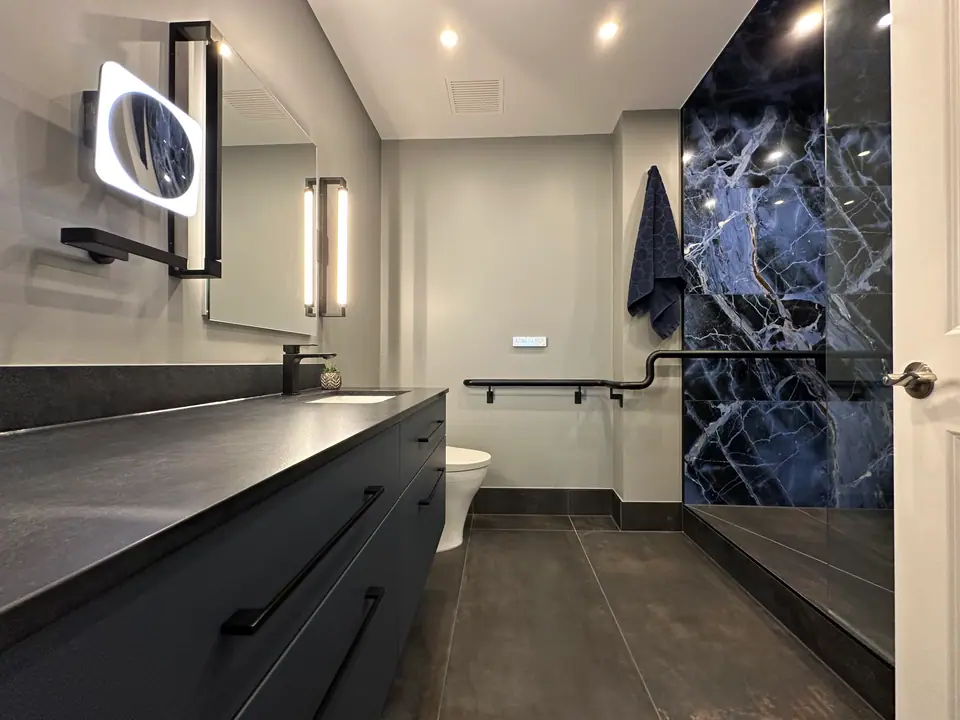
Choose for the people who use the bathroom most. Taller adults and anyone with knee or hip trouble usually prefer the upper end; US accessibility guidelines put an accessible toilet seat at 17 to 19 inches above the floor. A family bathroom used by young children can sit lower. If the room is meant to serve someone ageing in place, see accessible bathroom renovation and add blocking for grab bars at the same time.
Once tile is on, changing the height means opening the wall. Mock it up at framing: tape the planned rim height on the studs and sit on a chair set to that height.
The flush plate is the access panel
People worry about a tank sealed inside a tiled wall. In practice the flush plate comes off to expose an opening into the tank, and the parts that wear, the fill valve and the flush valve, are designed to be reached and replaced through it without touching the tile. Never tile over, shrink or box in that opening.
Plates and tanks are matched within a brand and often within one tank series, so a plate made for one maker's tank will not fit another's. Choose a carrier from a maker with a long track record and parts sold in Canada, and record the model numbers of the carrier, tank, plate and bowl.
Warranty terms show what makers expect to last. One major brand offers a limited lifetime warranty on the tank and carrier, ten years on the fill and flush valves, and one year on the flush plate. Register yours at installation, when the paperwork is in hand.
Ontario flush volume rules for in-wall tanks
Ontario's Building Code limits toilets in residential buildings to 4.8 litres per flush (Table 7.6.1.6.-B). Dual-flush toilets that offer both a flush of 4.1 litres or less and a 6.0-litre flush are deemed to comply. In-wall tanks are sold in matching versions, commonly 4.8/3.0 litres or 6.0/3.0 litres, and the bowl has to be rated for the same flush volume as the tank. For more on water use, see low-flow toilets and water efficiency in Ontario.
Where wall-hung toilets fit best, and where they get hard
They suit some rooms far better than others. The pros and cons against a standard toilet are covered in wall-hung vs floor-mounted toilets.
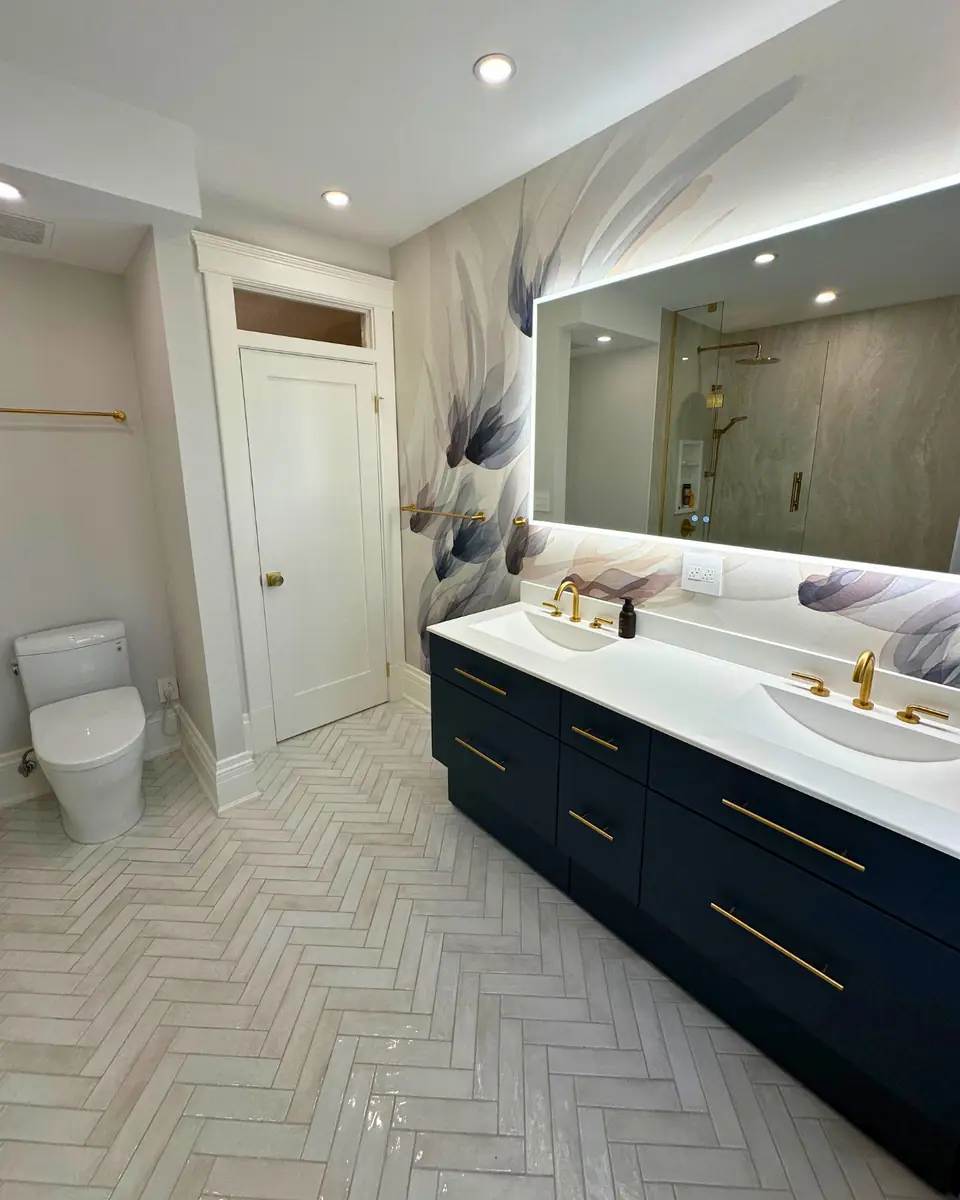
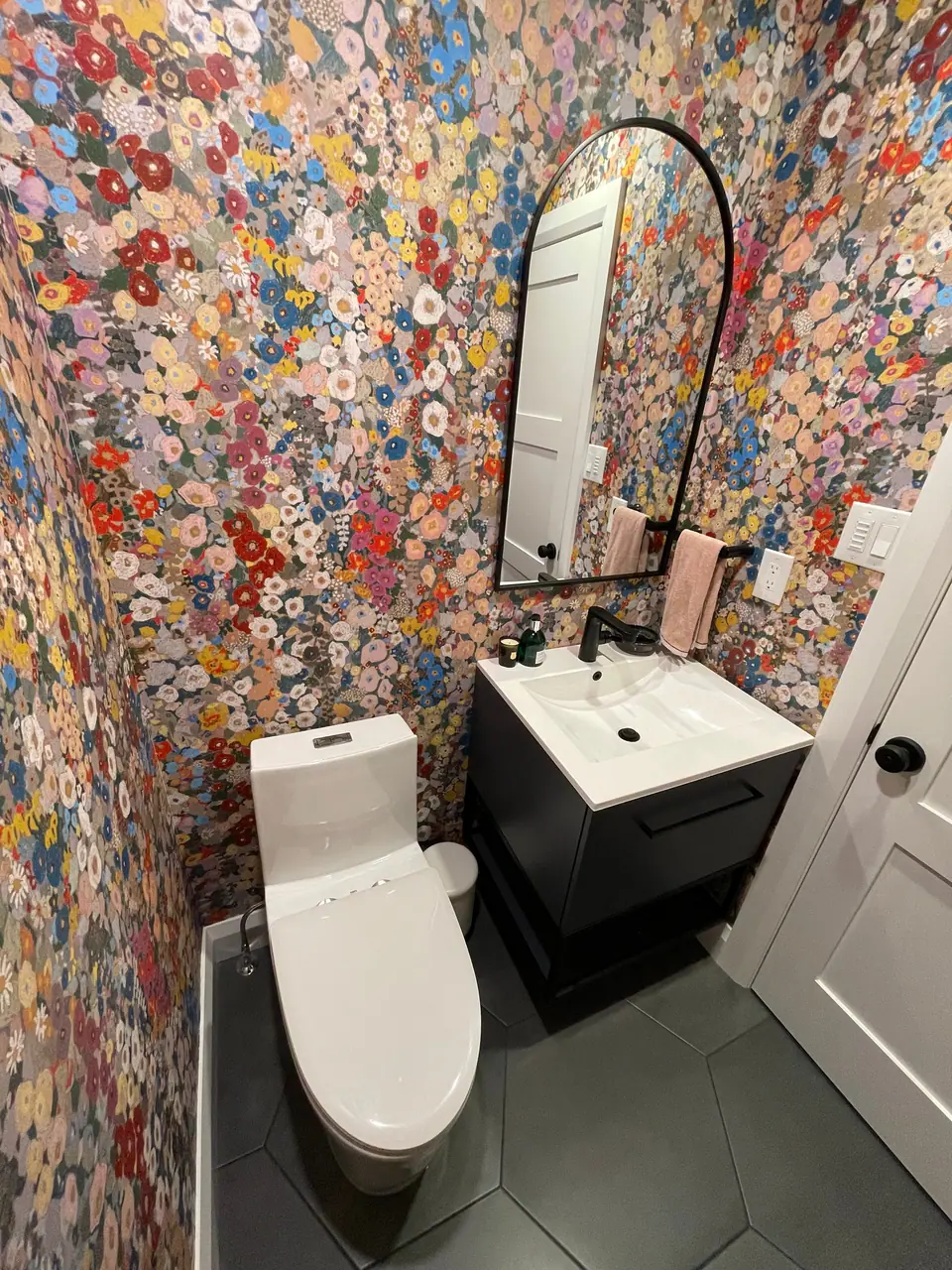
- Small bathrooms and powder rooms: with the tank in the wall, the toilet projects less into the room, and open floor beneath it makes the space feel bigger. See powder room renovation.
- Cleaning: the floor runs unbroken to the wall, with no toilet base to scrub around.
- With a floating vanity: a wall-hung toilet and a floating vanity share one clean line along the wall.
- Older houses: the wall usually has to be rebuilt or furred out, and the drain has to meet the carrier's elbow, which can mean reworking the connection to the stack.
- Condos: the toilet drain is set in the concrete slab, and moving it means coring, which the condominium corporation controls. Carriers fit most easily where the existing drain is already close to the wall; condo bathroom renovation in Toronto covers the approvals.
Questions
How much weight can a wall-hung toilet hold?
The carrier takes the load, not the wall. One widely used carrier is rated to 880 lb (400 kg) without damage to the wall or the frame, far above any person's weight, provided it is anchored to the floor and framing as its manual specifies.
Can a wall-hung toilet go in a 2x4 wall?
Yes, with a slim carrier and thinner tank made for 2x4 framing, although the drain routing is tighter. Otherwise the wall is rebuilt in 2x6, furred out, or fronted with a half-height ledge wall.
What happens if something inside the wall breaks?
The parts that wear, the fill valve and the flush valve, are reached through the flush-plate opening without removing tile. The steel frame and the tank shell have no moving parts, which is why makers warranty them for so long.
Do wall-hung toilets need a special bowl?
Yes. It must be a two-hole wall-hung bowl that the carrier maker lists as compatible and that is rated for the tank's flush volume. Compatibility lists usually include bowls from many brands, so the choice of shapes is wide.
Sources and further reading
- Ontario 2024 Building Code Compendium, Part 7 Plumbing (Articles 7.3.4.1 and 7.6.1.6)
- Geberit installation system specification sheet, 2x4 installations (GNA7225)
- Geberit Duofix installation manual, 2x6 carrier with Sigma concealed tank
- JLC: Back to the wall, Geberit in-wall carrier system
Checked November 19, 2026. Codes, by-laws, prices and product specifications change; confirm with your municipality, condo corporation or supplier before you build.
Keep reading
Related guides