Kitchen countertops
Quartz countertops for kitchens
A quartz countertop is engineered stone: roughly 90 to 93 per cent crushed quartz by weight, bound with polyester resin and pigments and pressed into slabs under vacuum. It is non-porous, needs no sealing and resists everyday stains, but its resin makes it heat resistant rather than heatproof, so hot pans belong on a trivet. Standard slabs are about 10 feet long, which decides where seams land on long runs. Its high crystalline silica content is a serious hazard for the people who cut it, not for the people who cook on it.
What a quartz slab is made of
Quartz surfacing is a manufactured product, not a quarried slab. Crushed quartz is mixed with an unsaturated polyester resin, a catalyst and pigments, then compacted by vibration under vacuum and cured. The process squeezes out air, which is why the finished slab has virtually no porosity and the same properties in every direction.
Because the pattern is designed rather than found, colour is consistent from slab to slab within a batch, and veined designs can be ordered to imitate marble. Slabs are made in 12, 20 and 30 mm thicknesses, and the most common format is about 3040 by 1440 mm, roughly 120 by 57 inches. Some lines also come in larger jumbo slabs.
| Ingredient | Share | What it does |
|---|---|---|
| Crushed quartz grit and powder | About 90 to 93% | Hardness, scratch resistance, body of the slab |
| Polyester resin | About 7 to 10% | Binds the stone; sets the heat and UV limits |
| Pigments, catalyst and accelerator | Small amounts | Colour and curing |
How quartz handles heat, stains and knives
Quartz takes stains, spills and daily wiping better than most natural stone, because liquids cannot soak in. The limits all trace back to the resin. Engineered quartz is unaffected by heat below about 150°C (300°F), but a pan straight off a burner or out of the oven can be far hotter, and sudden temperature change can damage the slab. One major quartz maker's care manual recommends a trivet to prevent burning and says not to let a naked flame touch the surface.
The same manual says not to cut directly on quartz, to avoid hard knocks on exposed edges, which can chip, and notes that dark colours show scratches, fingerprints and limescale more readily than light ones. The polyester resin is also not fully UV stable, which is why standard quartz is not recommended for outdoor kitchens.
Cleaners that are safe on quartz, and the few to avoid
Daily care is warm water, a little mild dish soap and a soft cloth, then a dry wipe so minerals do not leave a film. A manufacturer care guide for the Canadian market also allows a 50/50 mix of vinegar and water, rinsed and dried afterwards, and a non-abrasive cream cleanser for marks.
- Avoid hydrofluoric acid and any product that contains it; check the label of heavy-duty rust removers
- Avoid oil soaps and oil-based polishes: they leave a film that makes the surface more prone to staining
- Do not machine-polish quartz; the factory finish needs no wax or sealer
- Metal marks from pots can be spot-cleaned with a mild abrasive cleanser on a damp cloth, gently, then rinsed
- Honed, concrete-look and textured finishes show fingerprints and metal marks more than polished quartz and need more frequent cleaning
Slab size decides where seams land
A slab about 120 inches long means a straight run longer than roughly 10 feet, or an L-shaped counter, will usually have at least one seam unless a jumbo slab is used. A well-made seam is tight, filled with colour-matched adhesive and laid out before cutting. Ask to see the seam layout on the shop drawing, and on veined quartz ask how the pattern will flow across it.
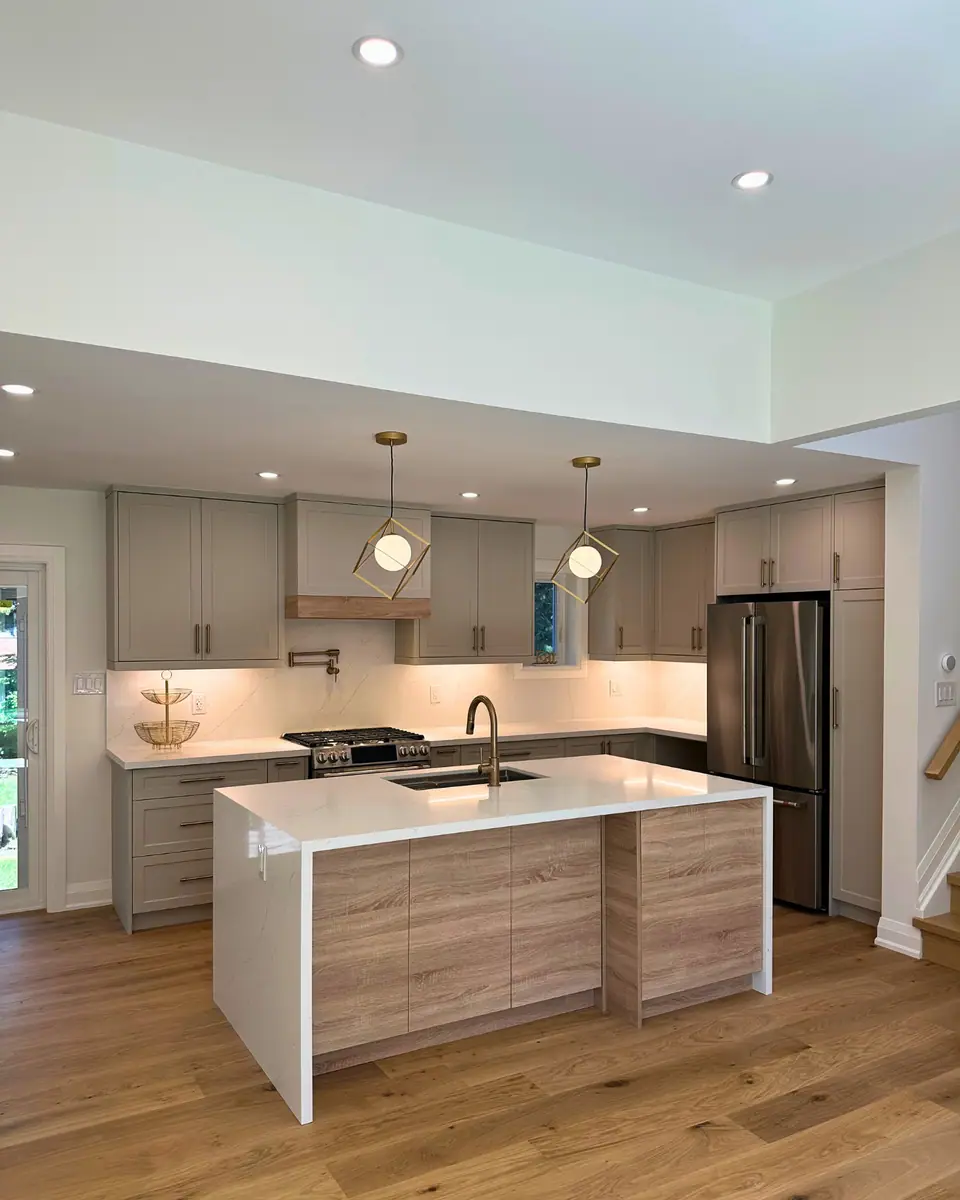
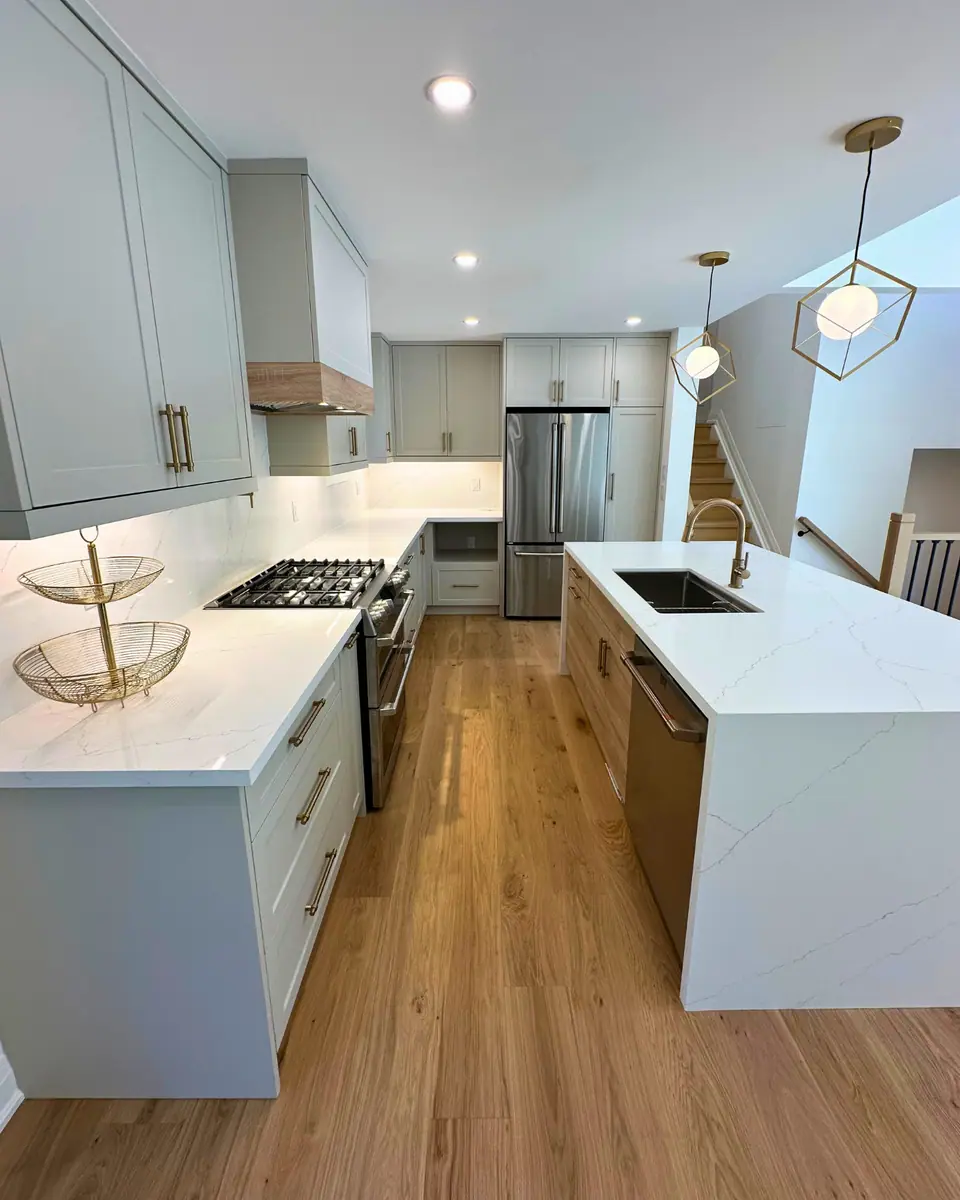
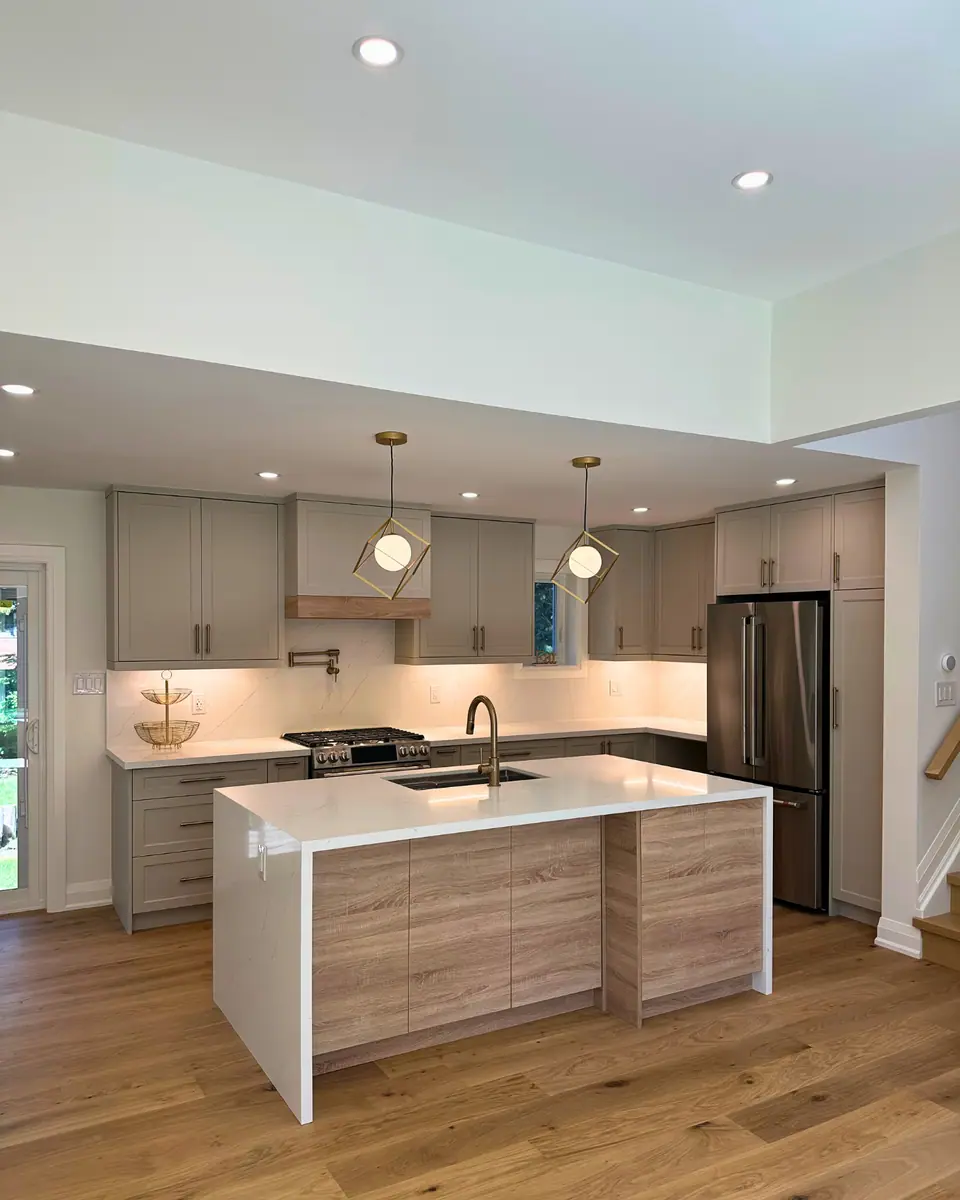
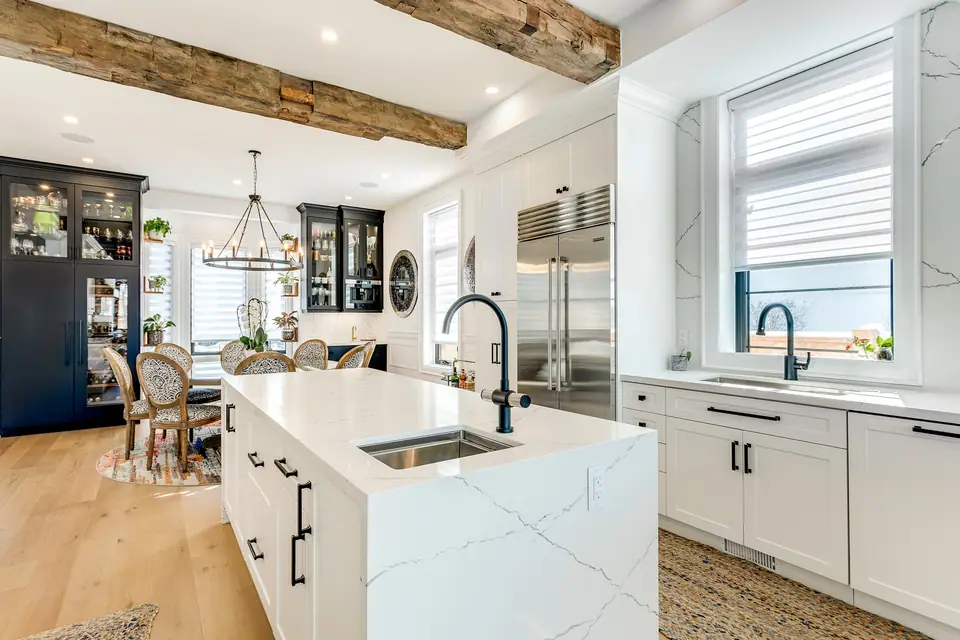
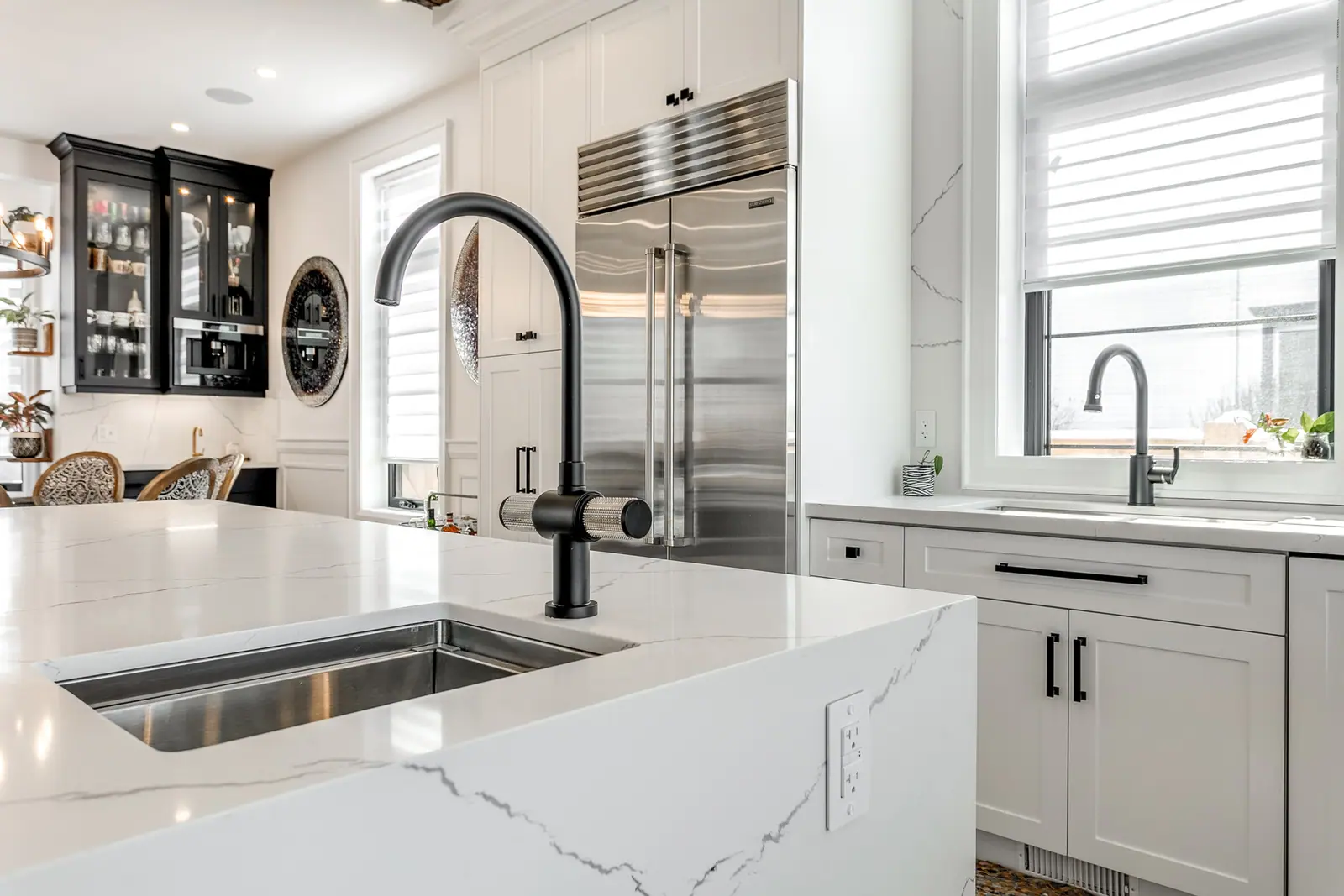
Seams matter most on islands and full-height backsplashes, where the eye travels along one surface. A waterfall island wraps the pattern down the side, and a full-height slab backsplash needs its own slab layout, so both can raise the slab count. Thickness, overhangs and edge shapes are on countertop thickness and overhangs and countertop edge profiles.
Silica dust: why quartz is regulated for the people who cut it
Cutting, grinding and polishing quartz makes fine dust containing respirable crystalline silica, which can cause silicosis, an incurable lung disease. A joint OSHA and NIOSH hazard alert lists engineered stone at up to 95 per cent crystalline silica, compared with 10 to 50 per cent for granite and under 5 per cent for marble. Australia banned engineered stone from 1 July 2024.
In Ontario, silica is a designated substance. A provincial alert on countertop manufacturing and installing tells employers to assess exposure and use controls such as local exhaust ventilation, wet methods, HEPA-filtered vacuuming and respirators, and the construction projects regulation requires respiratory protection for workers installing or altering stone countertops where ventilation cannot control the dust. The Workers Health & Safety Centre notes Ontario's exposure limit is 0.1 mg/m3 for quartz.
Manufacturers are responding. Caesarstone launched a crystalline-silica-free line in Canada in June 2025 and says it plans to move its whole range to crystalline-silica-free surfaces by the end of 2026. For you, the practical points are simple: slabs should be cut and finished in a controlled shop, any on-site adjustment should be done with water or dust extraction, and you should stay out of the room while it happens. A finished countertop in normal use is not what the alerts are about.
Where quartz has earned its place in GTA kitchens
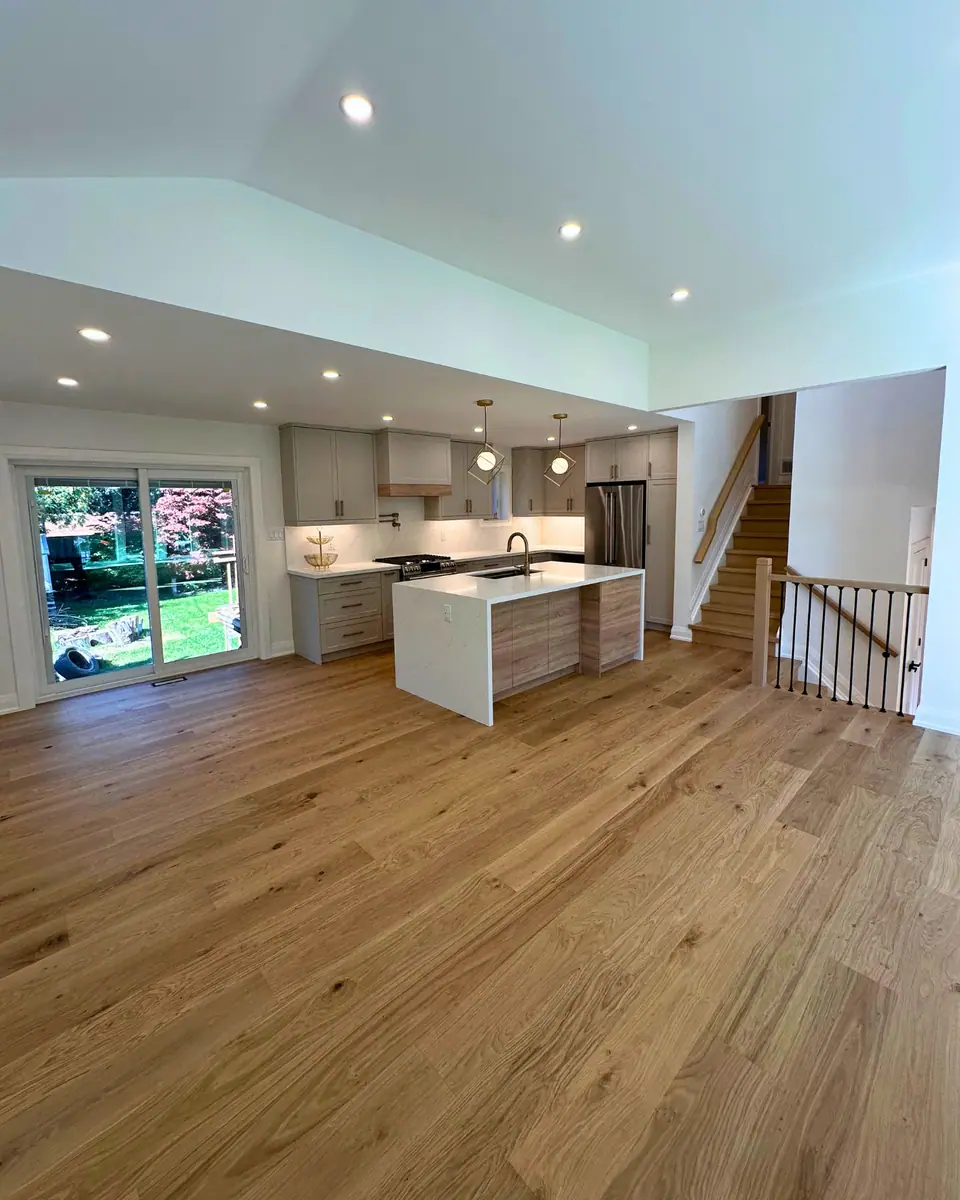
Quartz is the default for many busy kitchens because it pairs a stone look with low upkeep. In an Old Milton Victorian-Gothic house, a heritage kitchen rebuilt from the studs carries quartz from a waterfall island to a full-height backsplash behind a professional range. A sage green Toronto kitchen uses a quartz waterfall island under vaulted ceilings, and a Toronto main-floor renovation pairs quartz with custom millwork.
If you are still choosing a material, the head-to-head pages are quartz vs granite countertops, quartz vs quartzite and porcelain slab vs quartz countertops. Current GTA pricing is on quartz countertop cost.
Questions
Does a quartz countertop need sealing?
No. Engineered quartz is compacted under vacuum and has virtually no porosity, and manufacturers say their finishes stay durable without sealants or wax. The granite sealers sold at hardware stores are not needed.
Can I set a hot pan on quartz for a few seconds?
It is a gamble. Quartz is unaffected below about 150°C, but pans from a burner or oven often run hotter, and manufacturers advise a trivet every time. Scorch marks usually show as brown or yellow discolouration, and severe ones can be permanent.
Is it safe to have quartz countertops in my home if quartz contains silica?
The hazard described by health and safety agencies is breathing dust created when slabs are cut, ground or polished. That happens in the fabrication shop and during any on-site cutting, so keep out of the room while it is done. Wiping and cooking on a finished counter does not create that dust.
Can quartz be used for an outdoor kitchen in the GTA?
Standard quartz is not recommended outdoors, because its polyester resin is not fully UV stable and sunlight can discolour it. Porcelain slabs and some natural stones are made for outdoor use; see porcelain slab countertops.
Sources and further reading
- Engineered stone, Wikipedia
- Caring for Your Caesarstone Quartz, Porcelain and ICON Surfaces (Canada)
- Hazard Alert: Worker Exposure to Silica during Countertop Manufacturing, Finishing, and Installation, OSHA and NIOSH
- Alert: Silica exposure during countertop manufacturing and installing, Government of Ontario
- Australia bans use of engineered stone: will Ontario follow suit?, Workers Health & Safety Centre
Checked November 19, 2026. Codes, by-laws, prices and product specifications change; confirm with your municipality, condo corporation or supplier before you build.
Keep reading
Related guides