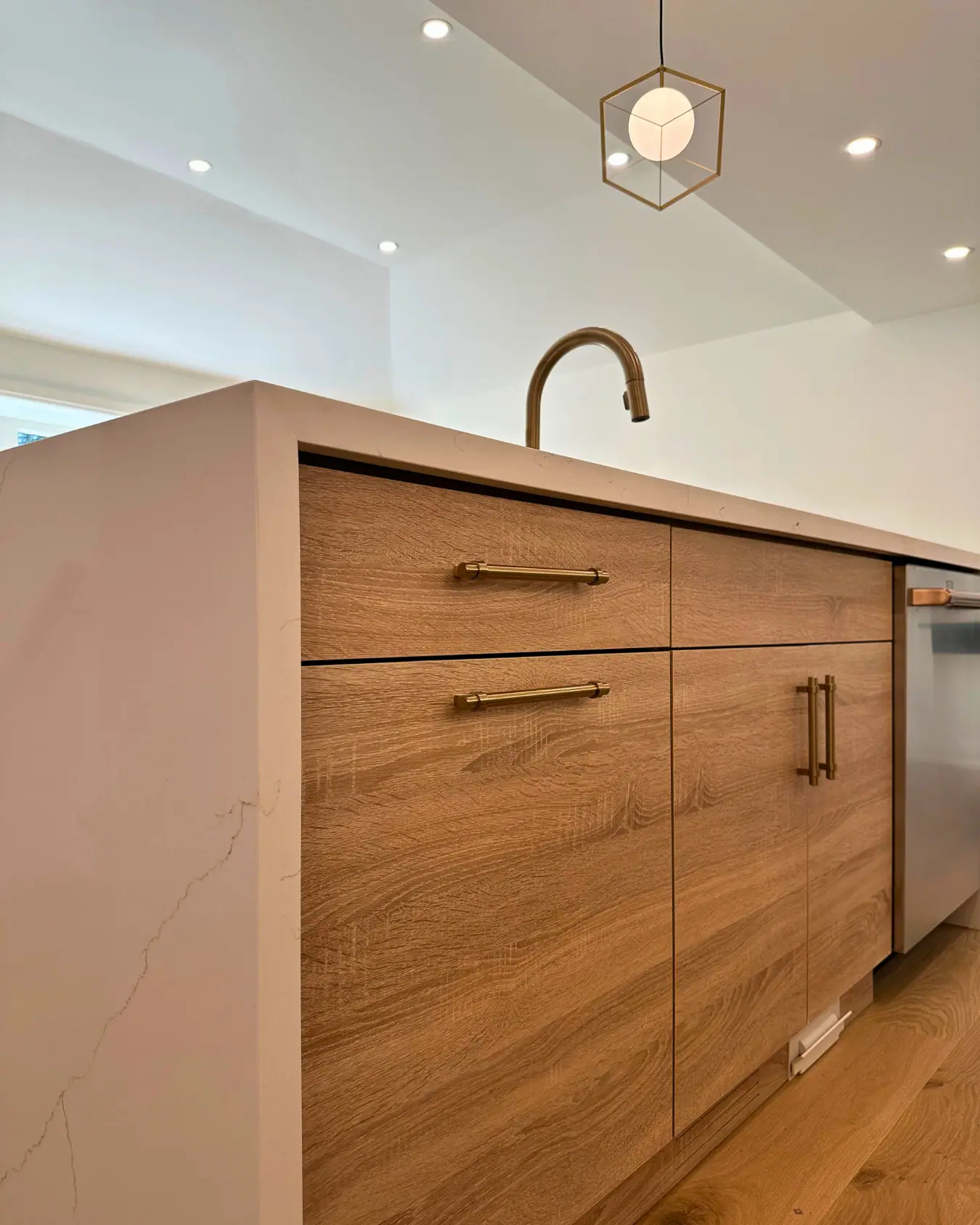
Cabinet hardware
Kitchen cabinet hardware and soft-close hinges
Kitchen cabinet hardware is two systems: the working parts inside, meaning concealed hinges and drawer slides, and the pulls or knobs you touch. Specify concealed hinges with soft-close built into the hinge cup, enough hinges for each door's height and weight, and full-extension drawer slides rated for what the drawer will hold. Then choose pulls that are easy to grip, sized by centre-to-centre spacing. The working parts decide how the kitchen feels in ten years; the pulls decide how it looks.
Concealed hinges: soft-close, opening angle and how many per door
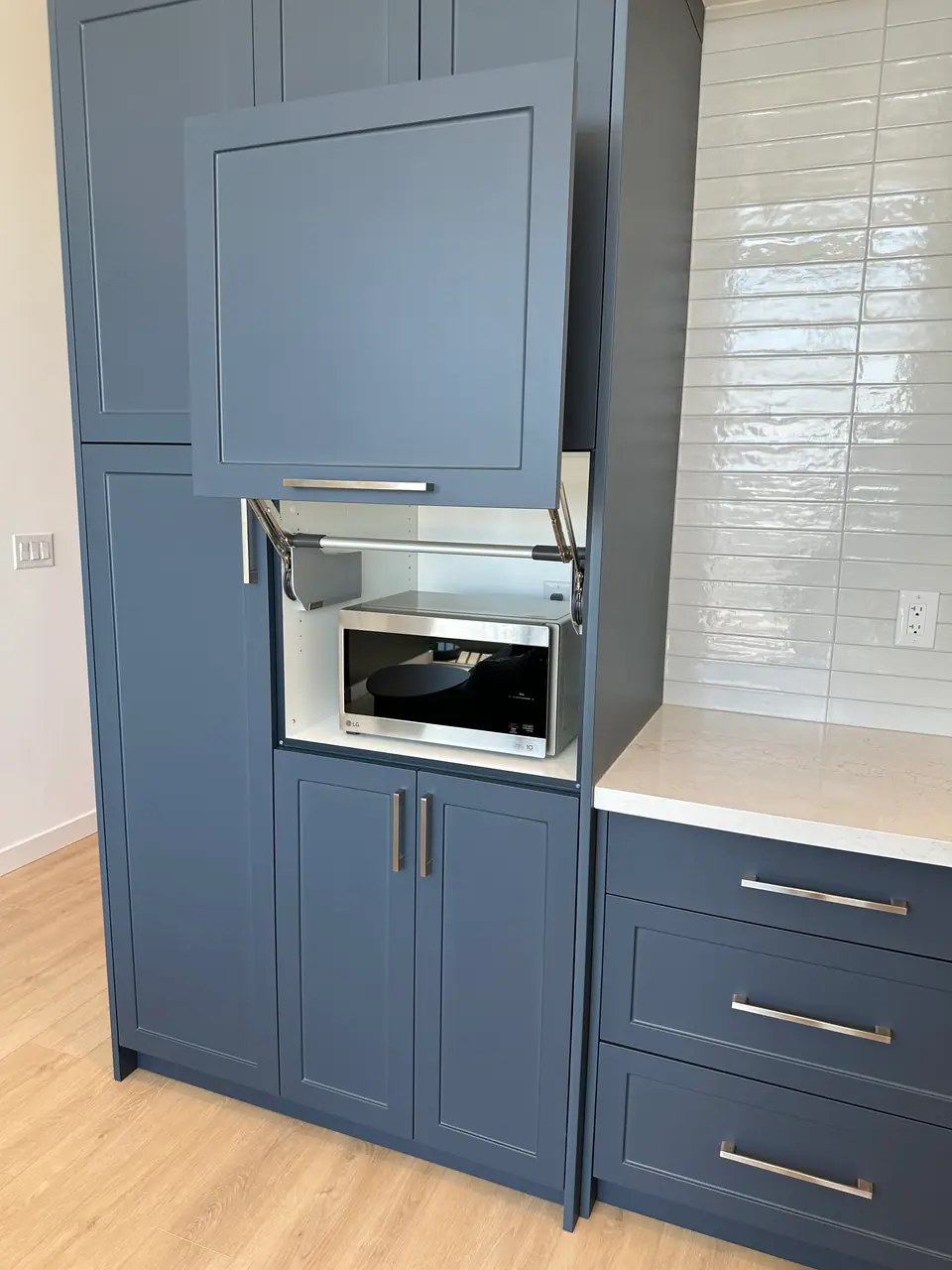
Almost every modern cabinet door hangs on a concealed cup hinge: a 35 mm cup bored into the back of the door, an arm, and a mounting plate on the cabinet side. Soft-close is now usually built into the cup, so the door slows and pulls itself shut in the last few degrees. Hinges come in different arm shapes for full overlay, partial overlay and inset doors, which is why the door style is chosen before hardware is ordered.
Door size sets the hinge count. Blum's planning chart steps from two hinges on short, light doors up to five on the tallest and heaviest, and it adds a rule worth remembering: the distance between the top and bottom hinges must be greater than the width of the door. On very small, light doors, two soft-close hinges can make the door close sluggishly, so that maker's hinges include a switch to turn soft-close off on one of them.
| Hinge | What it does | Where it is used |
|---|---|---|
| 110°, the standard | Opens the door just past square | Most doors in a kitchen |
| 155° zero protrusion | Swings the door fully clear of the opening | Cabinets with interior pull-outs or drawers behind the door |
| 170° wide-angle | Opens the door nearly flat | Doors that must open well out of the way |
| Cranked-arm half overlay | Lets two doors share one partition | Twin doors meeting on one cabinet side |
| Inset hinges | Sets the door flush inside the face frame | Inset cabinetry, including blind corners |
Drawer slides: full extension, load class and soft-close
Full-extension slides let a drawer open to its back so nothing hides in the dark rear third. Fine Homebuilding calls them well worth the extra cost and notes that slides are rated for weight, commonly 75 or 100 pounds. Concealed undermount slides sit under the drawer box, out of sight, and come in load classes too; one widely used line is sold in 40 kg and 70 kg classes.
Match the class to the drawer. A wide drawer of pots, cast iron or dishes needs the heavier class; a cutlery drawer does not. Soft-close catches the drawer near the end of its travel and brings it gently shut. Push-to-open systems suit handleless slab fronts: some are mechanical and combine a touch-release with soft-close, others are electrically assisted so a light push opens the drawer.
What a cabinet quality standard tests on hinges and slides
ANSI/KCMA A161.1, the North American performance standard for kitchen and vanity cabinets, cycles a cabinet door open and closed 25,000 times; afterwards the door must still work, hold closed and sag no more than 1.6 mm at the test point. Drawers are loaded at 15 pounds per square foot and cycled 25,000 times, then must still run with no failure in the drawer or its slides.
For perspective, 25,000 cycles is ten openings a day for nearly seven years. A pot drawer by the range or the door in front of the garbage pull-out can easily exceed that, which is why heavier-rated slides and quality hinges earn their place on the busiest fronts.
Pulls and knobs: grip, size and placement
Choose hardware your hands can use on a bad day. Canada Mortgage and Housing Corporation's list of low-cost accessibility changes recommends easy-grip D-handles on cabinets and drawers. A D-pull lets you hook your fingers through instead of pinching a small knob. That matters more as hands age; see accessible kitchen design for aging in place.
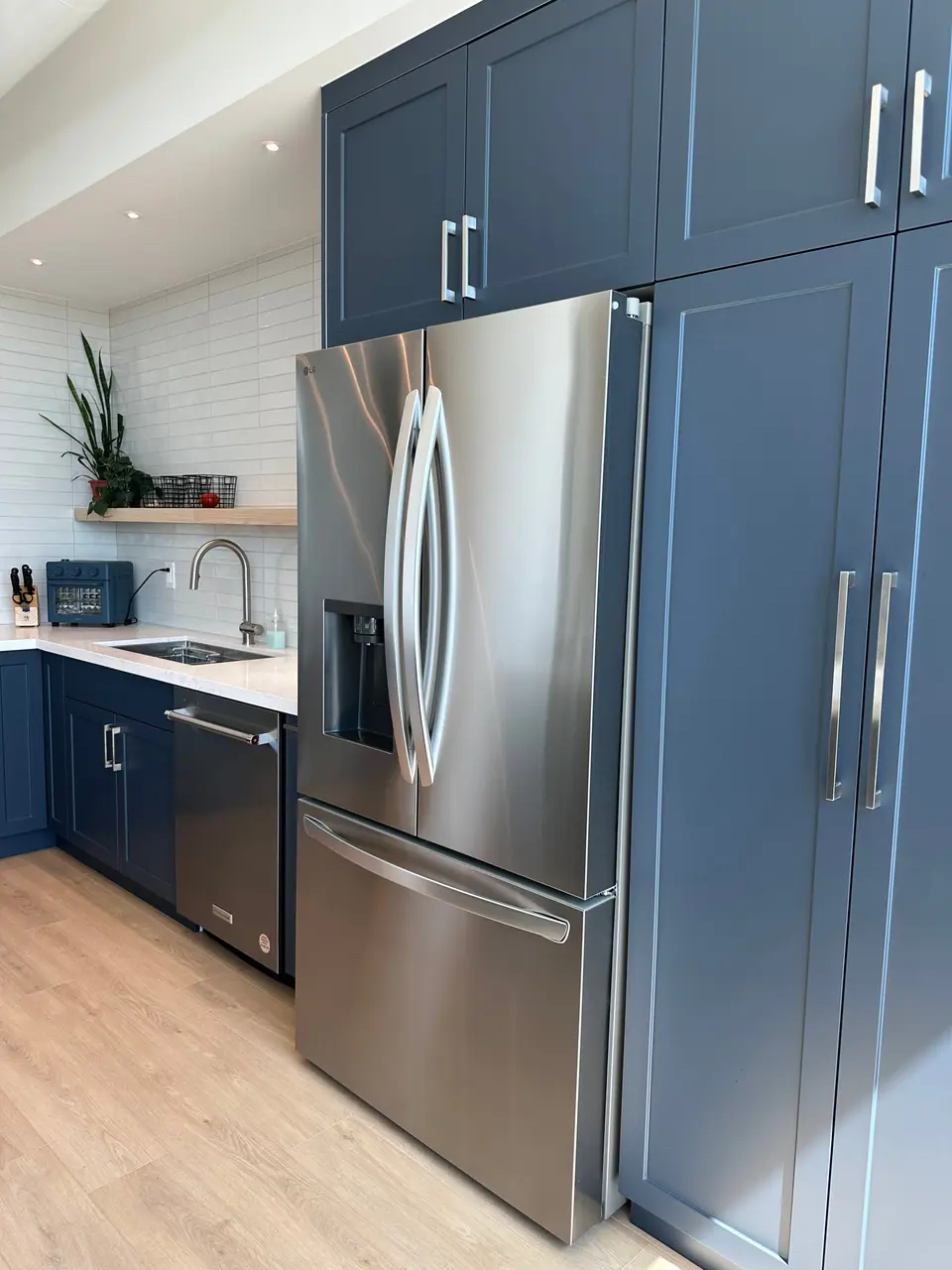
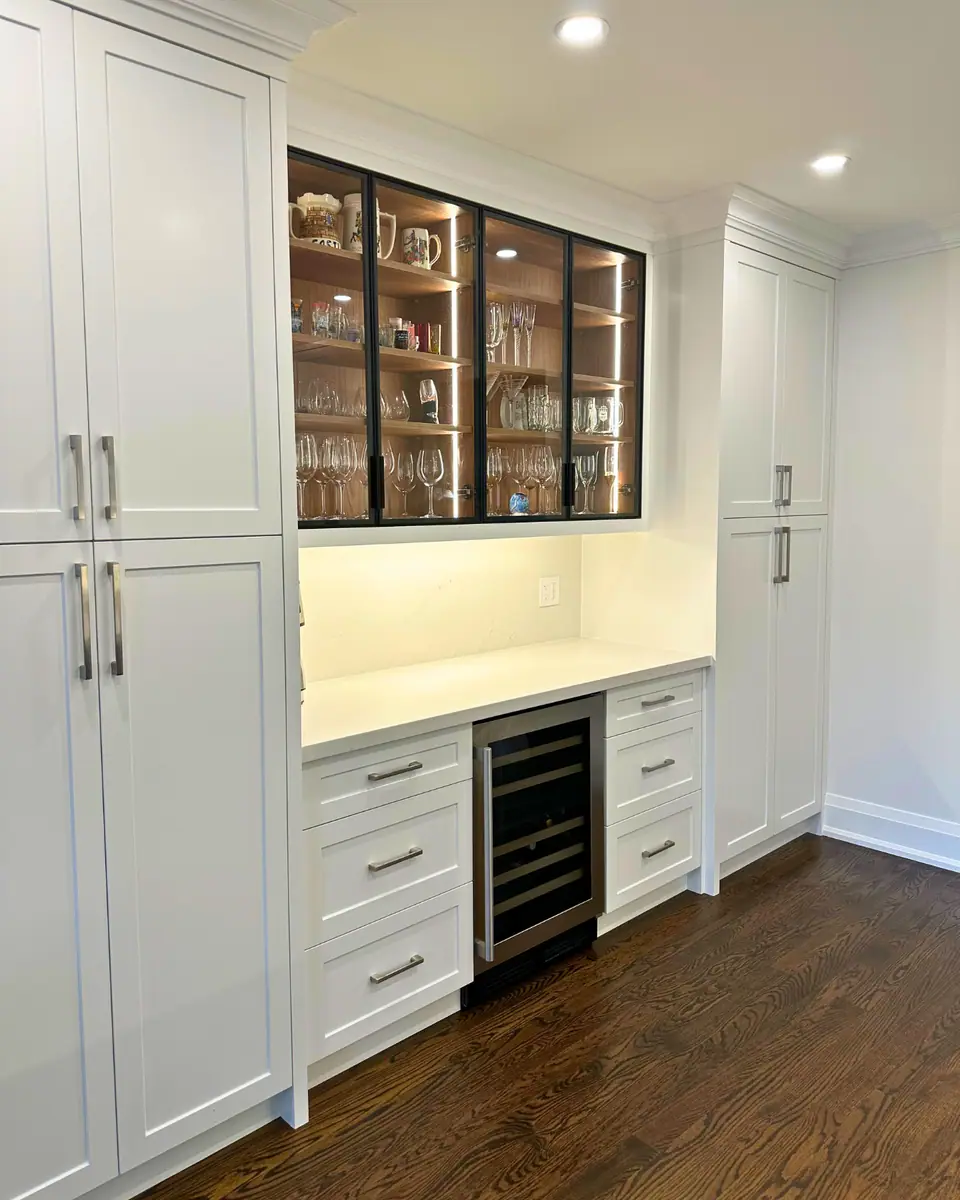
Pulls are sized by centre-to-centre spacing, the distance between the two screw holes, not by overall length. Common metric spacings include 96, 128 and 160 mm, with longer bars for wide drawers and appliance panels. When you replace pulls on existing doors, measure the spacing first: a new pull that fits the old holes avoids filling and redrilling. Door pulls usually sit near the opening edge, toward the bottom on upper cabinets and toward the top on base cabinets. Finish choices are on kitchen hardware finishes: brass, black and nickel.
Adjusting and upgrading the hardware you already have
A door that has drifted out of line rarely needs new hinges. Concealed hinges adjust in three directions with a screwdriver. On one common hinge line, the side screw moves the door about 2 mm either way, the mounting-plate cam moves it about 2 mm up or down, and the depth screw moves it in or out by a few millimetres.
Soft-close can often be retrofitted. Blum, for one, sells a soft-close add-on for its standard concealed hinges, so existing doors can be made to close gently. Converting old side-mount drawers to concealed undermount slides is a bigger job, because those slides depend on how the drawer box is built; check the boxes before buying slides. Pull-outs and dividers are covered in kitchen drawer organizers and cabinet inserts.
Questions
How many hinges does a tall pantry door need?
More than two. Hinge makers' charts move to three, four or five hinges as door height and weight climb, and the top and bottom hinges must be spaced farther apart than the door is wide. A full-height pantry door, especially one carrying door-mounted shelves, can need four or five.
Why does my small cabinet door close too slowly?
Two soft-close hinges on a small, light door can over-damp it. Some hinges have a switch on the cup to turn soft-close off on one of them; with add-on dampers, removing one does the same job.
Are push-to-open drawers worth it?
They suit slab fronts where you want no visible hardware, and mechanical versions pair the touch-release with soft-close. Electrically assisted versions need power inside the cabinet, so they are planned with the wiring, not added at the end.
Should I pick knobs or pulls?
Pulls are easier to grip, especially D-shaped ones that let you hook your fingers through, which is why accessibility guidance favours them. Knobs work on small doors and suit some traditional kitchens. Many kitchens use pulls on drawers and either style on doors.
Sources and further reading
- Concealed hinges catalogue, Blum
- MOVENTO runner system programme, Blum
- ANSI/KCMA A161.1-2022 Performance and Construction Standard for Kitchen and Vanity Cabinets
- Low and no cost modifications for accessibility, CMHC
- A Buyer's Guide to Kitchen Cabinets, Fine Homebuilding
Checked November 19, 2026. Codes, by-laws, prices and product specifications change; confirm with your municipality, condo corporation or supplier before you build.
Keep reading
Related guides