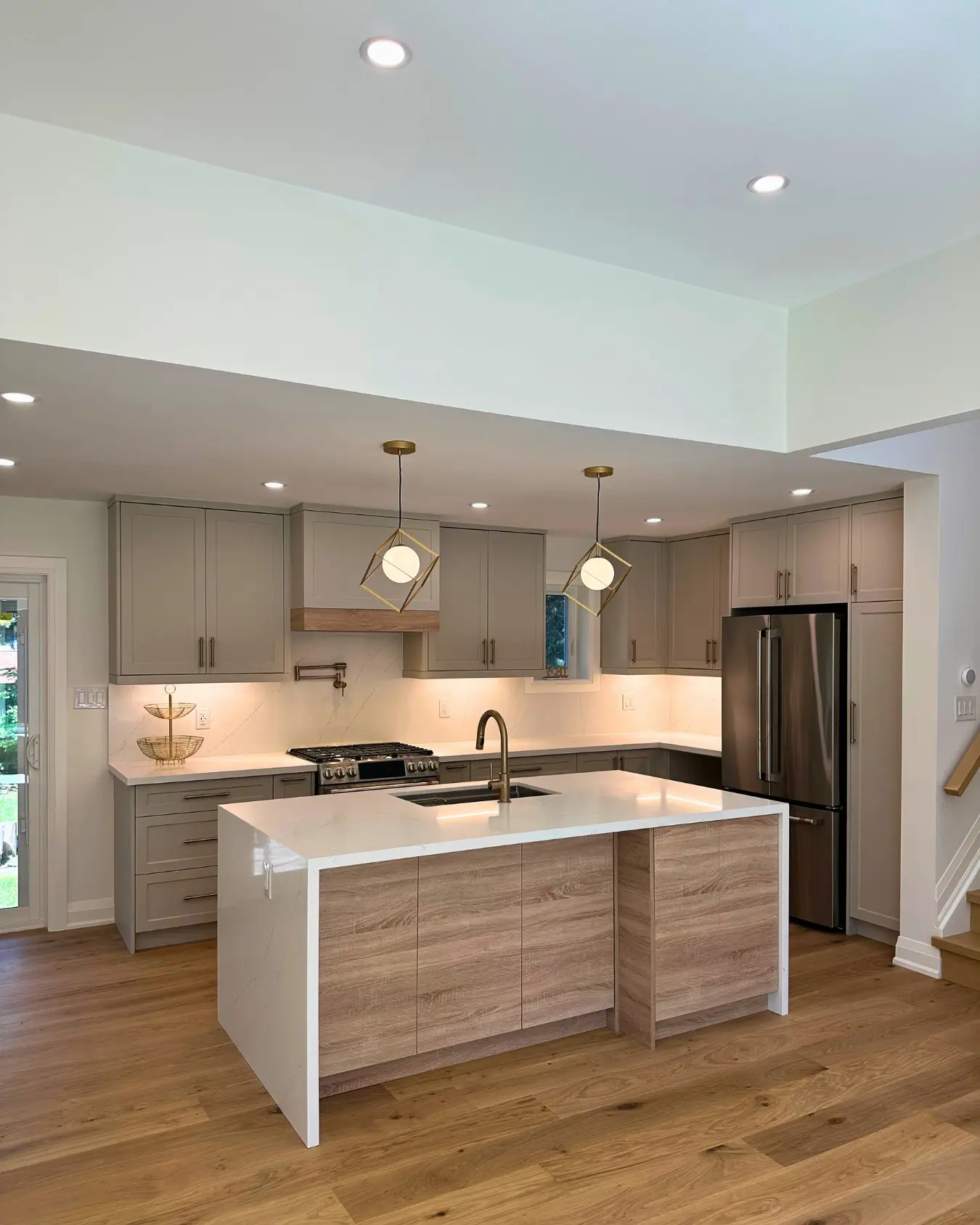
Natural stone counters
Quartzite countertops
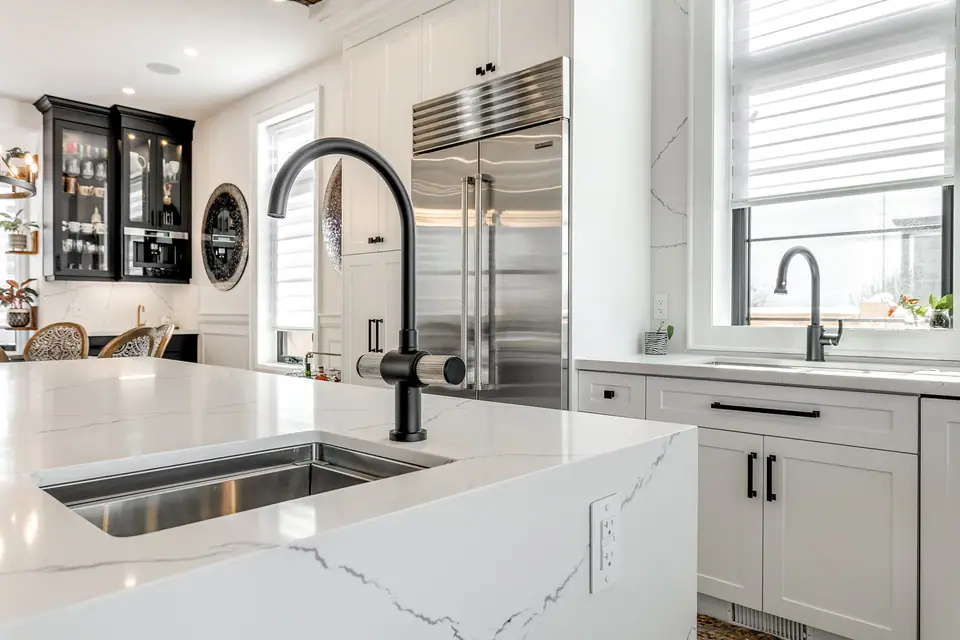
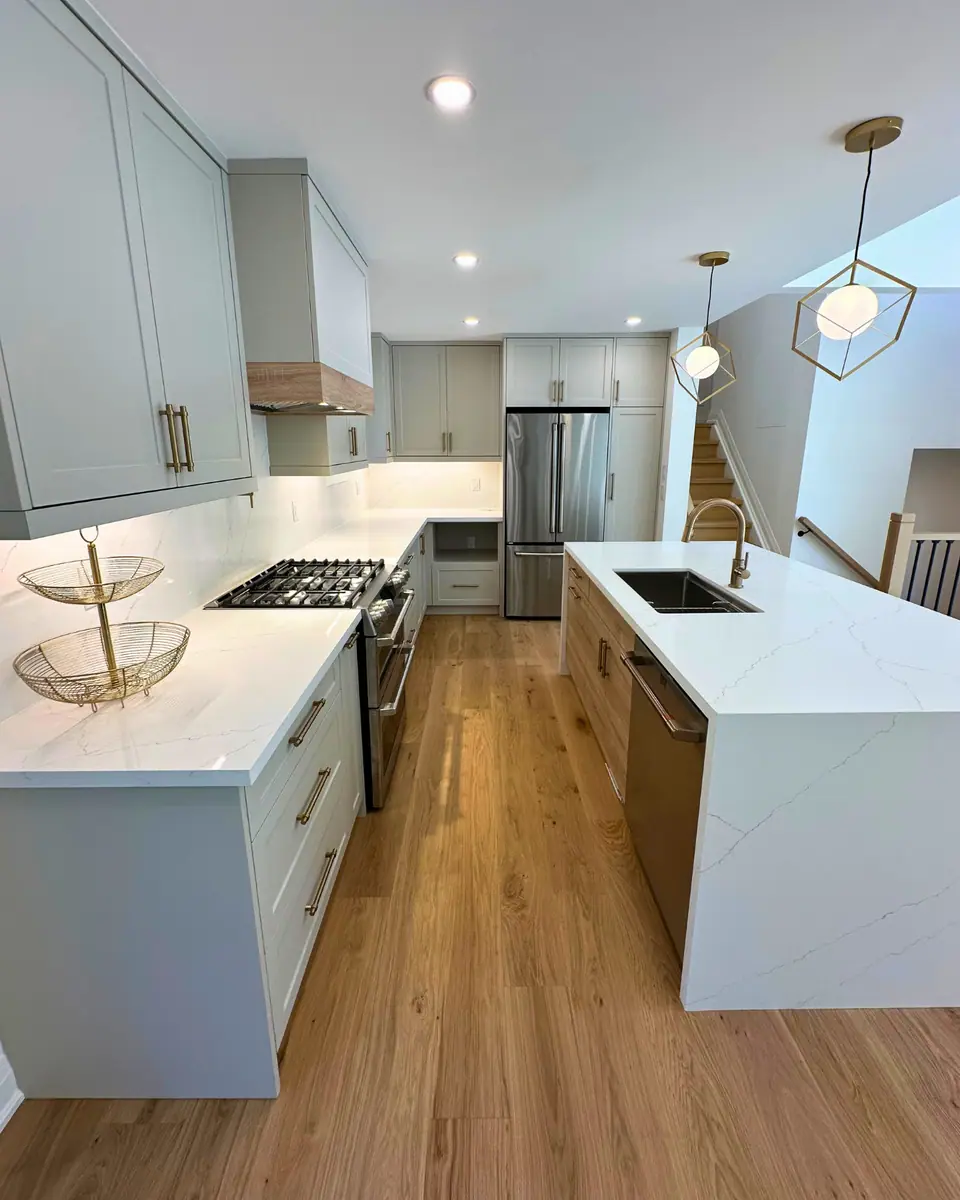
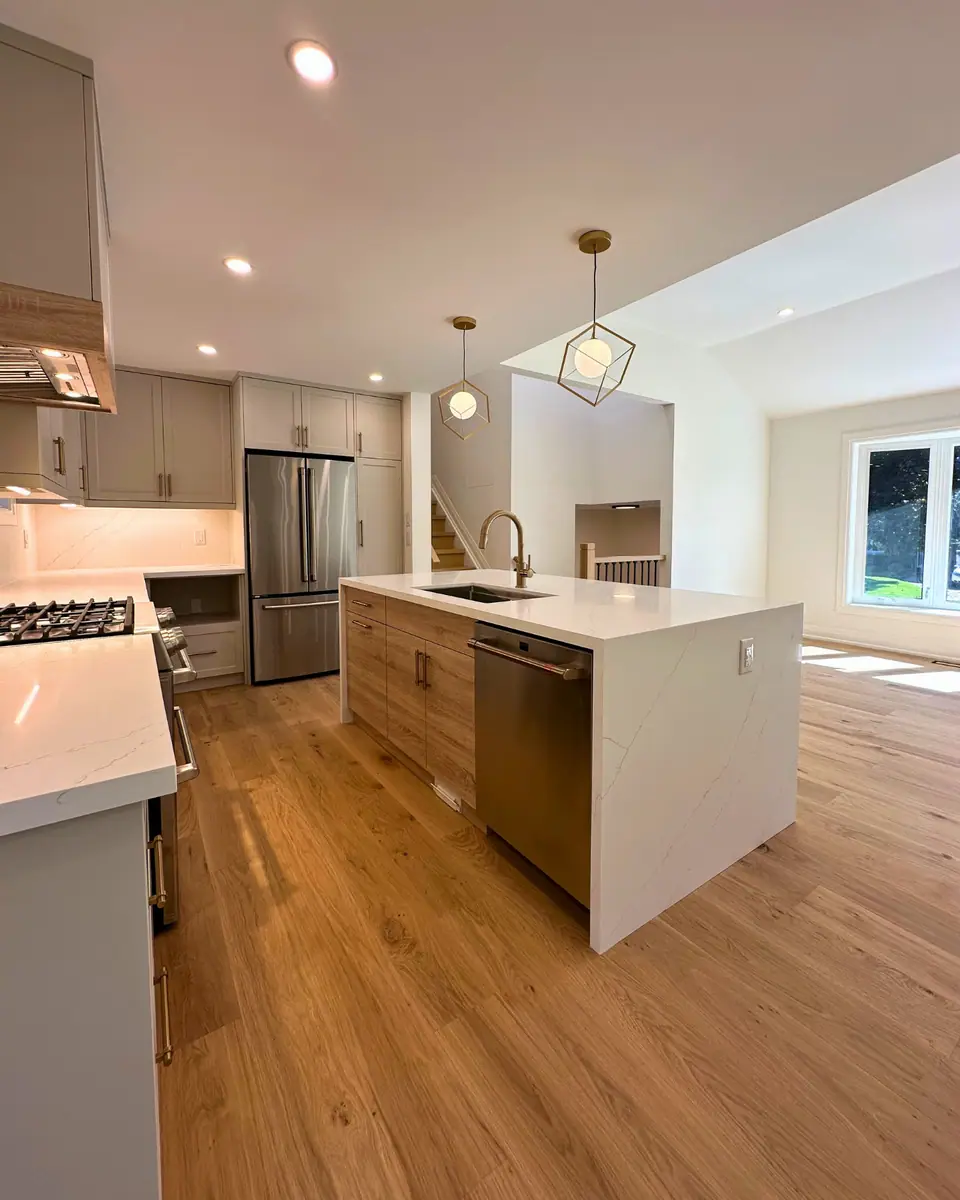
Quartzite is a natural stone: sandstone transformed by heat and pressure into a dense rock made almost entirely of quartz. True quartzite scratches glass, does not etch when lemon juice or vinegar sits on it, and stands up well to daily cooking, but its porosity varies from slab to slab, so many need sealing. The biggest risk is buying a stone sold as quartzite that is really marble or dolomite, so test a sample before you commit.
What quartzite is, and what gets sold under its name
Geologically, quartzite is metamorphosed sandstone: grains of quartz fused under heat and pressure until the rock breaks through the grains rather than around them. That is where its hardness comes from. How far the change went varies, so some quartzites are glassy and tight while others keep sandstone-like pores and absorb more.
The trade name is looser than the geology. The Natural Stone Institute's consumer site says there is really no such thing as soft quartzite, and in most cases that term means the stone is marble. It identifies Super White as dolomite, a mineral that etches more slowly than marble but still etches. One fabricator interviewed by Stone World tells clients that white stones sold as quartzite, such as Mont Blanc, are likely dolomites that stain and etch like marble. Testing is how you protect yourself.
Three tests to run on a sample before you buy
Ask the stone yard for an offcut or a sample from the same block, and do these at home. No single test is conclusive on its own, but together they separate true quartzite from look-alikes. Sealers do not stop acid from etching, so a sealed sample still tells you the truth.
| Test | How to do it | True quartzite | Marble or dolomite |
|---|---|---|---|
| Glass scratch | Draw a sharp corner of the sample firmly across a glass tile or bottle | Scratches the glass; hard to scratch with a knife | Will not scratch glass, or scratches easily itself |
| Acid etch | Leave lemon juice or vinegar on the polished face for a few minutes, then rinse and look at a low angle | No dull spot | A dull, rough patch; dolomite may take longer to show |
| Water drop | Leave a few drops of water on the face for several minutes | Varies: dense slabs stay dry, porous ones darken | Varies too; on any stone, darkening means it should be sealed |
Porosity, sealing and the dark patch by the sink
Quartzite resists stains but is not stain-proof. The Natural Stone Institute says sealing needs range from not required at all to required at installation and reapplied at intervals, and names White Macaubas and Calacatta Macaubas as more porous varieties that may benefit from sealing. A stone distributor's care guidance says many quartzite countertops benefit from sealing once or twice a year, applied until the stone will not take more, including every cut edge.
Two problems catch owners off guard. First, quartzite can darken after installation because of moisture held inside the stone; drying fabricated pieces fully before sealing reduces this. Second, gaps in sealing let water in where nobody looks. A fabricator quoted in Stone World lists the back edges, sink cut-outs, faucet holes and the area under the dishwasher as places that must be sealed, comparing it to waterproofing a shower.
If an oil stain does set in, a poultice of baking soda and acetone left for 24 to 48 hours can draw it out. For daily cleaning use a gentle, pH-neutral cleaner; acidic or abrasive products can dull the polish and wear down the sealer.
Living with quartzite day to day
Quartzite's character is natural: no two slabs match, veins wander, and colour shifts across a slab. That is the appeal, and it is why you should see and reserve your actual slabs rather than choose from a small sample.
- Knives and pots: true quartzite is harder than glass and resists scratching, but a cutting board still protects your knives and the polish
- Acids: lemon, wine, tomato and vinegar do not etch true quartzite; if they do, the stone is not quartzite
- Heat: quartzite has no resin to scorch in its body, but many slabs are resin-treated at the factory and care guides still recommend trivets
- Edges: like any stone, an edge can chip under a hard knock from a heavy pan; edge shapes are compared in countertop edge profiles
Fabrication takes longer, and fissures decide the layout
Quartzite is hard on tools. Fabricators interviewed by Stone World describe using costlier blades with more diamonds and slower saw speeds for quartzite, which adds time and expense, and one uses blades made for porcelain on true quartzites such as Taj Mahal.
Fissures are natural fractures that run through many quartzite slabs. One fabricator describes them as acting like dry veins and says the stone should be handled like a delicate marble with plenty of reinforcement; another notes heavily fissured slabs may need extra bracing just to travel to the house. Many slabs arrive resin-treated and mesh-backed to stabilise them, but cutting exposes raw edges that can wick moisture. Ask the fabricator to show you where seams, sink and cooktop cut-outs will fall on your slabs, and to keep cut-outs away from major fissures.
Silica: quartzite sits at the top of the scale
Because it is almost pure quartz, quartzite sits at the top of the crystalline silica scale for countertop materials: at least 95 per cent, according to the joint OSHA and NIOSH hazard alert on countertop work, a level matched only by some engineered stones. Natural stone is not exempt from silica rules. Ontario's alert on countertop manufacturing and installing covers natural and manufactured stone alike and calls for exposure assessment, local exhaust ventilation, wet methods and respirators where needed.
In your home, that means the cutting and polishing belong in the fabricator's shop, any on-site trimming should be done wet or with dust extraction, and the room should be closed off while it happens. Comparisons with engineered quartz, including silica, are on quartz vs quartzite.
Questions
Is Taj Mahal a true quartzite?
Taj Mahal is widely treated as a genuine quartzite: one fabricator interviewed by Stone World cuts it with porcelain blades because it is so hard, and another recommends it for its whiteness and versatility. Names are not guarantees, though, so run the glass and acid tests on a sample of your own slab.
Why is my quartzite darker around the sink?
Darkening near the sink usually means water is getting into the stone. It can be moisture still trapped from fabrication or a sign that the sealer is missing or worn, often at the cut-out edge. Let it dry fully, then have the area and the cut edges resealed.
How often should a quartzite countertop be resealed?
It depends on the slab. Dense quartzites may need little or no sealer; porous ones can need sealing once or twice a year. Modern sealers can last from one to ten years, so repeat the water-drop test every few months and reseal when the stone starts to darken.
Can quartzite etch?
True quartzite does not etch from kitchen acids such as lemon juice or vinegar. If a stone sold as quartzite develops dull etch marks, it contains calcite or dolomite, which means it is a marble or dolomitic marble, and it needs marble care.
Sources and further reading
- Caring for Quartzite Countertops, Natural Stone Institute (UseNaturalStone.org)
- How to Be Your Own Stone Sleuth, Natural Stone Institute (UseNaturalStone.org)
- Fabricators Weigh in on Quartzite, Stone World
- Quartzite Absorption and Staining, Arizona Tile
- Hazard Alert: Worker Exposure to Silica during Countertop Manufacturing, Finishing, and Installation, OSHA and NIOSH
Checked November 19, 2026. Codes, by-laws, prices and product specifications change; confirm with your municipality, condo corporation or supplier before you build.
Keep reading
Related guides