Kitchen cabinets
Kitchen cabinet door styles: shaker, slab and inset
A shaker door is a five-piece door: a frame of rails and stiles around a recessed flat panel. A slab door is one flat piece with no frame, the usual choice for modern and handleless kitchens. Inset is not a door design but a way of hanging the door inside the cabinet's face frame, flush with it, and an inset door can itself be shaker or slab. Pick shaker for range, slab for clean lines and easy wiping, and inset for period precision at a higher price.
How shaker, slab and inset doors differ at a glance
The three names describe two different things. Shaker and slab describe how the door itself is made. Inset describes where the door sits relative to the cabinet box. That is why a kitchen can have inset shaker doors, overlay shaker doors or overlay slab doors.
| Trait | Shaker | Slab | Inset |
|---|---|---|---|
| Construction | Five pieces: two stiles, two rails, one recessed centre panel | One flat panel | Any door fitted inside the face frame, flush with it |
| Common materials | Solid wood frame with wood or MDF panel; all-MDF for paint | Veneered MDF, painted MDF, laminate, glued-up solid wood | Usually solid wood frames with shaker or slab fronts |
| Cleaning | Inside corners of the recess hold crumbs and grease | Easiest: one flat face | Flat faces, but the gap around each door needs wiping |
| Cabinet box | Framed or frameless | Mostly frameless | Face-frame boxes |
| Hardware | Pulls or knobs | Pulls, edge pulls or push-to-open | Hinges that sit inside the frame; pulls or knobs |
| Relative cost | Middle | Low to high, depending on material | Highest: tight tolerances and more labour |
Shaker doors: a frame, a recessed panel and room to move
The shaker door takes its name from Shaker furniture, made by a religious community that valued simplicity and utility and avoided ornament; their cabinet doors were flat panels held in rail frames. The modern version is the same idea: square inside edges, no moulding, a flat recessed centre.
In a solid-wood shaker door the centre panel is left to float in grooves in the frame, so it can expand and shrink with the seasons without splitting. That movement matters for paint. A solid-wood panel shrinks slightly in dry winter air and can reveal a sliver of unpainted edge, so most painted shaker doors use an MDF centre panel, which barely moves. The joints where rails meet stiles can still show a fine line in paint; see painted kitchen cabinets.
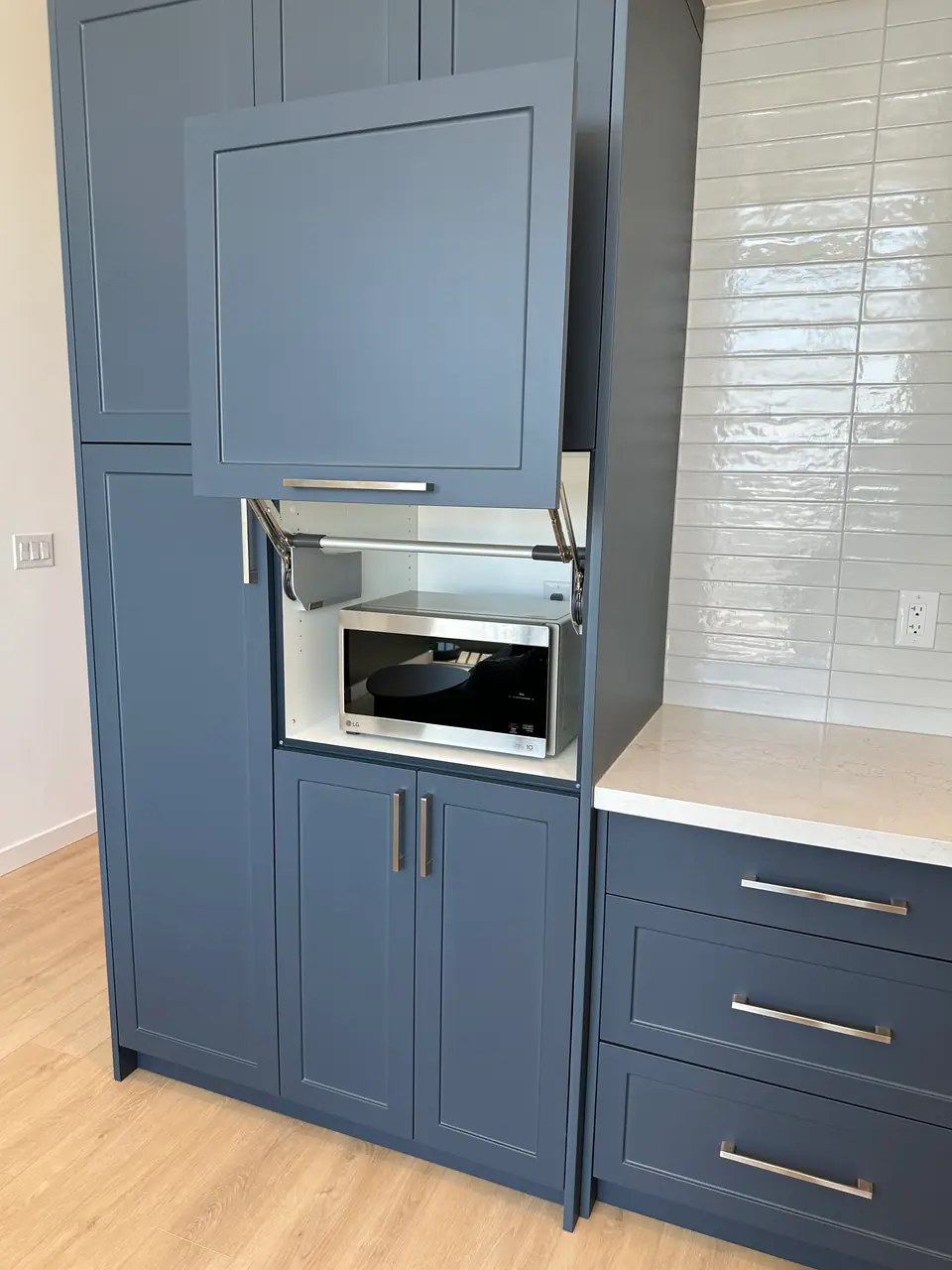
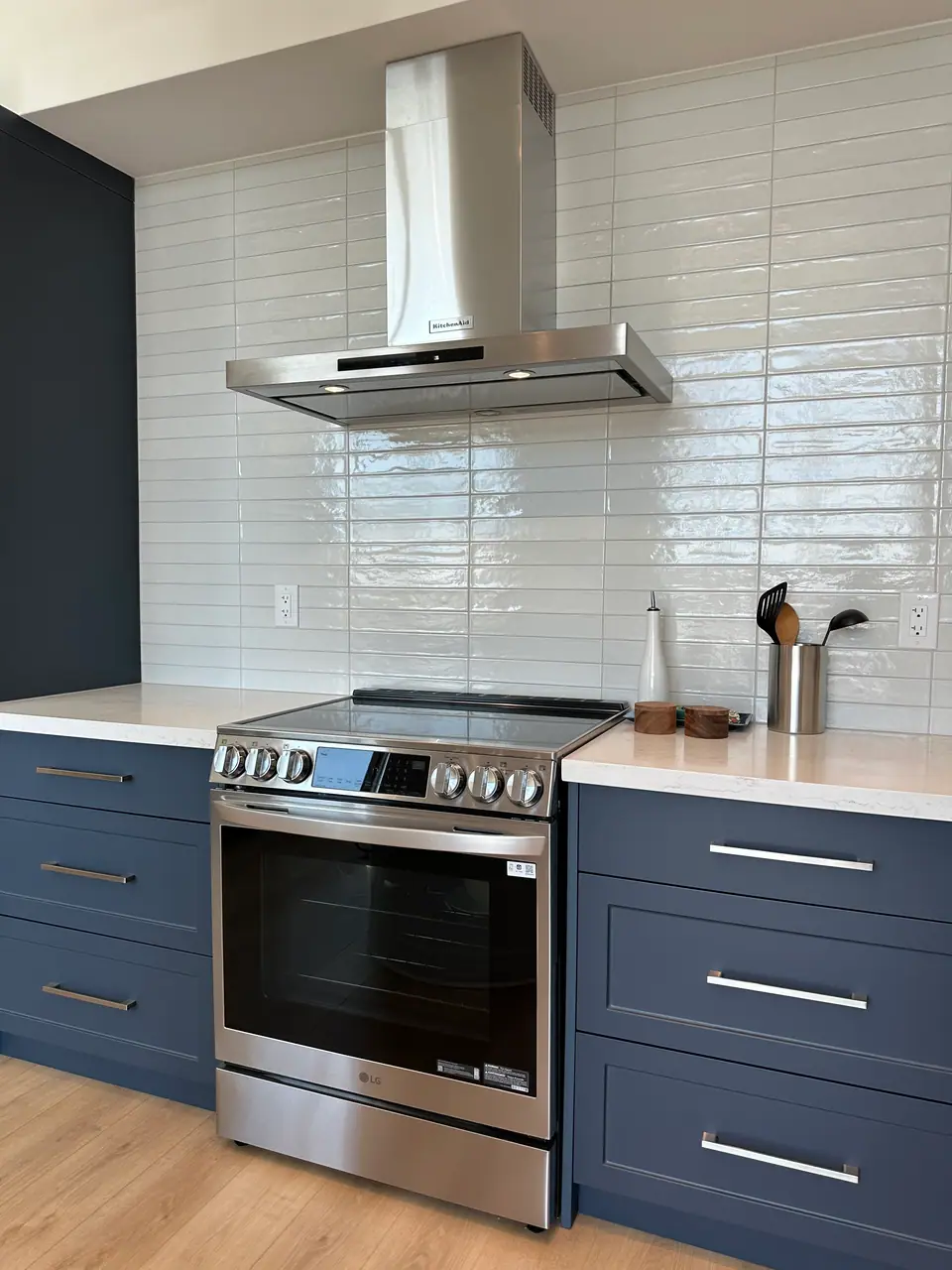
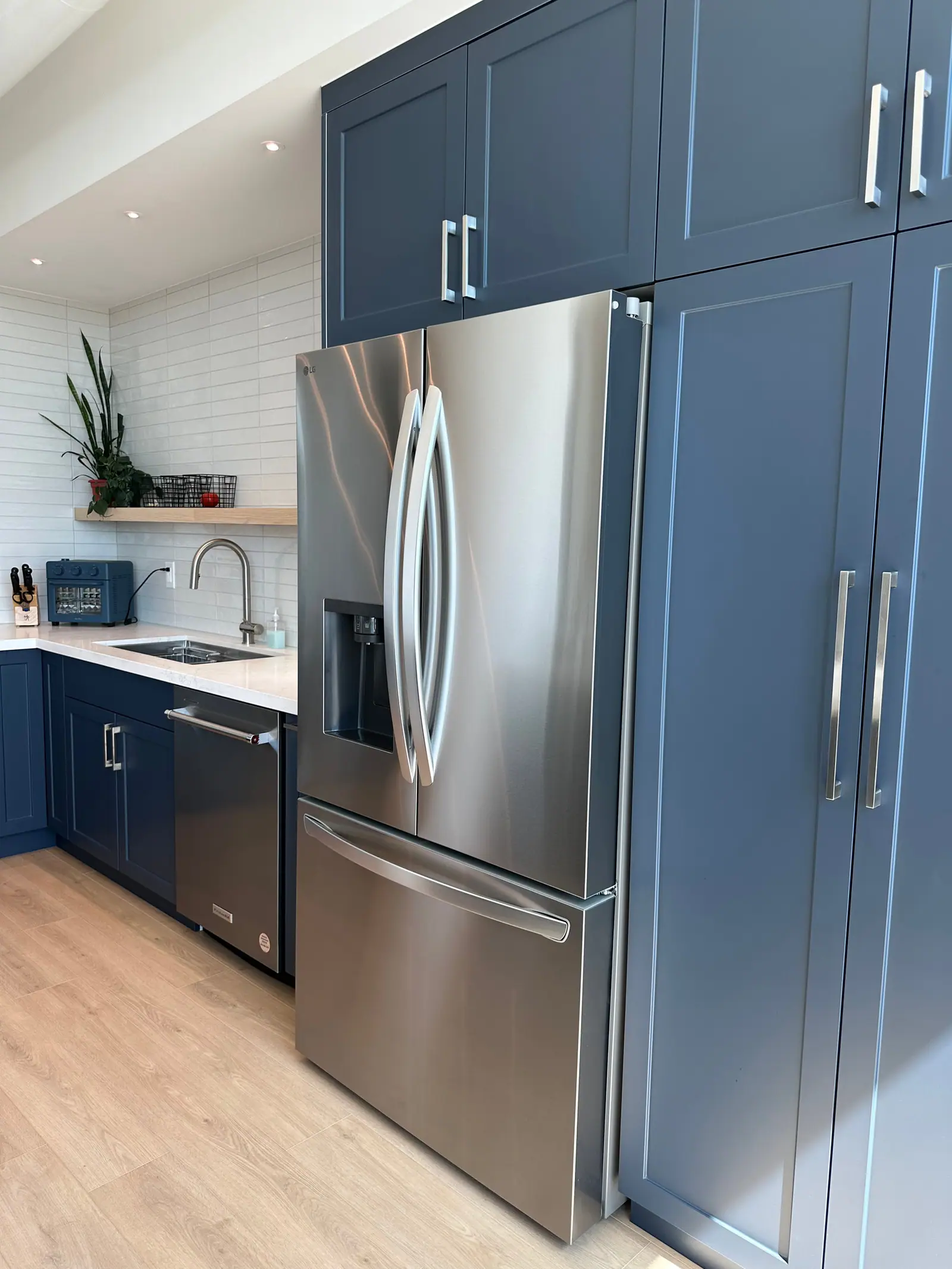
Shaker suits almost any house, which is why it shows up in both period and modern rooms. The tall blue shaker pantry cabinets in a Toronto condo kitchen with city views show it working in a glass-walled tower. Narrower rails give a slimmer, more contemporary shaker; wider rails read more traditional.
Slab doors: one flat surface, many materials
A slab door has no frame, so the material is the design. Fine Homebuilding describes slab doors as either glued-up solid wood or veneered MDF, typically used with frameless cabinets. Veneered MDF stays flat and stable; a glued-up solid-wood slab moves more with the seasons, which matters most on wide, tall fronts.
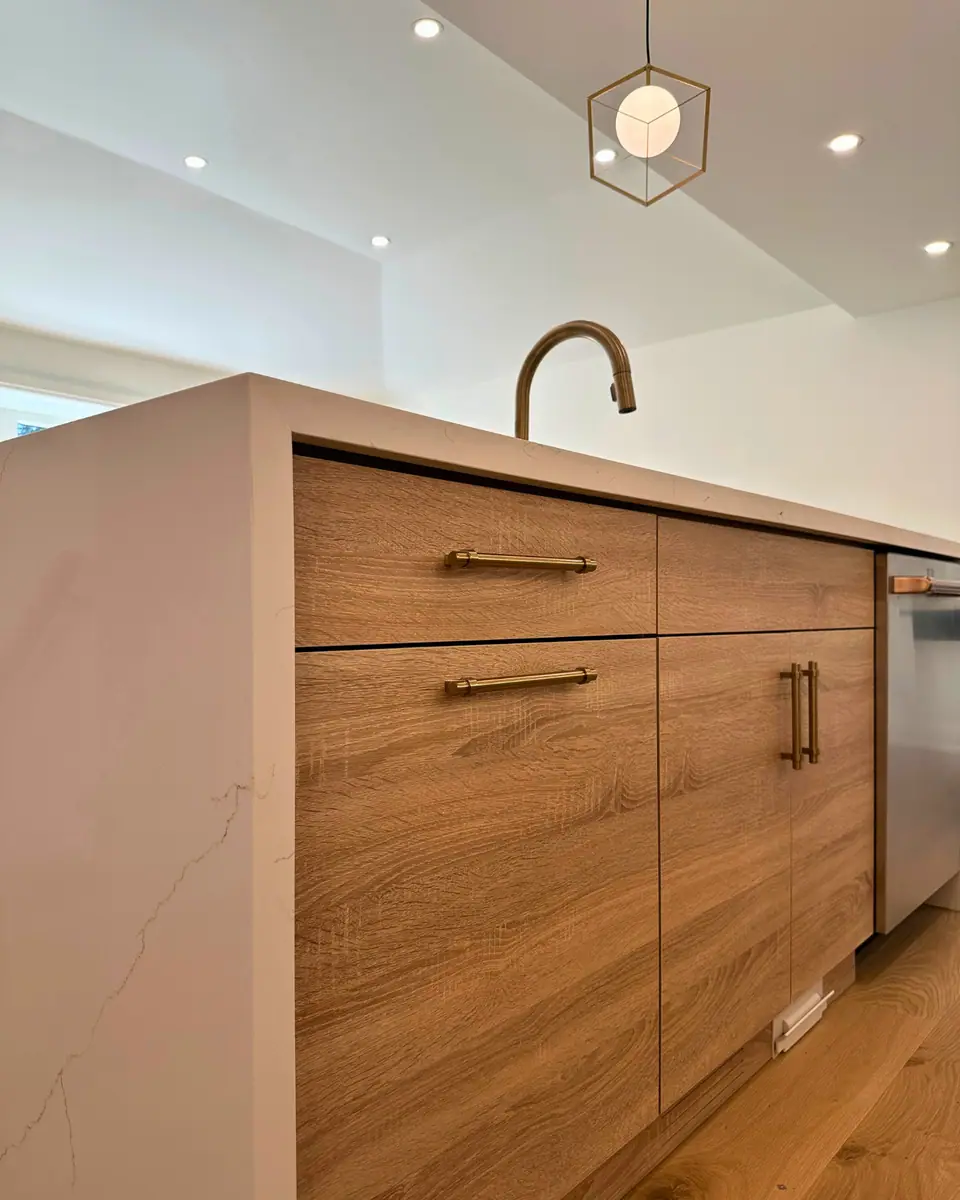
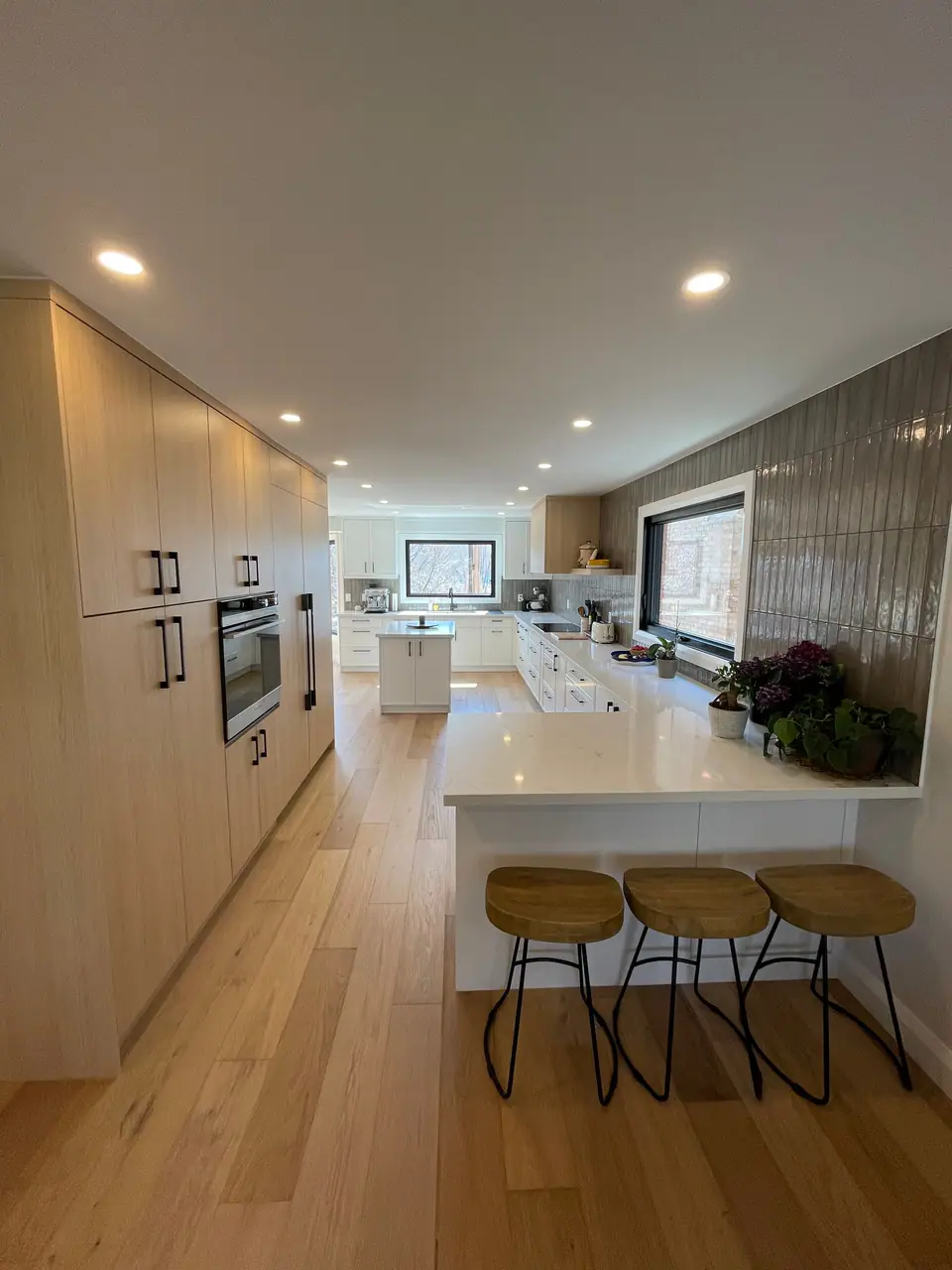
Slab is the natural partner for handleless kitchens. Fronts can open with edge pulls, a routed finger groove, or a push-to-open mechanism; one major hardware maker pairs a mechanical opening system with soft-close so a front opens with a touch and still closes gently. Slab fronts also blend with panel-ready appliances, because the appliance panels match the doors around them.
- Wood veneer: ask whether the grain will be laid out to run continuously across a row of doors
- Painted MDF: the smoothest painted surface you can get, with no joints to crack
- Laminate or melamine: hard-wearing faces; check that the edges are fully banded, since edges are where water gets in
Inset doors: flush fronts and tight, even gaps
An inset door closes into the opening of a face frame and sits flush with it, so the frame stays visible around every door and drawer. The look depends on an even reveal all round, which means boxes, frames and doors must be built and installed square. That precision is where the extra cost comes from.
Inset has three practical trade-offs. The face frame narrows each opening, so you give up a little interior width compared with frameless boxes. Solid-wood doors and frames move with seasonal humidity, so a gap that is even in January can tighten by August; concealed hinges with screw adjustment make it easier to bring doors back into line, a reason Fine Homebuilding notes European-style hinges make finicky inset doors easier to hang. And inset is usually a custom option, so it carries custom lead times; see custom kitchen cabinets in Toronto.
Overlay: the choice behind every shaker or slab door
If a door is not inset, it is overlay: it sits in front of the cabinet box and covers some or all of it. Full overlay doors cover the face frame or box edges almost completely, leaving narrow gaps between doors. Traditional or partial overlay doors leave part of the face frame showing between them. Frameless boxes normally take full-overlay doors.
| Mounting | What you see when closed | Interior access | Typical style |
|---|---|---|---|
| Full overlay | Doors and drawer fronts with small even gaps | Widest openings, especially on frameless boxes | Modern, transitional |
| Partial overlay | A band of face frame between doors | Frame narrows the opening | Builder-grade and older kitchens |
| Inset | The full face frame, doors flush inside it | Frame narrows the opening | Period, traditional, high-end |
Choosing a door style for your house and the way you cook
Start with the house. In a Victorian or Edwardian Toronto home, inset or classic shaker doors echo the original trim; the Victorian home kitchen guide covers the rest of that brief. In a condo, slab or slim shaker fronts keep a small kitchen calm, and slab blends best with integrated appliances. A transitional kitchen usually lands on shaker.
Then think about use. Busy family kitchens do well with slab or shaker in a durable finish. Inset rewards owners who like adjusting a hinge now and then. Mixing is common: shaker doors with slab fronts on narrow top drawers, or a slab island in a contrasting colour, which is the territory of two-tone kitchen cabinets.
Questions
Which cabinet door style is easiest to keep clean?
Slab, because it is a single flat face with nothing to collect grime. Shaker doors gather crumbs and grease in the inside corners of the recessed panel, especially near the range. Inset fronts are flat, but the reveal around each door needs an occasional wipe.
Can I mix shaker doors with slab drawer fronts?
Yes, and many kitchens do. A shaker frame on a short top drawer can look cramped, so slab fronts on narrow drawers with shaker doors elsewhere is a common, tidy combination. Keep the finish and edge detail consistent so the mix looks intended.
Can frameless cabinets have inset doors?
Traditional inset doors close into a face frame, and frameless boxes are normally fitted with full-overlay doors. If you want the flush inset look, plan on face-frame cabinets from the start rather than trying to convert later.
Why do my inset doors rub in summer and gap in winter?
Solid wood swells across the grain in humid weather and shrinks when heated winter air dries it out, so the reveal around an inset door changes through the year. Concealed hinges can usually be adjusted side to side and up and down to re-centre a door. Keeping indoor humidity steadier reduces the swing.
Sources and further reading
- Kitchen cabinet, Wikipedia
- A Buyer's Guide to Kitchen Cabinets, Fine Homebuilding
- Shaker furniture, Wikipedia
- MOVENTO runner system programme, Blum
Checked November 19, 2026. Codes, by-laws, prices and product specifications change; confirm with your municipality, condo corporation or supplier before you build.
Keep reading
Related guides