Kitchen styles
Transitional kitchen design
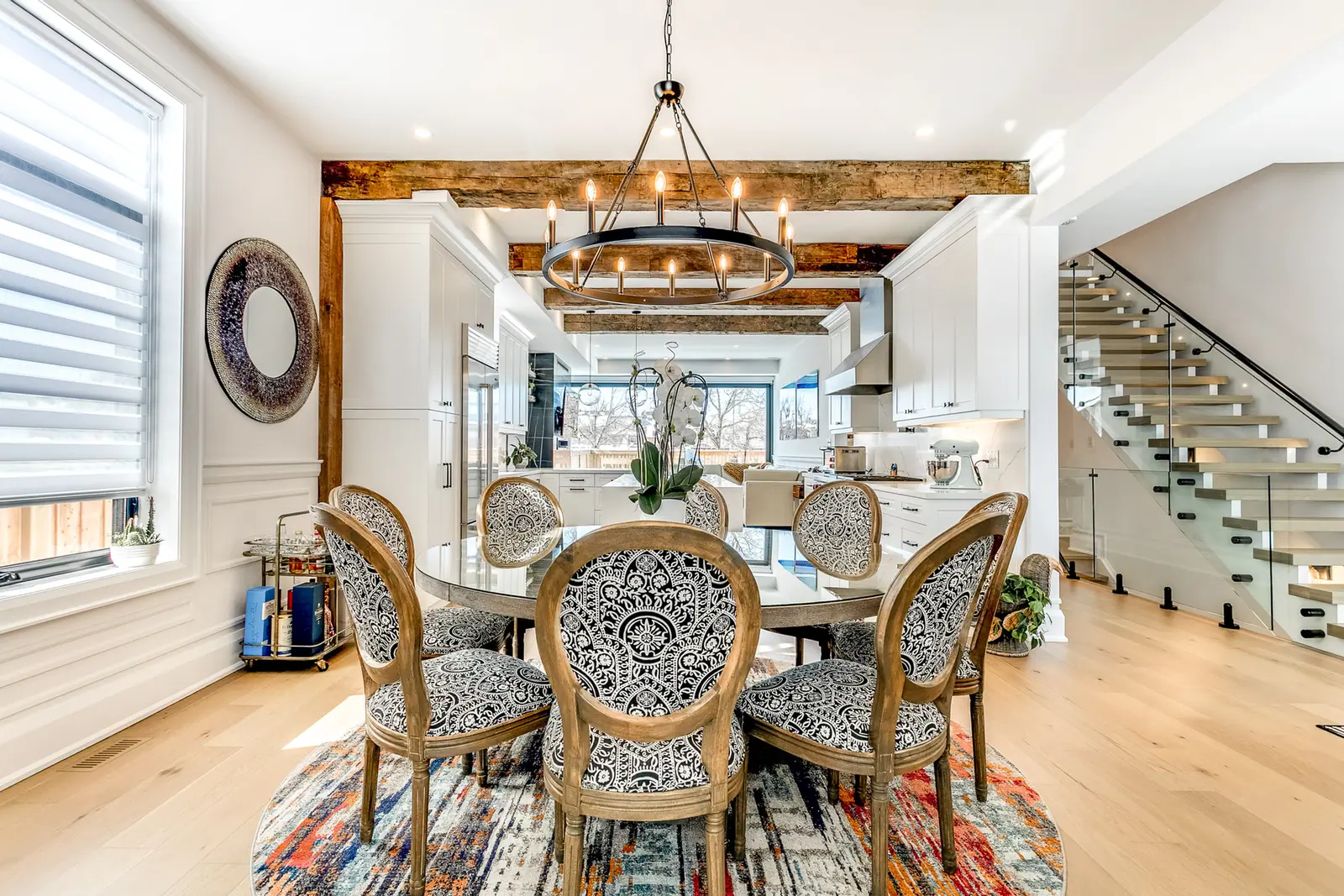
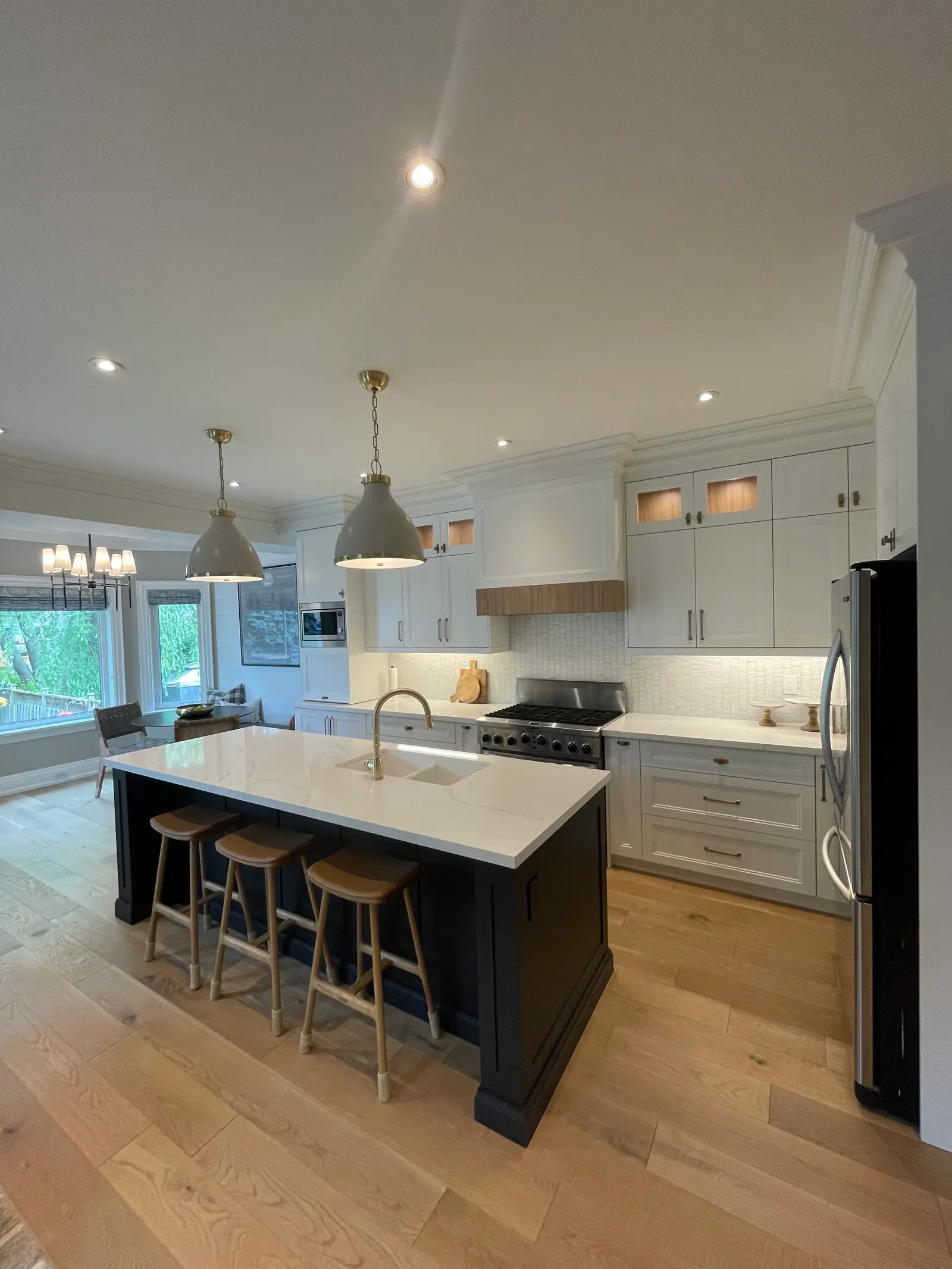
Transitional kitchen design takes the shapes of a traditional kitchen and strips back their ornament: a shaker door instead of a raised panel, a simple framed hood instead of carved corbels, soft-veined quartz instead of busy granite, and one or two warm details such as brass hardware or a wood island. It works because it borrows one or two traditional anchors and keeps everything else quiet, which is why it suits both older Toronto houses and new suburban builds.
Where transitional sits between traditional and modern
The easiest way to design a transitional kitchen is to know what the two styles on either side would do, then take the middle path element by element. Read the table across: each row is a choice you will make, and the middle column is the transitional answer.
| Element | Traditional | Transitional | Modern |
|---|---|---|---|
| Cabinet door | Raised panel, applied mouldings | Shaker or slim shaker, recessed flat panel | Flat slab |
| Hardware | Ornate knobs and bin pulls | Simple bar or cup pulls in brass, nickel or black | None, channel or edge pull |
| Top of the cabinets | Stacked crown moulding | Simple flat crown or cabinets to the ceiling | No moulding, flush to the ceiling |
| Range hood | Carved wood with corbels | Plastered or panelled hood with clean lines | Stainless canopy or concealed insert |
| Counters | Granite or marble with a decorative edge | Quartz or marble-look slab, eased edge | Thin porcelain or solid colour, square edge |
| Colour | Cream, cherry, deep stains | Warm whites, greige, sage, navy, white oak | White, black, grey, flat wood veneer |
| Lighting | Chandelier, lantern pendants | Simple glass or metal pendants, some warmth | Linear LED, recessed or architectural |
Pick one or two traditional anchors and keep the rest quiet
A transitional kitchen goes wrong when it collects too many traditional details at once and becomes a traditional kitchen with pale paint. The more reliable method is to choose one or two anchors, the pieces that give the room its character, and make every other choice plainer than you first want to.
Typical anchors and what to pair them with:
- A shaker door in a strong colour (navy, sage, deep green): pair with a plain quartz top, simple pulls and white walls.
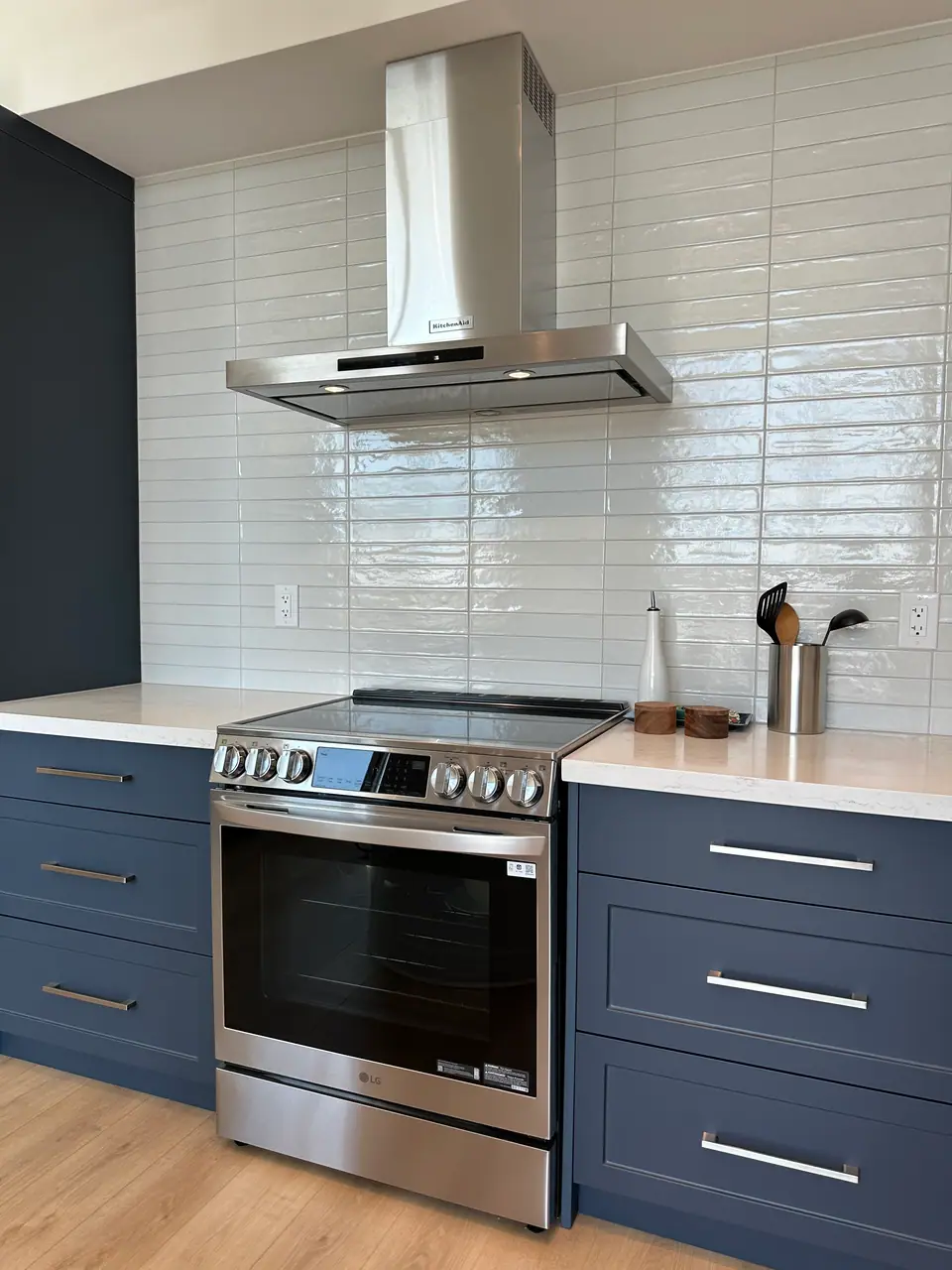
- A panelled or plastered range hood: keep the doors slim shaker and the backsplash a single slab or a simple tile.
- Unlacquered or brushed brass: repeat it in two or three places at most, such as pulls and pendants, and keep the faucet consistent.
- A wood island in white oak against painted perimeter cabinets: let the wood be the only grain in the room apart from the floor.
- An apron-front sink: keep the rest of the run clean, or the room tips into farmhouse style.
The shaker door does most of the work
Most transitional kitchens are built on the shaker door because it is the simplest traditional door there is. Shaker furniture comes from the United Society of Believers in Christ's Second Appearing, whose guiding principles were simplicity, utility and honesty, and a shaker cabinet door is a flat panel set inside a rail-and-stile frame. That frame gives a little shadow line and a sense of craft without ornament, which is exactly the balance the style needs.
Two variations change the feel. A slim shaker, with a narrower frame, reads more modern; a full-width frame reads more traditional. And the way the door sits on the box matters: full-overlay doors cover the cabinet frame when closed, while inset doors sit within the frame like a room door and need more precise alignment, which costs more and suits the more traditional end of transitional. The cabinet door styles guide compares them, and painted kitchen cabinets covers finishes.
Colour, metal and stone: how real transitional kitchens put it together
The palette is restrained but not cold: one main cabinet colour, one wood, one metal and a quiet stone. Three Purple Kitchen & Bath projects show different points on the same line.
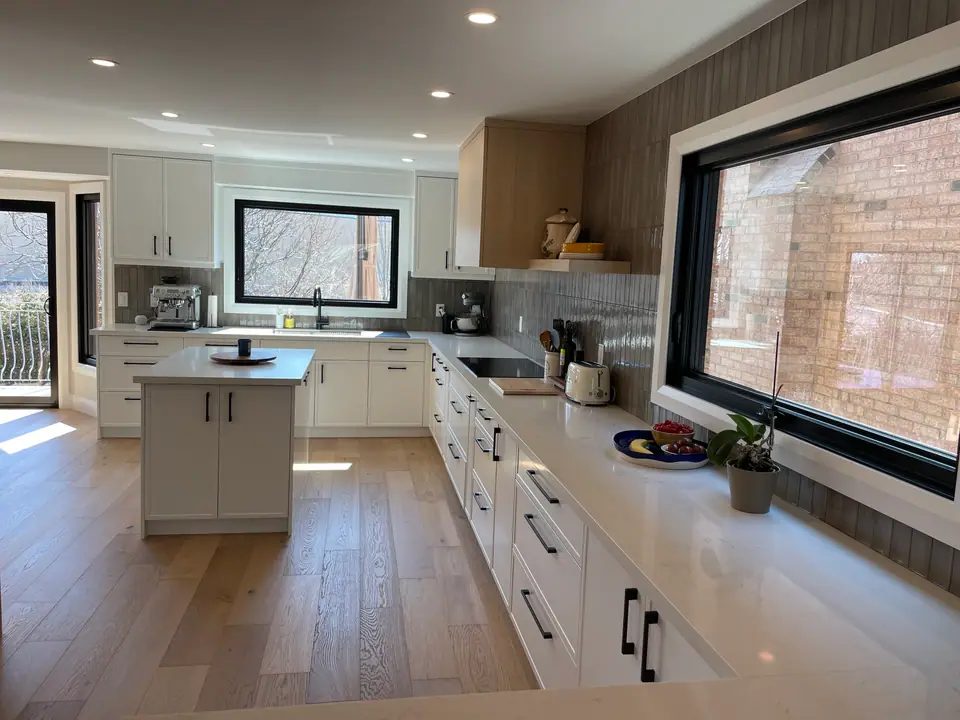
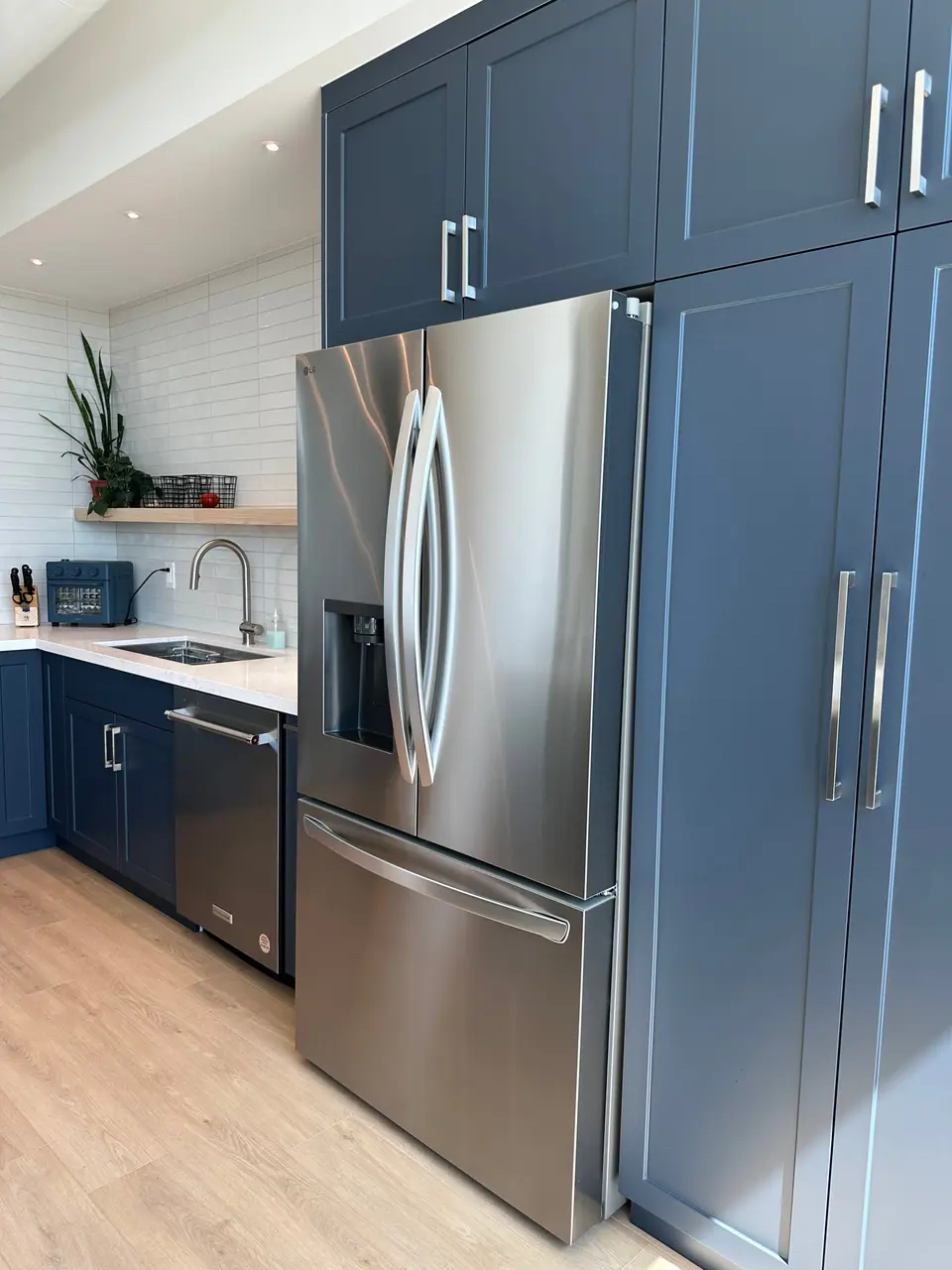
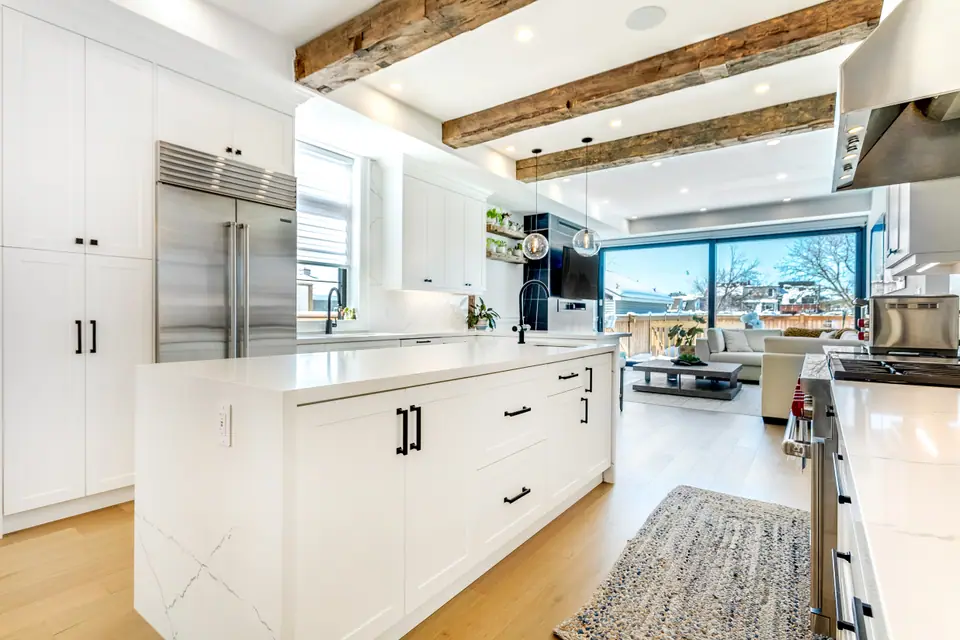
The sage green kitchen renovation in Toronto pairs sage cabinets with brass pendants, white oak floors and a quartz waterfall island under vaulted ceilings: a colour and a metal carry the warmth, while the waterfall and the open sightlines keep it current. The family kitchen in North Toronto was designed for farmhouse warmth with a contemporary edge, built with the homeowners' own designer after a dated two-way fireplace was removed to open the main floor. And the condo kitchen with city views puts tall blue shaker pantry cabinets and 12-foot custom millwork against floor-to-ceiling windows, showing that a shaker door in a bold colour can sit in a glass tower as comfortably as in an older house.
If you want two cabinet colours, keep them to a clear split, such as perimeter and island; two-tone kitchen cabinets explains how.
Transitional, farmhouse or modern: how to tell which one you are building
Styles drift during selections, so check the finished list against this short test before ordering. If most of your answers land in one column, that is the style you are really building.
| Clue | Transitional | Farmhouse | Modern |
|---|---|---|---|
| Door | Shaker, smooth paint or stain | Shaker or beadboard, often distressed | Slab |
| Sink | Undermount, sometimes apron | Apron-front | Undermount or integrated |
| Open shelving | A little, or none | Plenty, often rustic wood | Minimal, slim metal or wood |
| Wood | Smooth white oak or walnut | Reclaimed or knotty | Rift-cut veneer |
| Metal | One warm metal used sparingly | Black iron, aged brass | Stainless or none visible |
Mistakes that pull a transitional kitchen off balance
Most transitional kitchens that disappoint have the right parts in the wrong quantities.
- Three or more metal finishes in one room; two is a sensible limit.
- Ornate crown moulding over plain shaker doors, which makes the doors look cheap rather than calm.
- A busy granite or strongly patterned tile competing with a coloured cabinet.
- Builder-grade flush lights everywhere and nothing decorative over the island.
- Handles chosen last; repeated across dozens of doors and drawers, they are among the most visible details in the room.
Questions
Is transitional kitchen design going out of style?
It is less tied to trends than most styles because it is defined by restraint rather than by a fashionable colour or material. Individual choices, such as a particular green or a metal finish, will date faster than the shaker door and simple layout underneath them.
Can I mix brass and black hardware in a transitional kitchen?
Yes, if each has a clear job, for example brass on pulls and pendants and black on the faucet and window frames. Keep it to two finishes, and repeat each at least twice so it looks planned.
What countertop suits a transitional kitchen?
A quartz or stone top with soft veining or a quiet solid colour is the usual choice, with an eased or slightly rounded edge. Strong veining works if the cabinets and backsplash stay plain.
Do I need inset doors for a transitional kitchen?
No. Full-overlay shaker doors are the most common choice and cost less. Inset doors push the room toward the traditional end and need precise installation, which suits older houses with period trim.
Sources and further reading
- Wikipedia: Shaker furniture
- Wikipedia: Kitchen cabinet (inset and overlay doors)
- Wikipedia: Frame and panel
Checked November 19, 2026. Codes, by-laws, prices and product specifications change; confirm with your municipality, condo corporation or supplier before you build.
Keep reading
Related guides