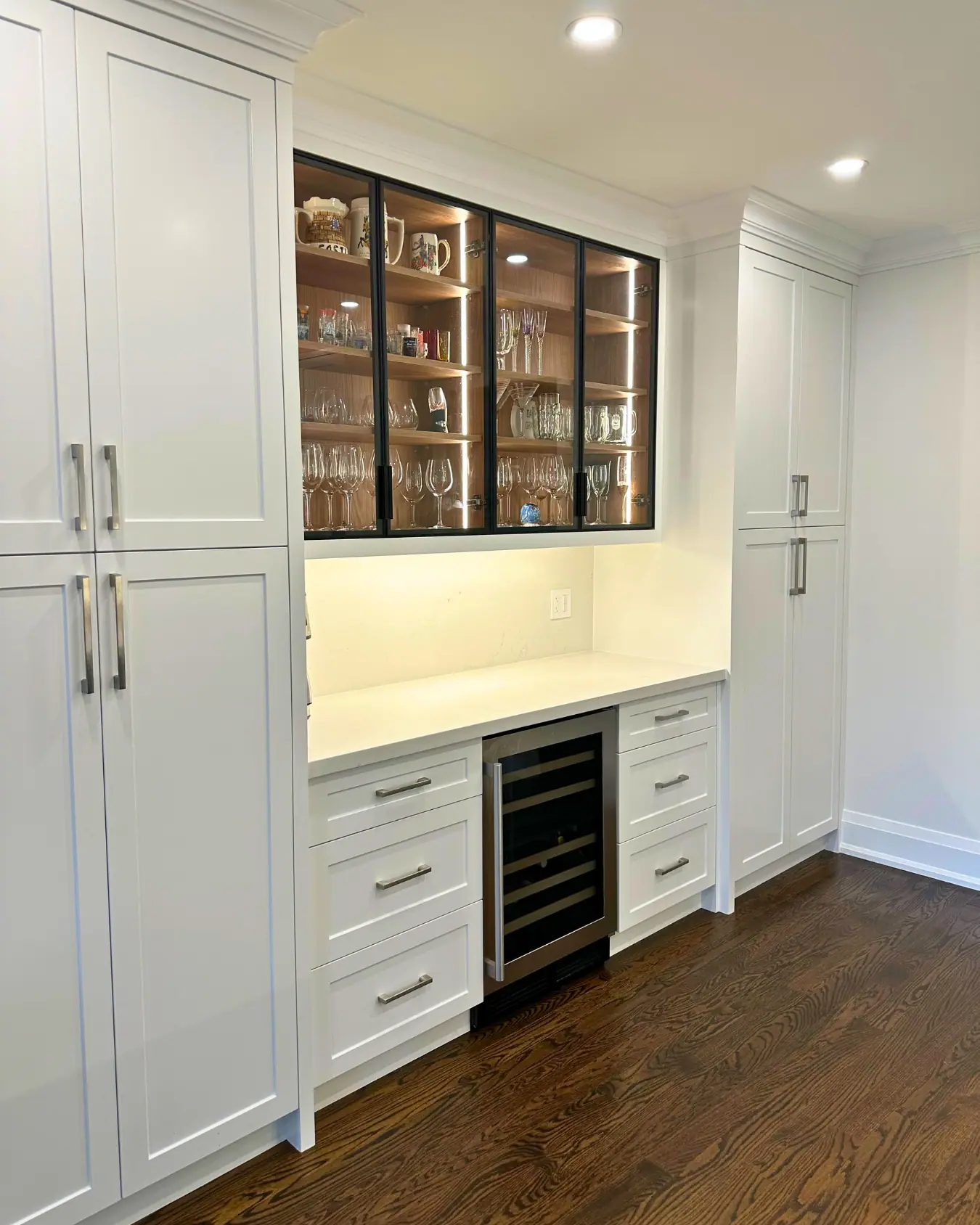
Kitchen storage
Kitchen drawer organizers and cabinet inserts
The kitchen drawer organizers that work best are planned with the cabinets, not bought afterwards: decide what each drawer will hold, then size the drawer and its insert together. Shallow top drawers take cutlery trays, in-drawer knife blocks and tiered spice inserts; deep drawers take peg systems for plates and dividers for pots and lids; the sink base takes a waste pull-out sorted for garbage, recycling and organics. Measure inserts to the inside of the drawer box, never to the cabinet.
Plan the inside of each drawer before the cabinets are ordered
Drawer heights are fixed when the cabinets are ordered, so the insert plan has to come first. A tiered spice insert wants a shallow drawer, a peg system for plates wants a deep one, and an in-drawer knife block needs a drawer longer than your longest blade. Work through the kitchen zone by zone and write the contents and the insert on the drawings, next to each drawer.
If you are still deciding between drawers and doors, or where a pantry fits, kitchen storage ideas for a renovation and kitchen pantry design cover the bigger picture. This page is about what goes inside.
| Where | What it holds | Insert |
|---|---|---|
| Top drawer at the prep zone | Cutlery, utensils, knives | Divided cutlery tray; in-drawer knife block |
| Top drawer near the cooktop | Spices, measuring spoons | Tiered spice insert that tilts jars so labels read from above |
| Middle drawer near the prep zone | Foil, wrap, bags, tea towels | Roll holder and simple dividers |
| Deep drawer near the dishwasher | Plates and bowls | Base with movable pegs |
| Deep drawer near the cooktop | Pots, pans and lids | Adjustable dividers and an upright lid rack |
| Narrow base cabinet or above the oven | Baking sheets, trays, cutting boards | Vertical tray dividers |
| Sink base | Garbage, recycling, organics, cleaning supplies | Waste pull-out with a tray for cleaning products |
Fixed trays, adjustable systems or custom wood inserts
Inserts come in three broad kinds, and the choice depends on how exactly you want them to fit and how often your needs change.
- Fixed moulded trays are inexpensive and easy to replace, but they come in standard sizes, so one often leaves a gap at the back or side of a custom drawer.
- Adjustable dividing systems made for metal drawer boxes use containers, long dividers and cross dividers that can be rearranged; Blum describes its ORGA-LINE system this way, for cutlery as well as bottles and pots in deep pull-outs. Some metal drawer sides are only 12.8 mm thick, which leaves more of the cabinet width as usable drawer space.
- Custom wood inserts are cut to the exact interior of each drawer box, often in the same species as the cabinets. They fit best, but they can only be made once the boxes exist and they are harder to rearrange.
Knife, spice and dish drawers: the details that make them work
Measure the inside of the box for every insert: width between the drawer sides, depth from front to back, and the clear height under the drawer above or the cabinet's top rail.
- Knives: an in-drawer block with angled slots keeps edges apart, which protects the blades and the fingers reaching in. Put it in the prep zone between the sink and the cooktop, and if small children are in the house, not in the first drawer they can reach.
- Spices: a tiered insert holds jars on a slant so every label shows from above. A drawer near the cooktop keeps spices dark and close at hand; keep them clear of oven vents and dishwasher steam.
- Plates on pegs: movable pegs in a perforated base hold stacks of plates and bowls upright in a deep drawer and can be reset when your dishes change. Lifting dishes out at hip height is easier on shoulders than reaching into a wall cabinet, a point that matters in an accessible kitchen.
- Weight: a deep drawer of stoneware or cast iron is heavy, so its slides need a load rating to match; kitchen cabinet hardware and soft-close hinges explains load classes.
- Pots and lids: dividers keep pans from nesting into a pile, and a rack at the back holds lids on edge instead of stacked.
Inside the waste pull-out: bins, liners and cleaning supplies
Where the bins go and why a Toronto kitchen needs three streams is covered in kitchen storage ideas for a renovation. The inside of the pull-out is where the daily friction is, and a few choices make it work.
- Size the organics bin up, not down. The City of Toronto says about 40 per cent of what ends up in Toronto's garbage could go in the Green Bin, which takes coffee grounds, filters and tea bags as well as soiled paper towels and napkins. A token-sized caddy fills in a day.
- Choose bins that lift out to wash. The City advises washing kitchen catchers often with dish soap to prevent odours, so pick bins with handles that come out of the frame without tools.
- Keep liners at the bins. Toronto lets you line the kitchen catcher with any plastic bag, so a slot for saved grocery and produce bags inside the pull-out saves a trip.
- Add a shallow tray above the bins for sponges, dish soap and brushes; harsher cleaners are better in a latched cabinet if small children are around.
- Plan a second organics spot if coffee and tea are made away from the sink: a small bin at the coffee station catches grounds, filters and tea bags.
- Confirm your municipality's rules. Other GTA municipalities run their own organics and garbage programs, and Toronto's recycling moved to a producer-run program on January 1, 2026, so check what each bin will take before sizing it.
Questions
Can I add organizers to the drawers I already have?
Yes. Measure the inside of each drawer box and buy or cut inserts to it. Check the slides too: an older drawer on light-duty slides may not carry a heavy stack of plates even if the insert fits.
Are knives better in a drawer or on a magnetic strip?
Both protect edges when used well. A drawer block keeps knives out of sight and away from small hands; a wall strip saves drawer space and keeps the daily knives at hand. Many kitchens use a drawer block for the full set and a short strip for one or two everyday knives.
Where should the Green Bin caddy go in a new kitchen?
Next to the prep sink, where peelings and scraps are made, which matches NKBA's advice to keep waste near each prep or cleanup sink. A lidded organics bin in the sink-base pull-out keeps it out of sight; empty it often.
Do drawer inserts reduce how much a drawer holds?
A little, because trays and dividers take up room. What you gain is usable space: items stay where you can see and reach them instead of sliding into a heap at the back.
Sources and further reading
- City of Toronto: What goes in the Green Bin (organic waste)
- City of Toronto: What goes in my Blue Bin (Circular Materials from January 1, 2026)
- National Kitchen & Bath Association: Kitchen Planning Guidelines with Access Standards
- Blum Canada: ORGA-LINE inner dividing system
- Blum Canada: LEGRABOX box system (12.8 mm drawer sides)
Checked November 19, 2026. Codes, by-laws, prices and product specifications change; confirm with your municipality, condo corporation or supplier before you build.
Keep reading
Related guides