Kitchen fixtures
Pot filler faucets: are they worth it
A pot filler is worth it if you often fill large stockpots or canning pots on a big range, and the wall behind the range can take a cold-water line without freezing. For most households, a pull-down faucet at a sink close to the cooktop does the same job for less. Remember that a pot filler only fills: the full pot still goes to the sink to drain, and the valve hangs over a surface with no drain.
What a pot filler needs behind the wall
A wall-mounted pot filler is a single cold-water line ending in a jointed arm above the range. The plumbing is simple, but it has to be built into the wall before the backsplash goes on. One widely sold model's spec sheet and installation guide set out what is involved:
| Item | What the maker specifies | Planning note |
|---|---|---|
| Water supply | Cold water connection only | No hot line to run, but no hot water at the range either |
| Connection | 1/2-inch IPS stub-out, extending 1/2 inch past the finished wall | The finished wall includes tile or slab, so set the stub-out after the backsplash thickness is known |
| Mounting | Stringers (blocking) recommended for a secure mount | Add solid wood blocking between studs while the wall is open |
| Arm | 24-inch double-jointed swing spout | Check that it reaches the back and front burners and folds flat under the hood |
| Controls | Two handle valves, each a quarter turn from off to on | The maker says to shut both when not in use |
| Flow | 15.1 L/min (4.0 US gpm) at 414 kPa | Fills a stockpot quickly; also floods a cooktop quickly if left open |
Where the line runs matters in a GTA house
Ranges often sit on an outside wall because that is the easiest route for the hood duct, and an outside wall is the worst place for a water pipe in a Toronto winter. The Ontario Building Code (Article 7.3.5.3) requires piping that may be exposed to freezing to be protected from it, so a line in an exterior wall has to stay on the warm side of the insulation, or come up from below through the floor instead. The hood duct, the gas line or 240-volt cable and now a water line all compete for the same few stud bays, so draw them together.
A new supply line is new plumbing. Toronto lists installing or modifying plumbing systems among work that needs a building permit; swapping an existing fixture does not. Other GTA municipalities set similar rules, so confirm with yours. Ask the plumber for an isolating valve you can reach, such as in the basement ceiling below or an adjacent cabinet, so the line can be closed for a repair without shutting off the house.
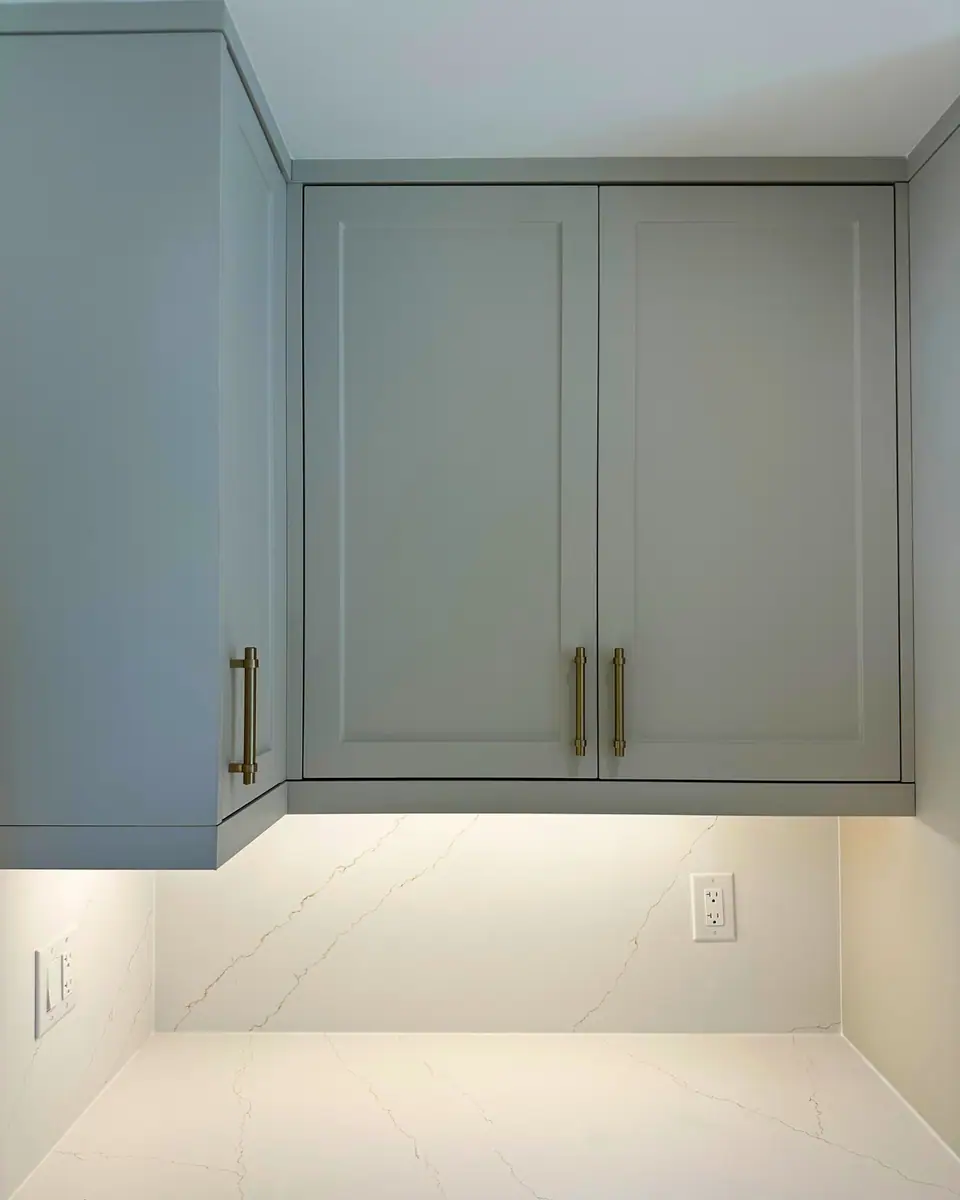
Coordinate the backsplash too. If the wall behind the range is a slab, the hole is drilled before or during installation; see full-height slab backsplash for how the slab is templated around fixtures.
The case for and against
Water weighs about a kilogram per litre, so a stockpot with 12 litres in it weighs well over 12 kg before any food goes in. Not carrying that from the sink is the whole argument for a pot filler. The arguments against are practical ones.
| For | Against |
|---|---|
| No carrying heavy pots of water across the kitchen | The full pot still travels to the sink to drain pasta or stock |
| Useful when the range is far from the sink | Moving the sink or adding a prep sink can solve the same problem |
| Handy for canning, stock and big-batch cooking | Drips land on burners, grates or induction glass |
| A strong visual point above a pro-style range | A forgotten valve floods a surface with no drain; the maker warns of water damage |
| Simple cold-only plumbing | Wall work, blocking and a permit add to the fixture's own price |
Who gets real use from one
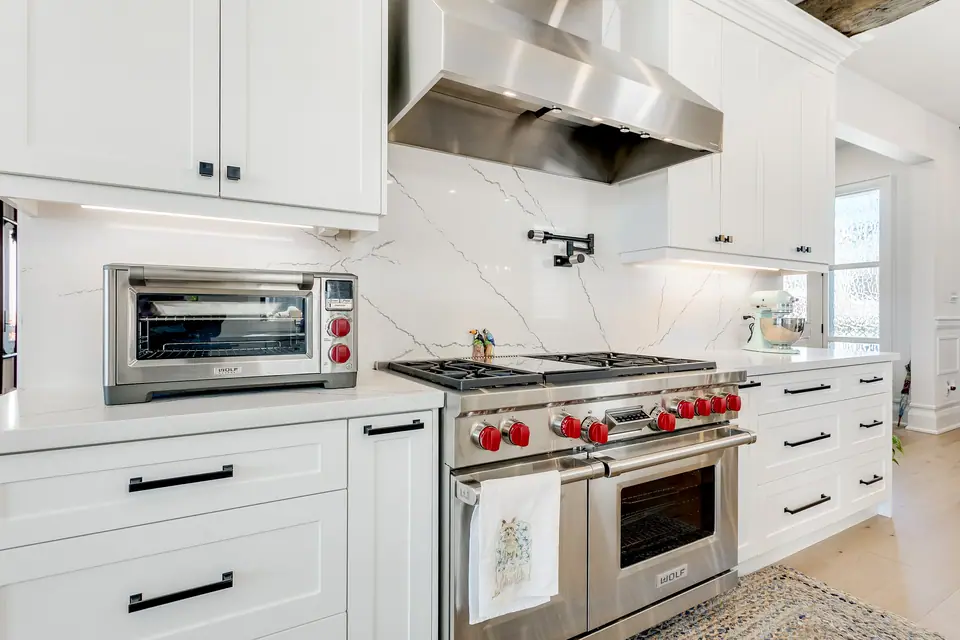
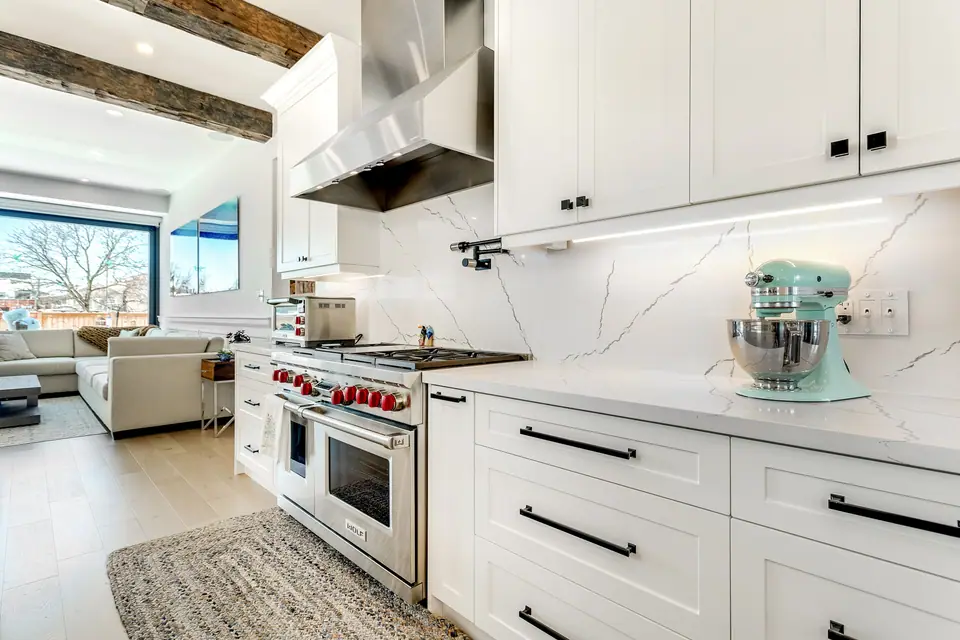
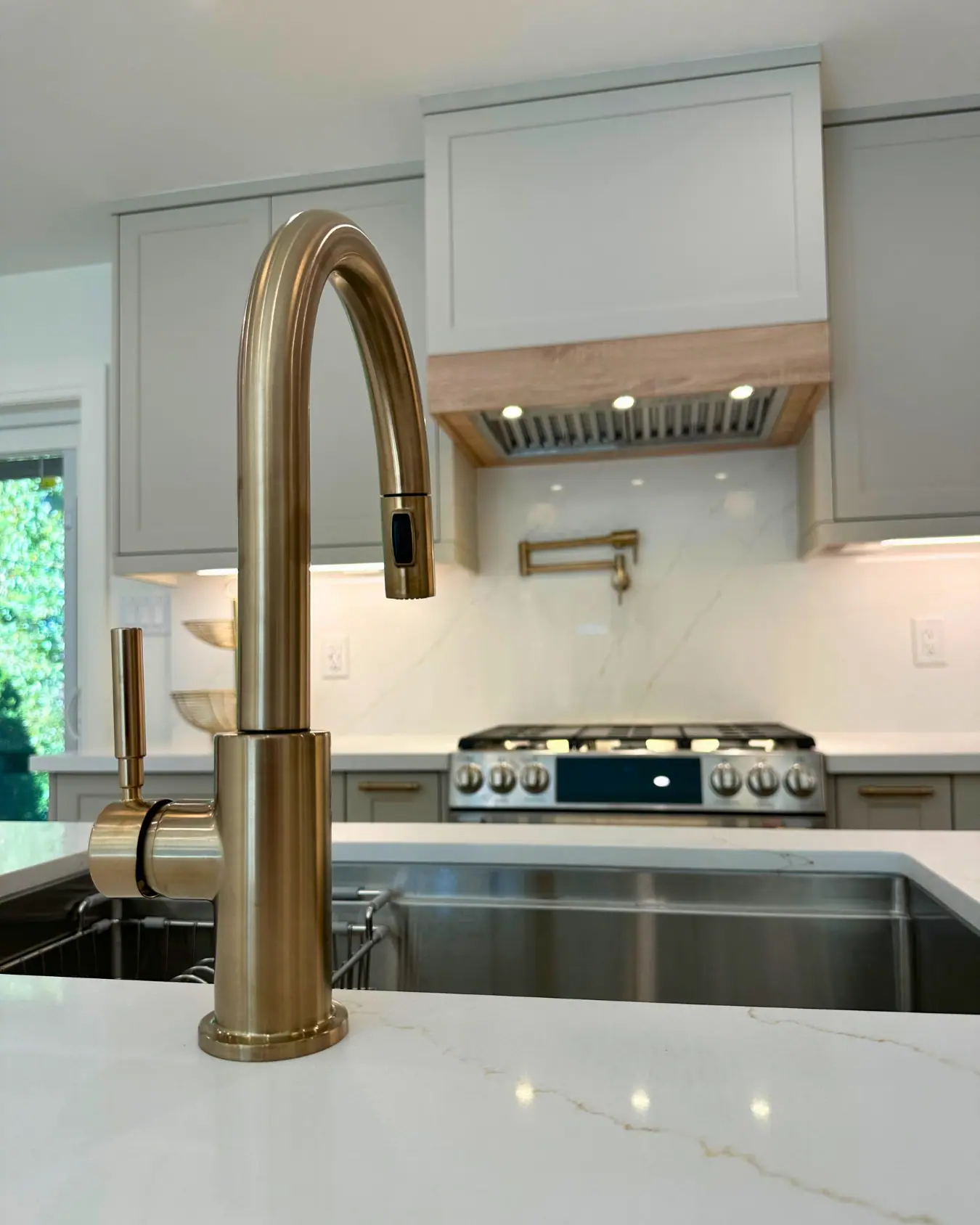
The honest verdict: a pot filler earns its place in a kitchen built around a large range where someone cooks in volume several times a week, and where the sink is more than a few steps from the cooktop. In the Victorian kitchen and bathroom renovation in Milton, the kitchen pairs a professional range and a full-height quartz backsplash with a pot filler, which is the setting where one makes sense.
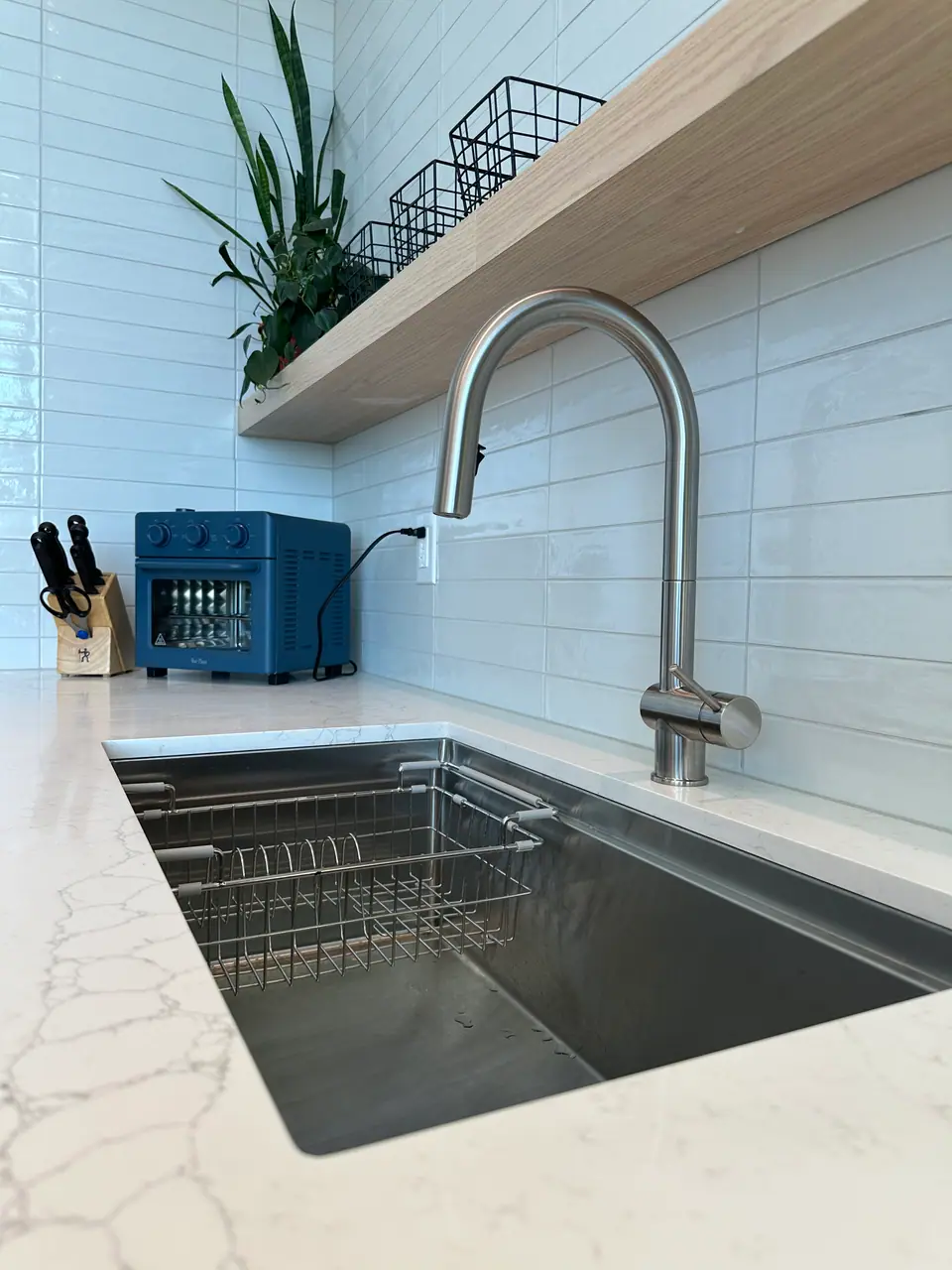
It is a weak buy over a 30-inch range, in a compact kitchen where the sink is beside the cooktop. In those kitchens, a single deep sink with a pull-down spray, placed next to the cooktop, does nearly everything a pot filler does and also drains. If you cook seriously but the layout is tight, put the money into planning a chef's kitchen around a prep sink instead.
Questions
Why are pot fillers cold water only?
They are made that way: one widely sold model's instructions say to connect to cold water only. Cold is also the right choice for cooking; the City of Toronto advises using cold water for drinking, cooking and preparing baby formula because lead dissolves more readily into hot water.
How high should a pot filler be mounted?
High enough that the spout clears your tallest pot with room to tilt it, and low enough that the folded arm sits clear under the hood. Measure your biggest stockpot on the range grate, then set the stub-out from the maker's rough-in drawing before the wall is closed.
Can a pot filler be added to an existing kitchen?
Yes, but it means opening the wall behind the range, running a new line, adding blocking and replacing whatever backsplash comes off. Unless the backsplash is being redone anyway, most of the effort and cost is in the wall, not the faucet.
Sources and further reading
- Delta Faucet: 1177LF wall mount pot filler specification sheet
- Delta Faucet: Wall mounted pot filler installation instructions (86363)
- 2024 Ontario Building Code compendium, Part 7: Plumbing (Article 7.3.5.3)
- City of Toronto: When do I need a building permit?
- City of Toronto: Lead in drinking water
Checked November 19, 2026. Codes, by-laws, prices and product specifications change; confirm with your municipality, condo corporation or supplier before you build.
Keep reading
Related guides