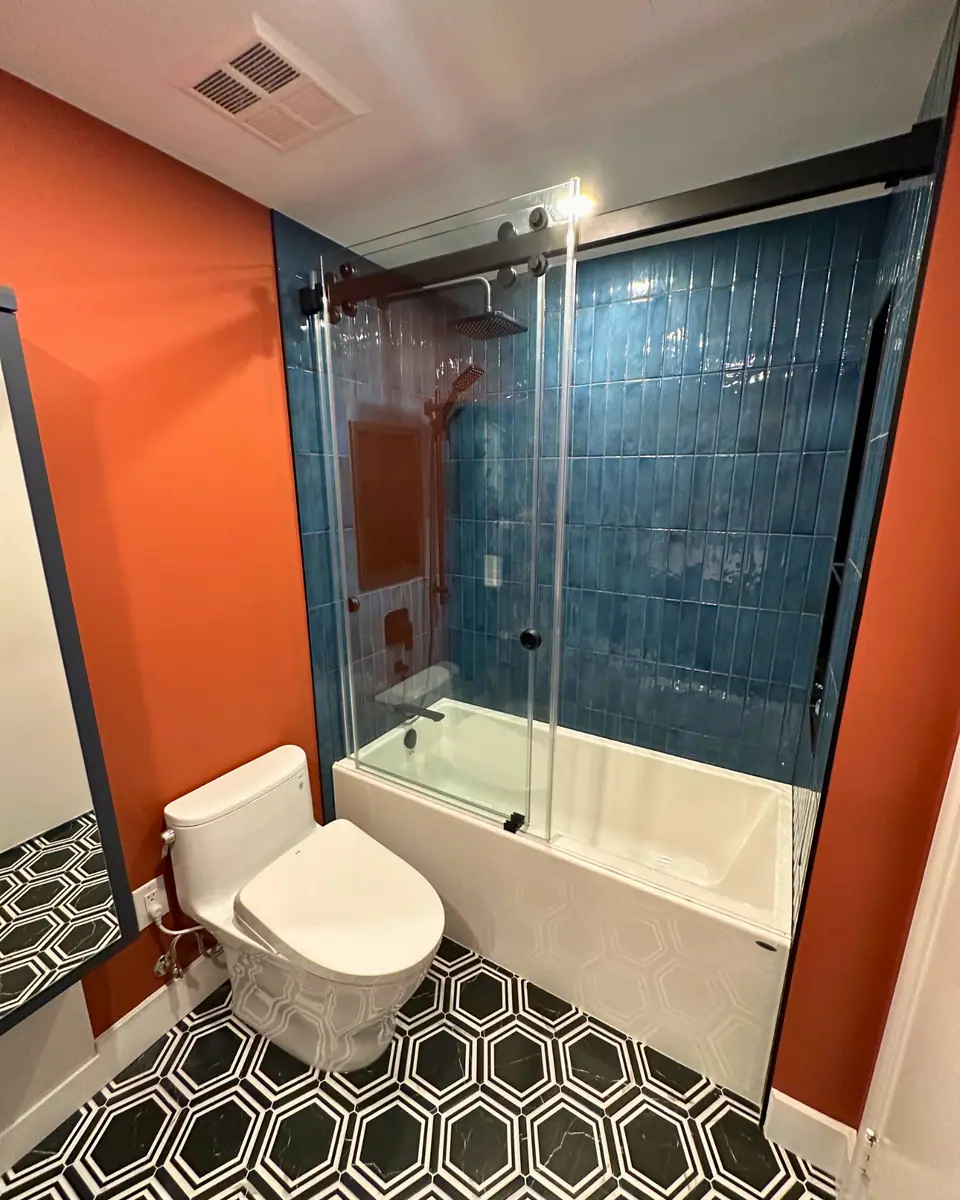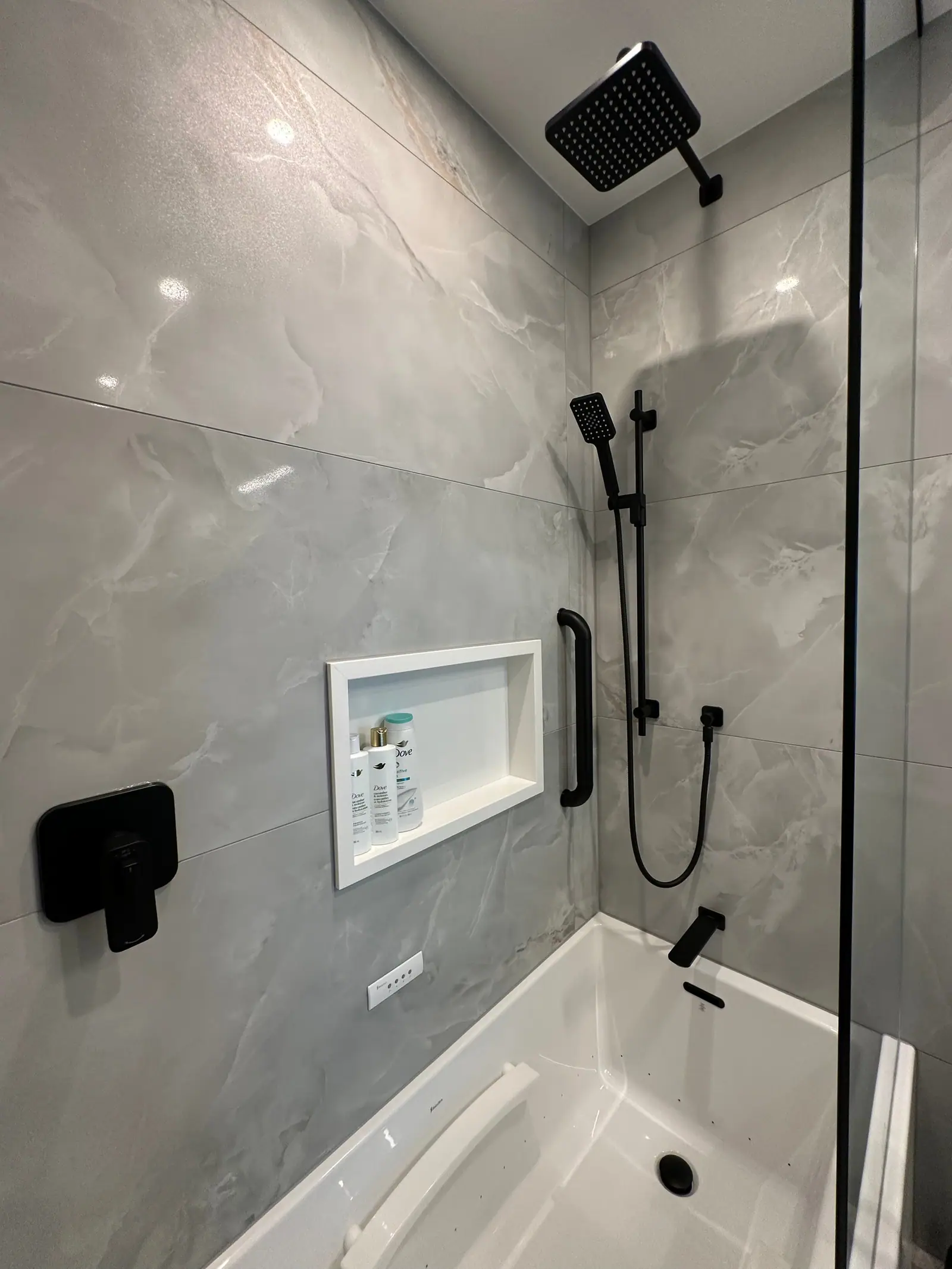
Shower fixtures
Rain shower heads and hand showers
A rain shower head is a wide head mounted overhead so water falls nearly straight down; a hand shower is a smaller head on a hose that you hold or park on a slide bar. Most renovated showers pair the two on one valve with a diverter. In Ontario, each shower head is limited to 7.6 litres a minute by the Building Code, and showerheads manufactured since July 1, 2026 must meet a federal limit of 7.0 litres a minute.
Flow limits for shower heads in Ontario
Three sets of numbers apply, and the strictest one decides what you can buy. Ontario's Building Code limits each individual shower head in a residential occupancy to 7.6 litres per minute, now under Article 7.2.10.6 and its table in the 2024 code, as the City of Markham's builder guidance summarizes it. Federally, the Energy Efficiency Regulations now cover showerheads: any showerhead manufactured on or after July 1, 2026 and sold across provincial lines or imported must flow no more than 7.0 L/min at 552 kPa (80 psi). The voluntary US WaterSense label requires 2.0 US gallons a minute or less, which is the same 7.6 L/min, plus tests for spray force and coverage.
- For heads with several nozzles, the federal limit applies regardless of how many nozzles are running.
- The limits are per head. A rain head and a hand shower running together can draw about 14 L/min, which matters for the water heater and the drain.
| Rule | Maximum flow | What it covers |
|---|---|---|
| Ontario Building Code (2024) | 7.6 L/min (2.0 US gpm) | Each individual shower head in a home |
| Federal Energy Efficiency Regulations | 7.0 L/min (1.8 US gpm) at 552 kPa | Showerheads manufactured from July 1, 2026, single or multiple nozzles |
| WaterSense label (voluntary) | 2.0 US gpm (7.6 L/min) | Labelled heads that also pass spray force and coverage tests |
Rain heads: wide coverage, gentle pressure
A rain head spreads a limited flow across a wide face, so the water feels softer than a standard head delivering the same litres. That is the point of it, and also its limit: it is relaxing to stand under but slow for rinsing thick hair, and it cannot be aimed. Because the water falls straight down, less of it reaches the glass than with a wall head angled across the shower.
Mounting decides how it feels. A ceiling-mounted arm drops the head straight down over the middle of the standing area, and its supply pipe runs through the ceiling, with blocking above to hold the arm. A long wall arm reaches out from the wall instead, which is the usual answer when the ceiling cannot take a pipe. In a concrete condo building, pipes cannot be buried in the slab above, so a ceiling head generally needs a dropped ceiling or bulkhead, or the wall-arm route. Either way, set the outlet height from the head's spec sheet before the wall closes, high enough that the tallest person in the house clears the head.
Hand showers: on a slide bar, a fixed holder or both
A hand shower does the jobs a rain head cannot: rinsing hair, washing children or a pet, cleaning the shower walls and glass, and showering seated on a bench. A slide bar lets each person set the holder height, which suits households with tall and short members and anyone who sits to shower. A fixed holder near the valve, at a height reachable from a bench, is the simpler option.
A slide bar is not a grab bar unless it is sold and installed as one, so never lean on an ordinary bar. If support matters, choose a combination grab bar and slide bar rated for the load, anchored into blocking, and see accessible bathroom renovation for the wider layout.
Diverters, separate controls and running both at once
How the outlets are switched depends on the valve. Ontario's Building Code requires the water feeding shower heads to pass through an automatic compensating valve, a pressure-balanced or thermostatic valve, and the outlets hang off it in one of these ways.
- Diverter on a pressure-balanced valve: one handle sets temperature, and a separate or built-in diverter sends water to the rain head, the hand shower, or on some models both. Flow is shared when both run.
- Thermostatic valve with volume controls: set the temperature once, then open each outlet on its own control or through a multi-port diverter. This suits three or more outlets; thermostatic and pressure-balanced shower valves compares the two.
- Place the controls before the heads. Put the valve where you can reach it from the entry without stepping under the rain head, and the hand shower holder where it will not spray out of the door gap.
- Check the drain. A standard linear drain handles about 9 US gallons a minute on a 2-inch line, plenty for a head and a hand shower; body-spray systems may need more. See linear shower drains.
Questions
Will a rain head feel weak at 7 litres a minute?
It will feel gentle, because the flow is spread over a wide face. Smaller rain heads concentrate the same flow and feel stronger. A hand shower on the same valve covers the jobs that need more force.
Can a rain head and a hand shower run at the same time?
Yes, if the diverter or valve allows it. Some diverters have a shared position that splits the flow; a thermostatic valve with separate volume controls gives each outlet its own full flow.
Is a ceiling-mounted rain head possible in a condo?
Often not directly, because supply pipes cannot run through the concrete slab above. A dropped ceiling or bulkhead in the shower, or a long wall-mounted arm, gives a similar overhead fall. Condo rules on plumbing changes also apply.
How much hot water does a long rain shower use?
At 7.6 litres a minute, a 10-minute shower uses about 76 litres of mixed water; at 7.0 L/min, about 70. Running a hand shower at the same time roughly doubles that, so check the water heater's capacity before adding outlets.
Sources and further reading
- City of Markham Builder Tip 77: Water conservation for dwellings (2024 OBC)
- Energy Efficiency Regulations, 2016 (SOR/2016-311): showerheads
- US EPA WaterSense: Showerheads
- Infinity Drain via BNP Media: Linear drain system specification 101
Checked November 19, 2026. Codes, by-laws, prices and product specifications change; confirm with your municipality, condo corporation or supplier before you build.
Keep reading
Related guides