Condo insurance
Condo renovation insurance and liability
Three sets of insurance meet in a condo renovation. The corporation's policy covers the units and common elements against major perils up to the standard unit; your unit owner policy covers your improvements, contents and personal liability; and your contractor's liability insurance and WSIB coverage respond to damage and injuries the work causes. If you, or someone you bring in, cause damage, the Condominium Act lets the corporation charge you up to its deductible. Call your broker before work starts and raise your improvements limit when it ends.
Three policies, three different jobs
Each policy answers a different question when something goes wrong, and none of them covers everything. Section 99 of the Condominium Act requires the corporation to insure the units and common elements against major perils: fire, lightning, smoke, windstorm, hail, explosion, water escape, strikes, riots or civil commotion, impact by aircraft or vehicles, vandalism or malicious acts, plus any others its declaration or by-laws add. That insurance must cover replacement cost subject to a reasonable deductible, and it does not include improvements made to a unit. Section 102 adds liability insurance for the corporation as occupier of the common elements.
Your own policy fills the gaps. The Insurance Bureau of Canada notes that a condo corporation's policy does not cover your personal contents, improvements to your unit or your liability, and that a unit owner policy covers those, along with additional living expenses after an insured loss and loss assessment coverage for your share of a major loss that exceeds the corporation's limits.
| Policy | Held by | Covers | Does not cover |
|---|---|---|---|
| Corporation's property policy | The condo corporation | Units and common elements damaged by major perils, at replacement cost, less a deductible | Improvements above the standard unit; your contents |
| Corporation's liability policy | The condo corporation | Its liability as occupier of the common elements | Your personal liability inside your unit |
| Unit owner policy | You | Contents, improvements up to a stated limit, personal liability, additional living expenses, loss assessment | Work your contractor is responsible for under its own insurance |
| Commercial general liability | Your contractor | Damage its work causes to your unit, other units or common areas, and injuries to third parties | Injuries to its own workers |
| WSIB coverage | Your contractor | Benefits for its workers injured on the job | Property damage |
Improvements: where the standard unit draws the line
The standard unit is the baseline the corporation repairs and insures, and anything you add above it is an improvement that you insure. The board can define it in a by-law under section 56(1)(h); if there is no by-law, the standard unit described in a schedule to the declaration applies. The Condominium Authority of Ontario sums it up: improvements are anything not included in the standard unit definition, and they are the owner's obligation to repair and insure.
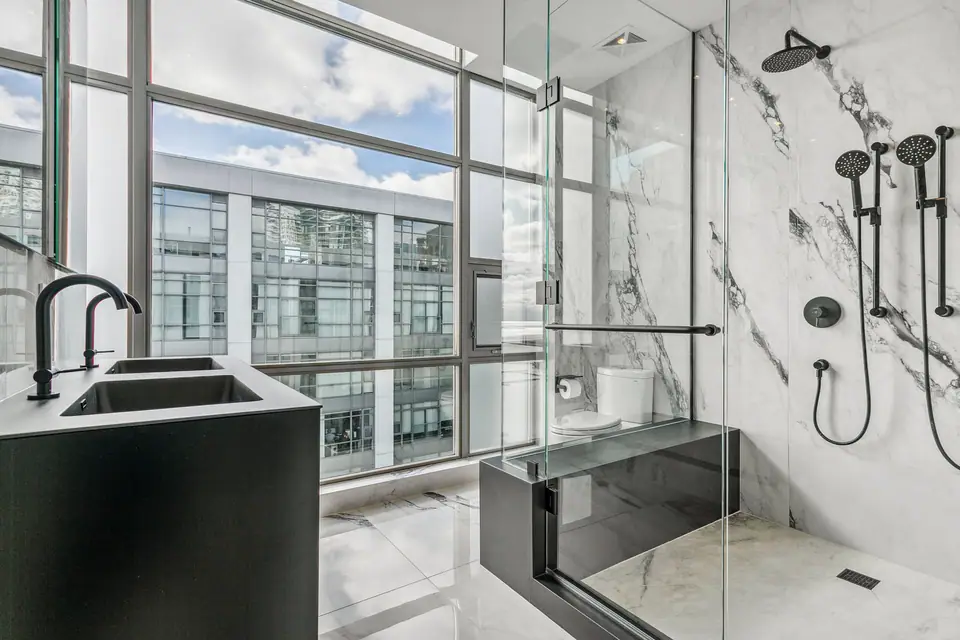
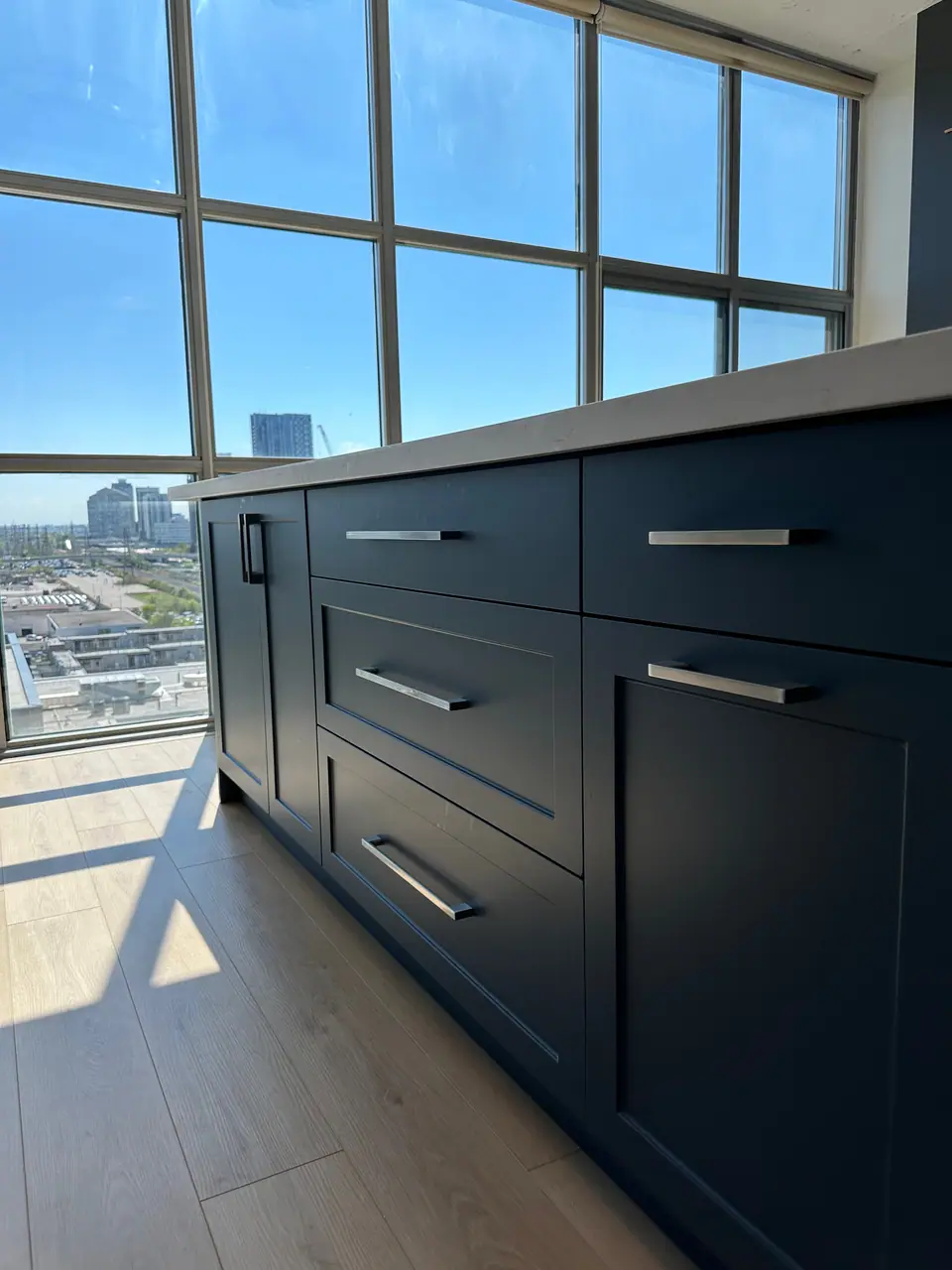
A kitchen or bathroom renovation is almost by definition a set of improvements. Custom millwork, quartz or porcelain slab surfaces, large-format tile, a curbless shower or a heated floor all sit above a typical builder's standard. After a leak, the corporation restores the standard finish; your policy pays the difference only if your improvements limit is high enough. Ask management for the standard unit by-law or schedule before you finalize the budget, and give your broker the renovation contract value.
When renovation work damages your unit, a neighbour's or the common elements
The deductible is where renovation liability usually lands on an owner. Under section 105(2), if you, a tenant or someone living in your unit damages your unit through an act or omission, the lesser of the repair cost and the corporation's deductible is added to your common expenses. A by-law under section 105(3) can extend that charge to damage nobody in your unit caused, as long as the corporation itself was not at fault. Your declaration may also contain its own provisions for damage that spreads to other units or the common elements, so read it alongside the deductible by-law.
Two more sections matter during the work. Section 117(1) bars anyone from causing a condition or activity in a unit or the common elements that is likely to damage the property or injure someone, and section 119(2) makes you take all reasonable steps to ensure your agents and employees, which includes your contractor, follow the Act, the declaration, the by-laws and the rules. In practice, the corporation looks to you, and you look to your contractor and its insurer.
The amount you can be charged under section 105 is an insurable interest of the owner (section 105(4)). The Condominium Authority of Ontario advises owners to review the corporation's deductible by-laws and speak to their broker, so ask directly whether your policy covers a deductible chargeback and up to what amount.
What the building will ask your contractor for
The Condominium Authority of Ontario notes that some corporations require insurance information from contractors, as well as inspections before and after the work, and some require owners to use approved contractors. Expect the renovation application to ask for most of the following, and collect them before you submit:
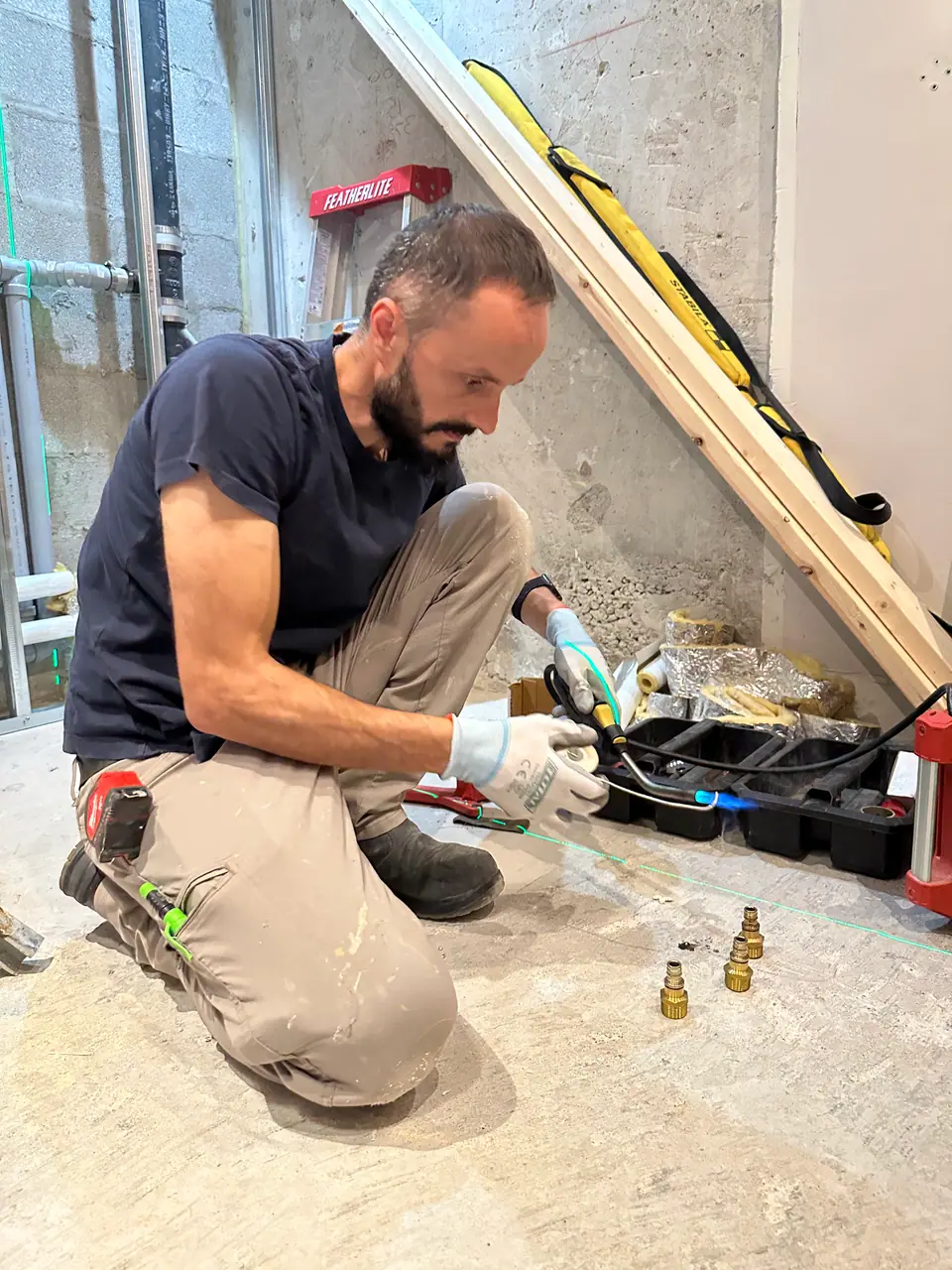
- A certificate of commercial general liability insurance showing the contractor's legal name, the insurer, the policy dates covering your project and the limits. Some buildings also ask to be named on the certificate; follow whatever wording the rules require.
- A WSIB clearance certificate, where the building asks for one.
- Licences for the regulated trades, such as the Licensed Electrical Contractor who will file the ESA notification.
- Any section 98 agreement if the work changes a common element. The Act requires that agreement to set out who is responsible for repair after damage, maintenance and insurance of the change.
- Proof of your own insurance, if the declaration or rules require owners to carry it.
| Stage | Document | Why |
|---|---|---|
| Before signing | Contractor's liability certificate and WSIB status | Confirms the cover exists and runs past your completion date |
| With the application | Certificates in the form the building asks for | Applications are returned when the wording is wrong |
| Before demolition | Your broker's confirmation of any renovation conditions | Some policies have notice or occupancy conditions during work |
| After completion | ESA Certificate of Acceptance and product warranties | Your insurer may ask for them, and they matter at resale |
An insurance checklist for condo owners, start to finish
Most insurance problems in condo renovations come from timing: the right cover existed, but nobody checked it before work started or updated it afterwards. Work through these in order.
- Read the corporation's insurance information. The CAO notes that owners are notified of changes to the corporation's insurance through information certificates; review the deductible and the standard unit.
- Confirm your own policy. Owners are not required by law to carry insurance, the CAO notes, but governing documents may require it, and without it the improvements and the deductible are yours alone.
- Call your broker before demolition. Describe the scope and dates, and ask about any conditions while work is under way or the suite is empty.
- Check the contractor's certificates against the building's requirements, not just your own.
- Reduce the risk on site. A tested suite shut-off, leak sensors and a daily end-of-day check prevent the claims that hurt most; see condo plumbing: risers, shut-offs and leaks.
- Raise your improvements limit when the work is finished, and keep invoices, photographs and warranties together for any future claim.
Questions
Does the corporation's insurance respond if poor workmanship causes a flood?
Its property policy covers damage from major perils, including water escape, and section 99(3) makes an exclusion for faulty or improper material, workmanship or design ineffective where the damage would otherwise be insured. That does not stop the corporation charging you up to its deductible under section 105 and its by-laws.
Am I required to have condo insurance in Ontario?
Not by law, according to the Condominium Authority of Ontario, but your declaration or rules may require it. Without a unit owner policy you carry the cost of your improvements, your contents, your liability and any deductible chargeback yourself.
Should the condo corporation be named on my contractor's insurance certificate?
Only if your building's rules require it, and the application may specify the exact wording. Ask management for their requirement before the contractor's broker issues the certificate, so it does not have to be reissued.
Who pays if my contractor damages the elevator or corridor?
The building can look to you first, through the deposit or a chargeback under its governing documents, and you recover from the contractor, whose liability insurance exists for that kind of damage. Pre and post inspections and photographs settle most of these questions.
Sources and further reading
- Condominium Act, 1998, S.O. 1998, c. 19 (sections 56, 98, 99, 102, 105, 117, 119)
- Insurance Bureau of Canada: Types of home insurance coverage
- Condominium Authority of Ontario: Repairs and maintenance
- Condominium Authority of Ontario: Condo Owners' Guide (2023)
- Condominium Authority of Ontario: Condo renovations
Checked November 19, 2026. Codes, by-laws, prices and product specifications change; confirm with your municipality, condo corporation or supplier before you build.
Keep reading
Related guides