Etobicoke bathrooms
Bathroom renovations in Etobicoke
For a bathroom renovation in Etobicoke, the City of Toronto's permit rules apply: repairing or replacing fixtures needs no building permit, but installing or modifying plumbing does, and so does a backwater valve. If the new bathroom is in the basement, Toronto's Basement Flooding Protection Subsidy now pays 80% of an eligible backwater valve, up to $1,600, within a property limit of $6,650, for work completed on or after November 12, 2025.
Where Toronto draws the permit line for a bathroom
Etobicoke addresses are served by Toronto Building, so the City's published list decides whether your bathroom needs a permit. The short version: keeping every fixture where it is usually means no permit, and moving, adding or rerouting plumbing means one. When plumbing or drains are part of the job, a Plumbing Data Sheet goes in with the building permit application.
The City notes that its lists are not exhaustive and that zoning rules apply even when no permit is needed, so confirm anything unusual with Toronto Building before demolition starts. The full walkthrough is in do you need a permit for a bathroom renovation in Toronto.
| Bathroom work | Toronto building permit |
|---|---|
| Repairing or replacing plumbing fixtures in place | Not required |
| Installing cabinetry and millwork | Not required |
| Installing or modifying plumbing, such as moving a toilet or adding a shower | Required |
| Adding or removing walls to change the room's size | Required |
| Finishing a basement with new plumbing | Required |
| Finishing a basement without new plumbing | Not required |
| Installing a backwater valve | Required |
| Installing a sump pump | Not required |
Basement bathrooms: what Toronto's flood protection subsidy pays
A basement bathroom puts drains, a toilet and often a shower below grade, right where a sewer backup would arrive first. A backwater valve on the main drain closes when sewage flows the wrong way, and Toronto's Basement Flooding Protection Subsidy Program pays toward installing one. The amounts were expanded for work completed on or after November 12, 2025, with applications for the higher amounts opening May 1, 2026.
- The backwater valve needs a City building permit, and the inspection must happen before the valve is enclosed or covered.
- You must be the registered owner of a single-family home, duplex, triplex or fourplex in Toronto, with downspouts disconnected.
- The installer needs a valid City of Toronto business licence: plumbing, plumbing and heating, or drain contractors can do all eligible work, while building renovators can do only the sump pump and pipe severance.
- Apply within two years of each installation, with itemized original invoices; funding is first come, first served and set by Council each year.
| Item | Maximum subsidy |
|---|---|
| Backwater valve, including alarm | $1,600 per device, up to two |
| Sump pump, including alarm | $2,250, one device |
| Battery backup for the sump pump | $300 |
| Foundation drain severance and capping | $400 |
| Home plumbing assessment | $500 |
| Total per property | $6,650 |
Lakeshore villages, post-war streets and Humber Bay towers
South Etobicoke urbanized first. Mimico was incorporated in 1911, New Toronto in 1913 and Long Branch as a village in 1930, and the lakeshore today mixes those older houses with post-war bungalows, townhouses and rentals. North Etobicoke was built mostly after the Second World War. In a house of either age, opening a bathroom floor can expose old drain lines or subfloor damage from past leaks, so leave room in the budget until the walls are open; plumbing upgrades during a bathroom renovation lists what to replace while you can reach it.
Along the waterfront, the towers of Humber Bay Shores bring a different set of limits: condo board approval, booked elevators and plumbing tied to shared risers. The penthouse bathroom renovation in downtown Toronto, two bathrooms rebuilt from the ground up with floating vanities and a glass walk-in shower with a bench, shows what a condo bathroom can become inside those rules.
Toronto's tap water is moderately hard, so plan the shower glass for it
Toronto Water's 2025 analysis put average hardness at 119 mg/L as calcium carbonate, with readings from 115 to 122, which is above the 80 to 100 mg/L operational guideline and works out to about 7 grains per US gallon. The water is disinfected with chloramine. None of this is a health concern, but hard water leaves white spots on glass, chrome and dark tile, and scale in shower head nozzles.
Plan for it in the design: frameless glass with a factory-applied coating, a squeegee hook inside the shower, brushed or matte fixture finishes that hide spotting, and a hand shower whose nozzles can be rubbed clean. A water softener is a whole-house choice rather than a bathroom one. The guide on how to keep a glass shower clean covers daily care.
How Purple Kitchen & Bath runs an Etobicoke bathroom
One team handles the design, selections, permit, inspections and construction, from a complimentary consultation with Rowan Henry to a final walkthrough, and project leads such as Gio Mendoza and Jayven Matthew keep you informed during the build. Every renovation carries a one-year workmanship warranty, and the team helps you register the manufacturer warranties on fixtures and materials.
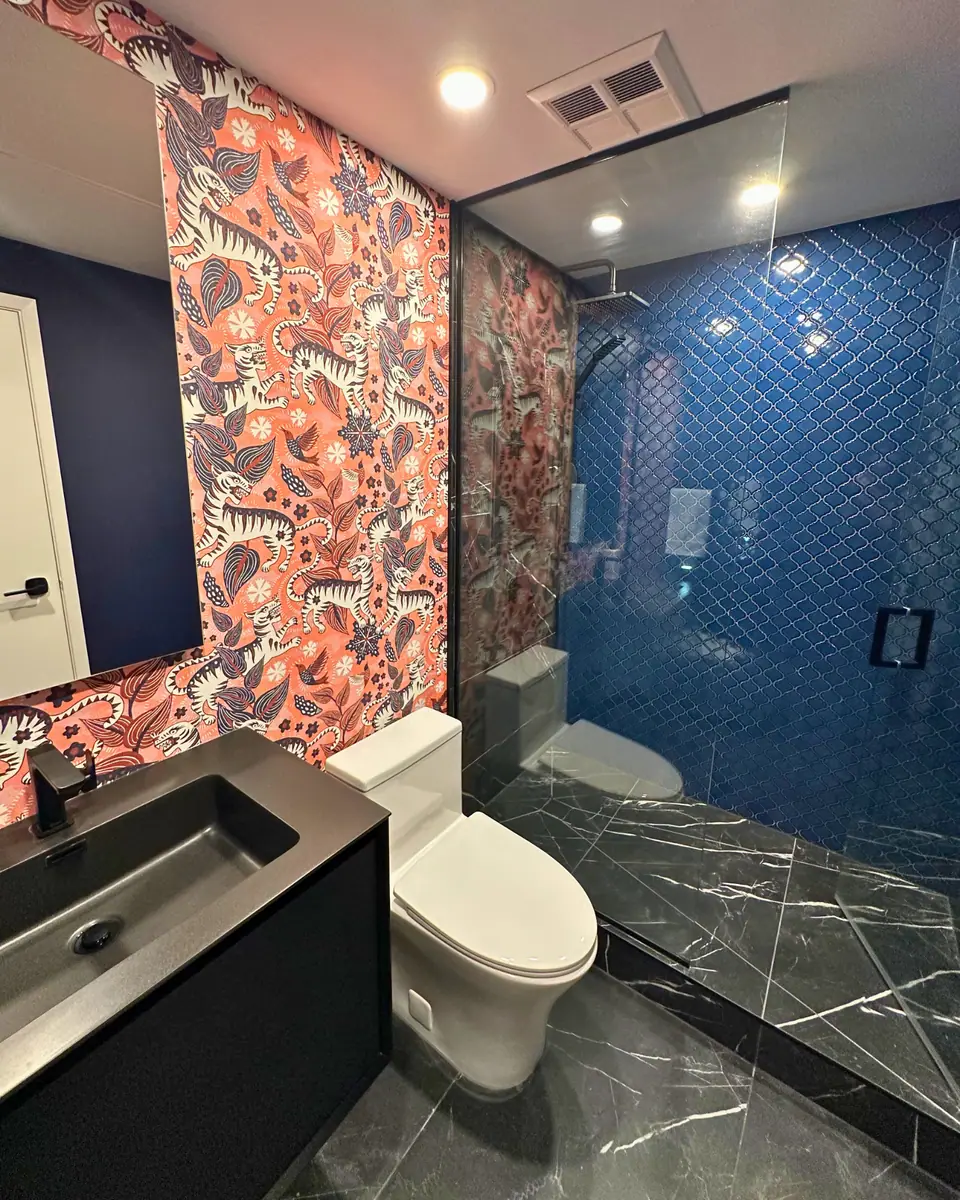
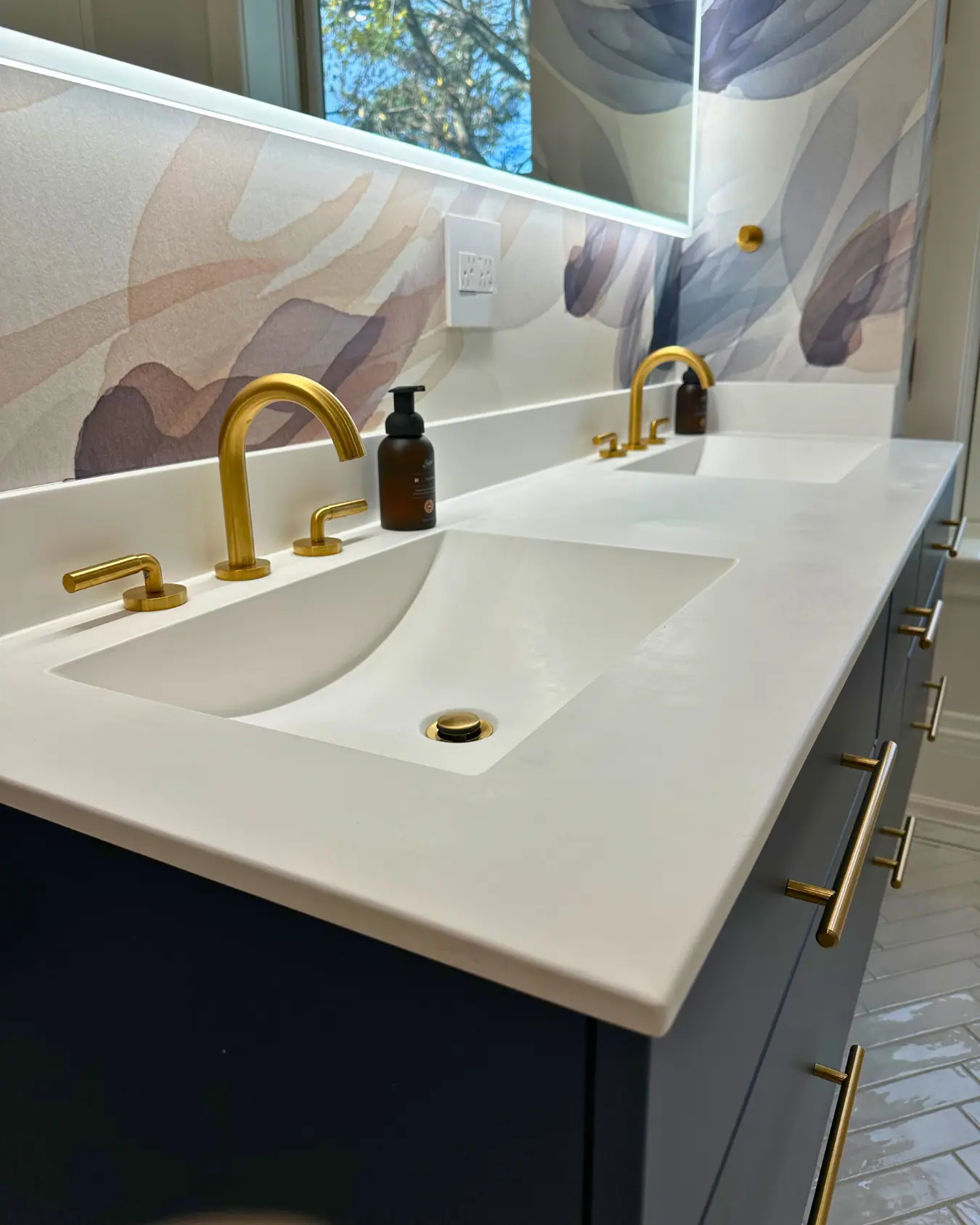
For finishes, nearby examples include a herringbone bathroom renovation in High Park, with a polished herringbone floor, slab surfaces, brushed gold fixtures, a navy double vanity and a backlit mirror, and two wallpapered bathrooms in Toronto built around bold patterned wallpaper and deep blue tile.
Questions
Can I replace my toilet, tub and vanity in Etobicoke without a permit?
Usually, yes, if each fixture stays where it is. Toronto lists repairing and replacing plumbing fixtures, and installing cabinetry, as work that does not need a building permit. Moving a fixture or adding one is modifying the plumbing, which does.
Will the City pay toward a backwater valve installed with a new basement bathroom?
It can. Toronto's subsidy covers 80% of the invoiced cost of an eligible backwater valve, up to $1,600 each, if the valve has a building permit, is inspected before it is covered, and the owner meets the program's conditions.
Who is allowed to install a subsidized backwater valve in Toronto?
A contractor holding a valid City of Toronto business licence as a plumbing, plumbing and heating, or drain contractor. Building renovator licences cover only the sump pump and pipe severance work.
Do you renovate bathrooms in Humber Bay Shores condos?
Yes. Condo bathrooms are part of the team's work, and the plan starts with the condo corporation's approval process, working hours and plumbing rules.
Sources and further reading
- City of Toronto: Basement Flooding Protection Subsidy Program
- City of Toronto: When do I need a building permit
- City of Toronto: Drinking water analysis summary 2025
Checked November 19, 2026. Codes, by-laws, prices and product specifications change; confirm with your municipality, condo corporation or supplier before you build.
Keep reading
Related guides